 English
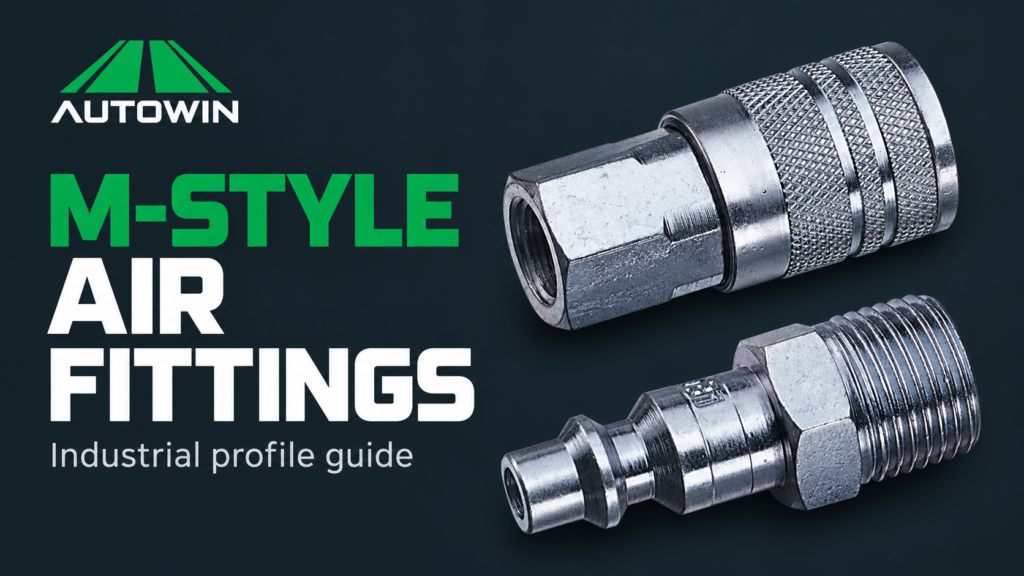
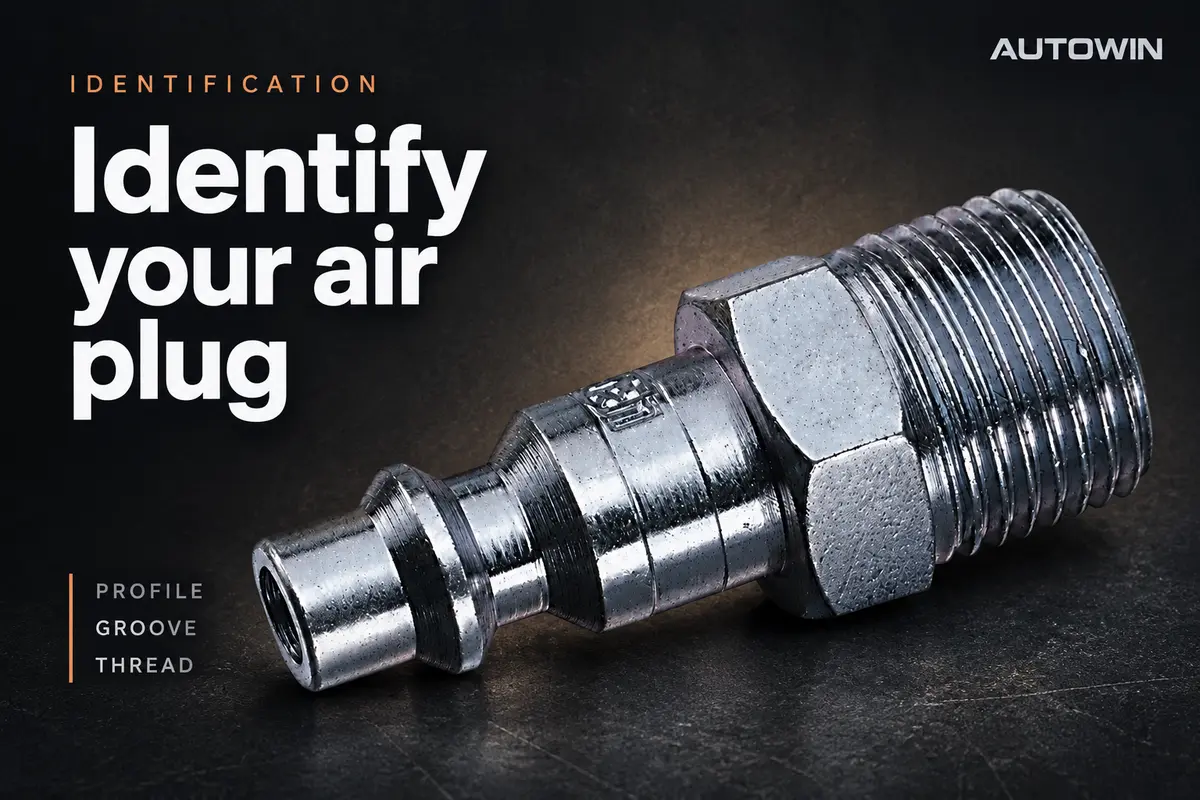
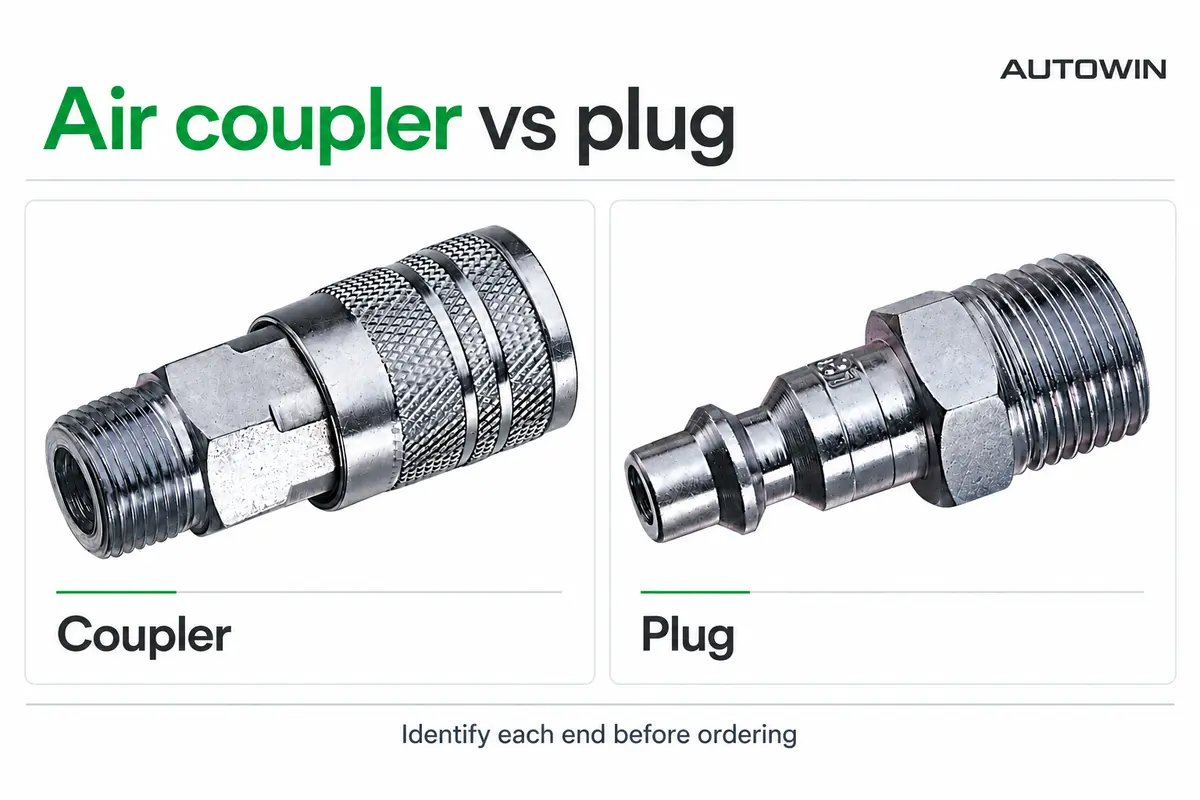
M-style air fittings are commonly associated with the industrial interchange family of compressed-air couplers and plugs. The useful purchasing description goes further: it identifies the profile, coupling body size, mounting connection and approved mating part. Those details determine whether a replacement belongs in the existing air system.
For a distributor or equipment buyer, the central question is whether the proposed industrial air coupler preserves the required connection and operating behavior. An attractive sleeve, matching thread or familiar style letter cannot answer that question alone.
Translate the style name into an interface specification
M-style is a naming convention used for an industrial interchange profile. Other manufacturers may identify their industrial couplings with different letters or numbers. Conversely, an M-series designation in another catalog can refer to an ARO interface. Copying a series letter between catalogs can therefore produce the wrong replacement.
Ask for the supplier’s full profile description and the applicable body size. Industrial interchange documentation may reference ISO 6150 B or other dimensional specifications. Record the exact reference the supplier declares; the words “industrial type” on a listing do not establish compliance with a particular standard.
The air hose fittings selection guide places this interface decision within the complete hose and tool connection. This article focuses on keeping an industrial-profile purchase consistent when sizes, operating mechanisms and suppliers differ.
Keep the plug profile separate from the mounting thread
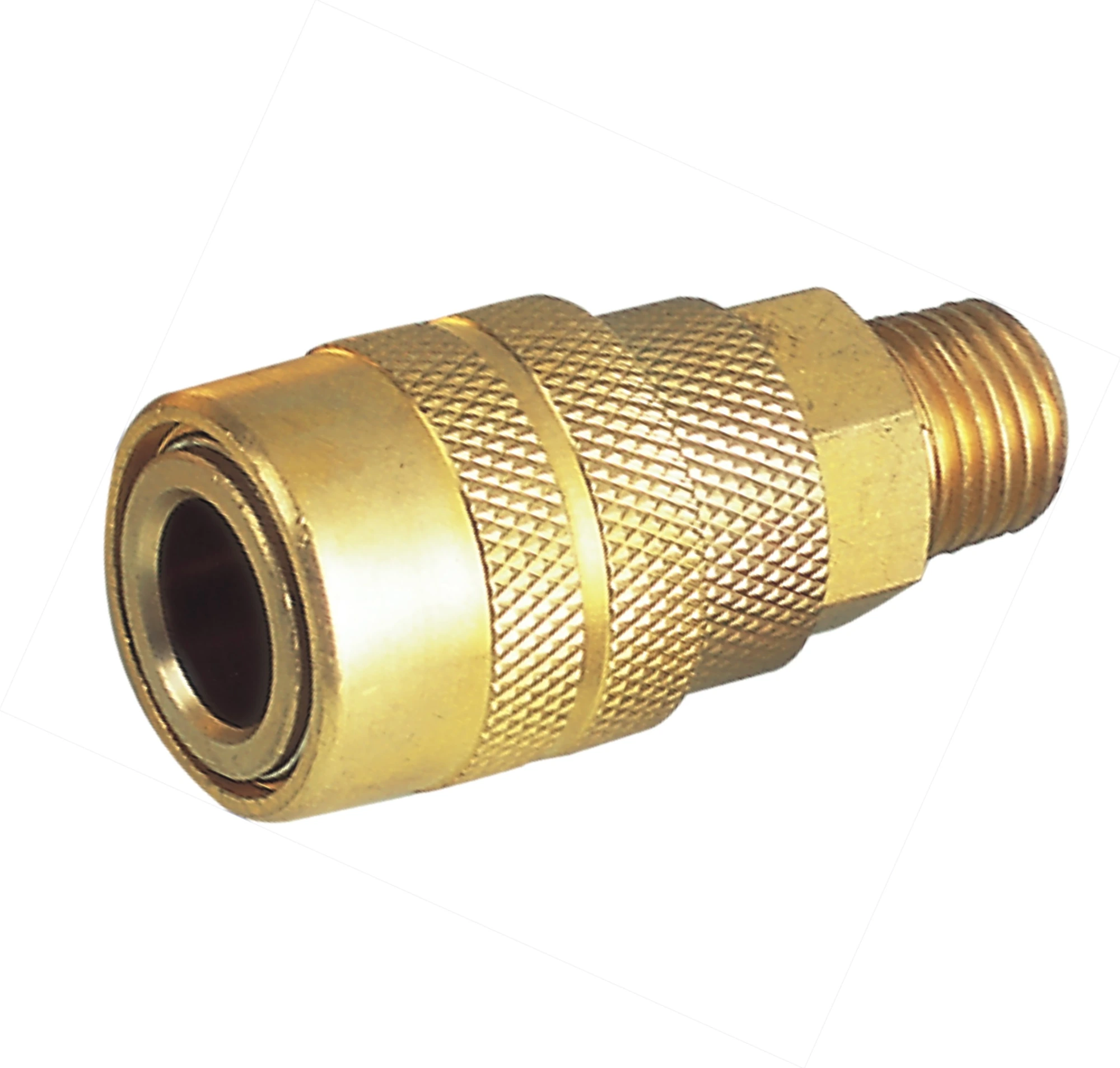
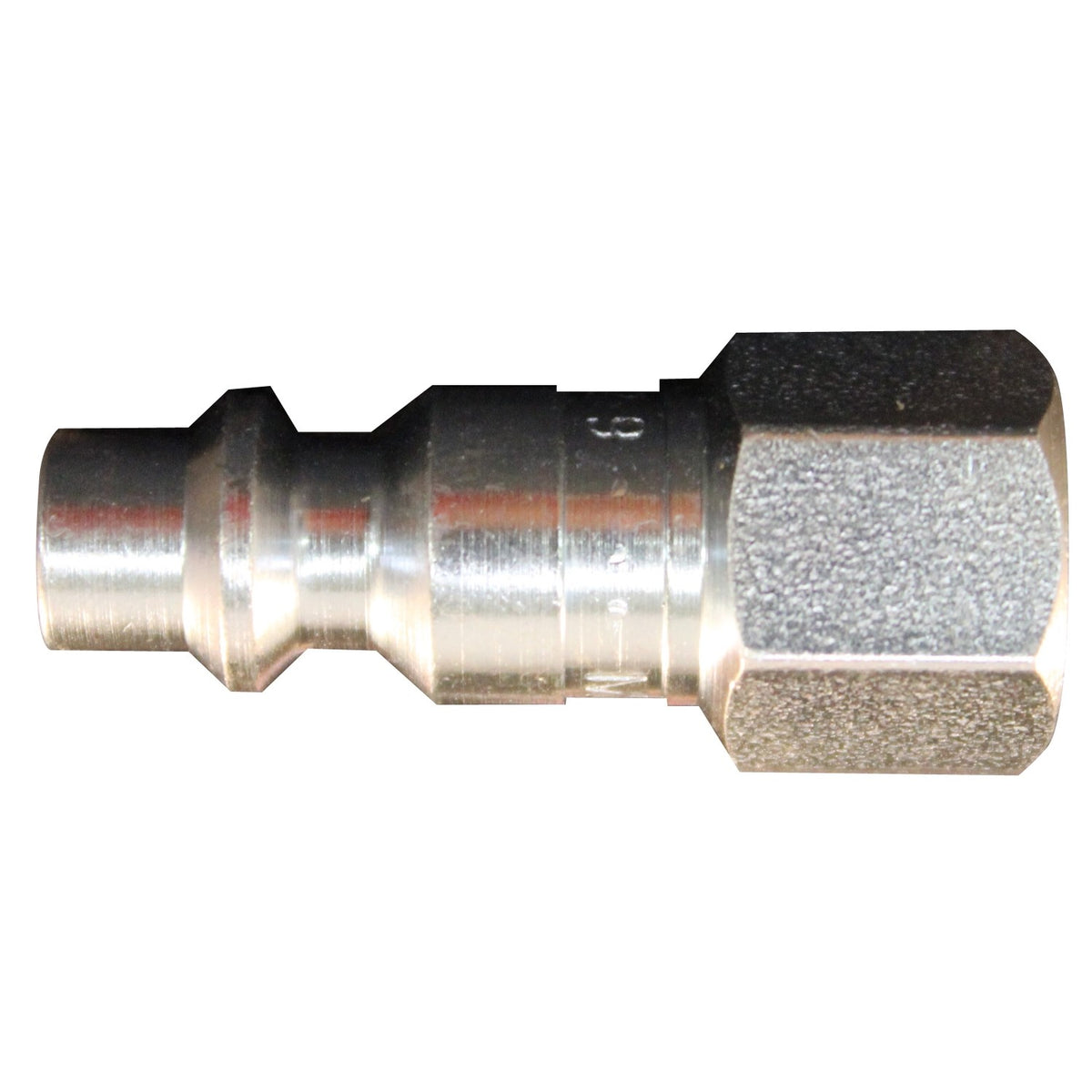
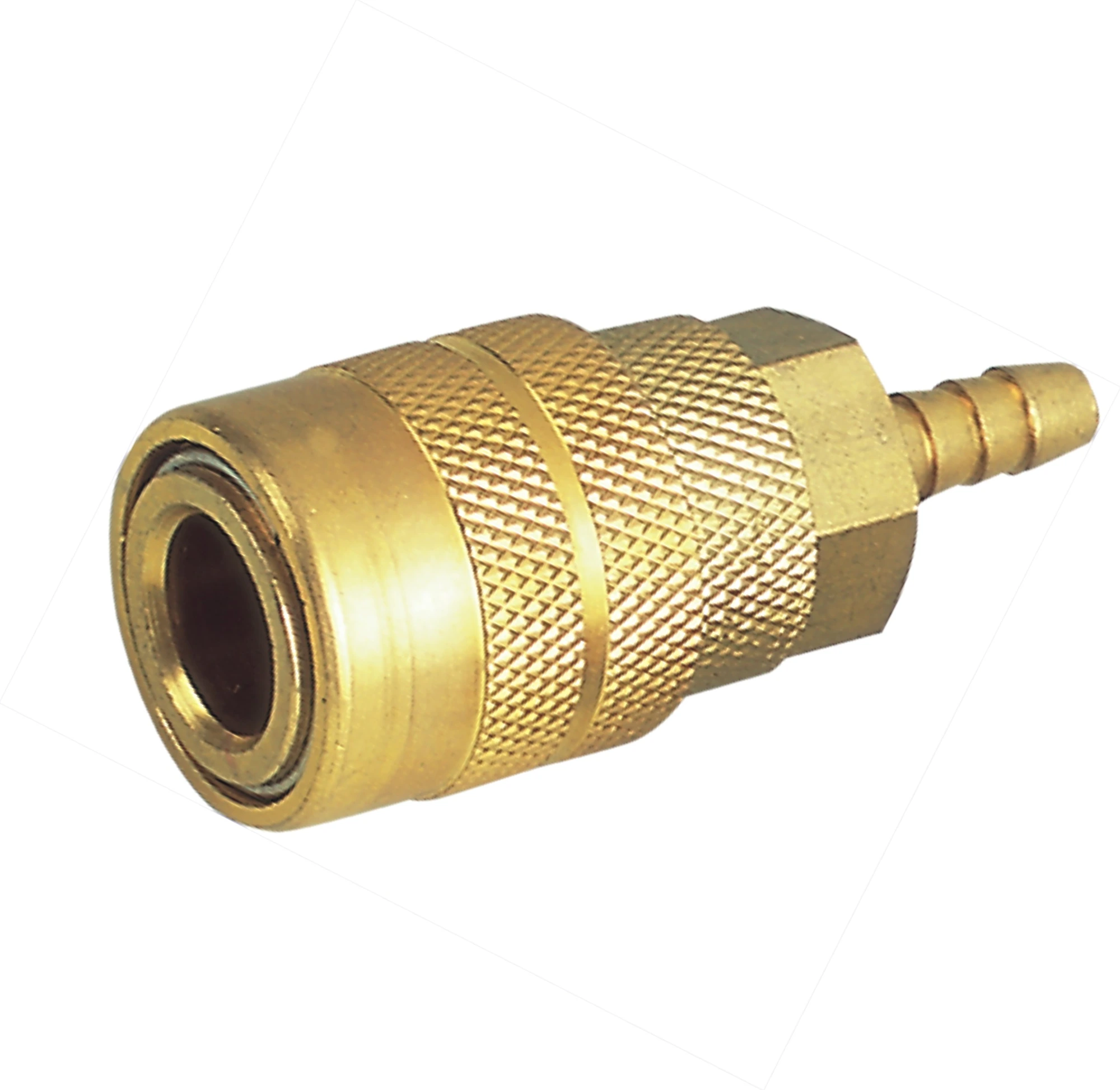
Industrial interchange catalogs list several end connections within one body-size group. A 1/4-inch coupling body can be offered with a 1/4-inch threaded end or a larger threaded end. The larger mounting thread does not automatically make the detachable interface a larger body size.
Use three separate fields in the purchase record. First identify the industrial profile. Then record the coupling body class. Finally specify the end connection, including the complete thread designation and gender, or the intended hose termination. Do this for the socket and plug individually.
| Purchase field | What to record | What it prevents |
|---|---|---|
| Interface | Declared industrial profile and drawing reference | Confusing a series letter with a common standard |
| Body size | The supplier’s coupling body-size designation | Selecting a different detachable interface |
| End connection | Thread standard, nominal size and gender, or hose connection | Ordering the correct profile with the wrong mounting end |
| Mating part | Exact socket and plug references | Assuming a family name approves every combination |
The air fitting size guide explains these dimensions in more detail. Keep the same field names in the quotation, sample approval and repeat-order record.
Choose the connection and release behavior deliberately
The industrial interchange family includes manual-sleeve and push-to-connect couplers. In a manual design, connection involves operating the sleeve as instructed. A push-to-connect version is designed to engage through its specified insertion action. The accepted plug profile can remain the same while the operator’s procedure changes.
That distinction matters when replacing couplers on a production station or supplying a workshop kit. A maintenance team may expect the old connection sequence. Include the release method and any sleeve-lock or exhaust feature in the specification so a replacement does not introduce an unexplained change in use.
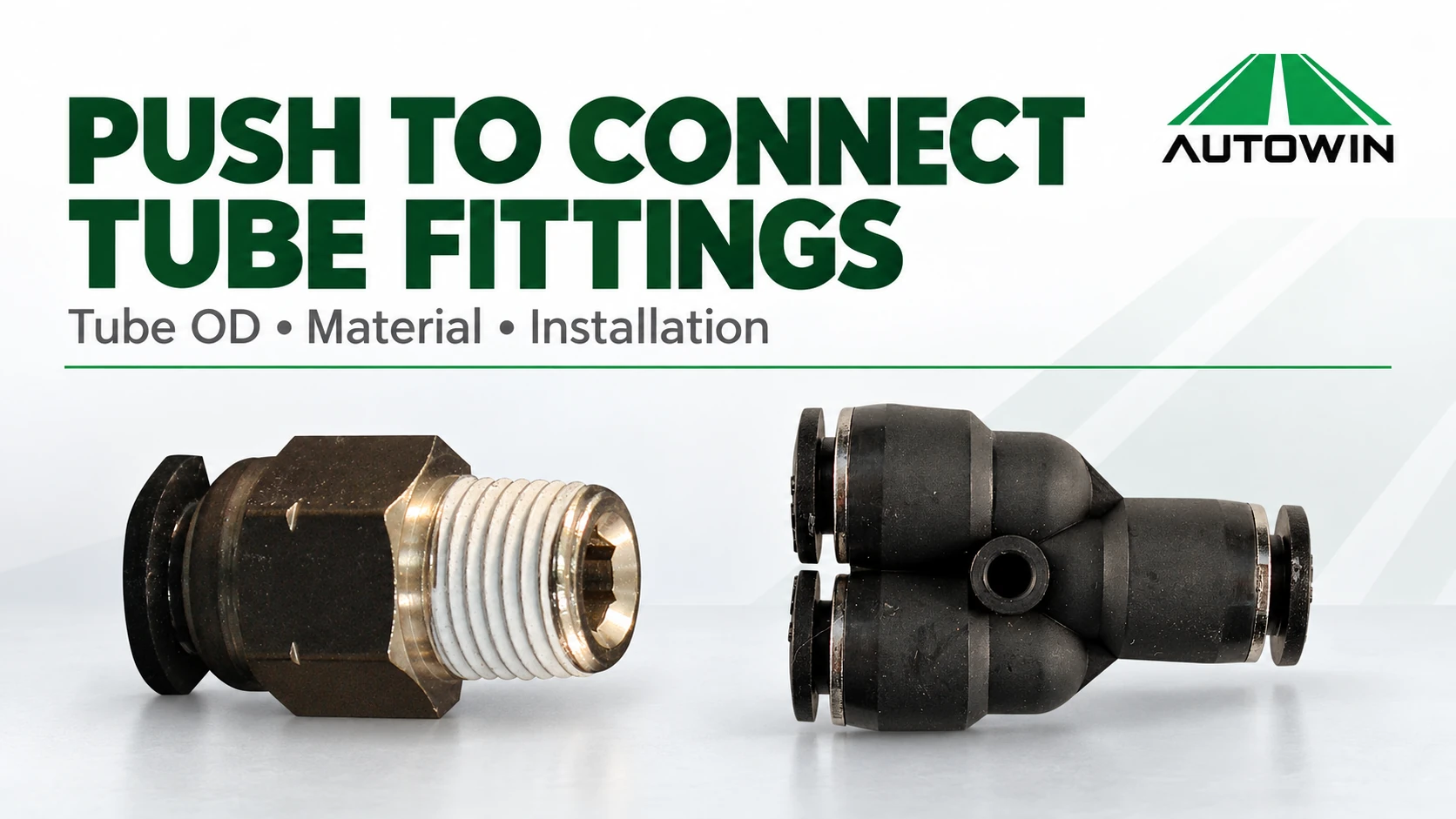
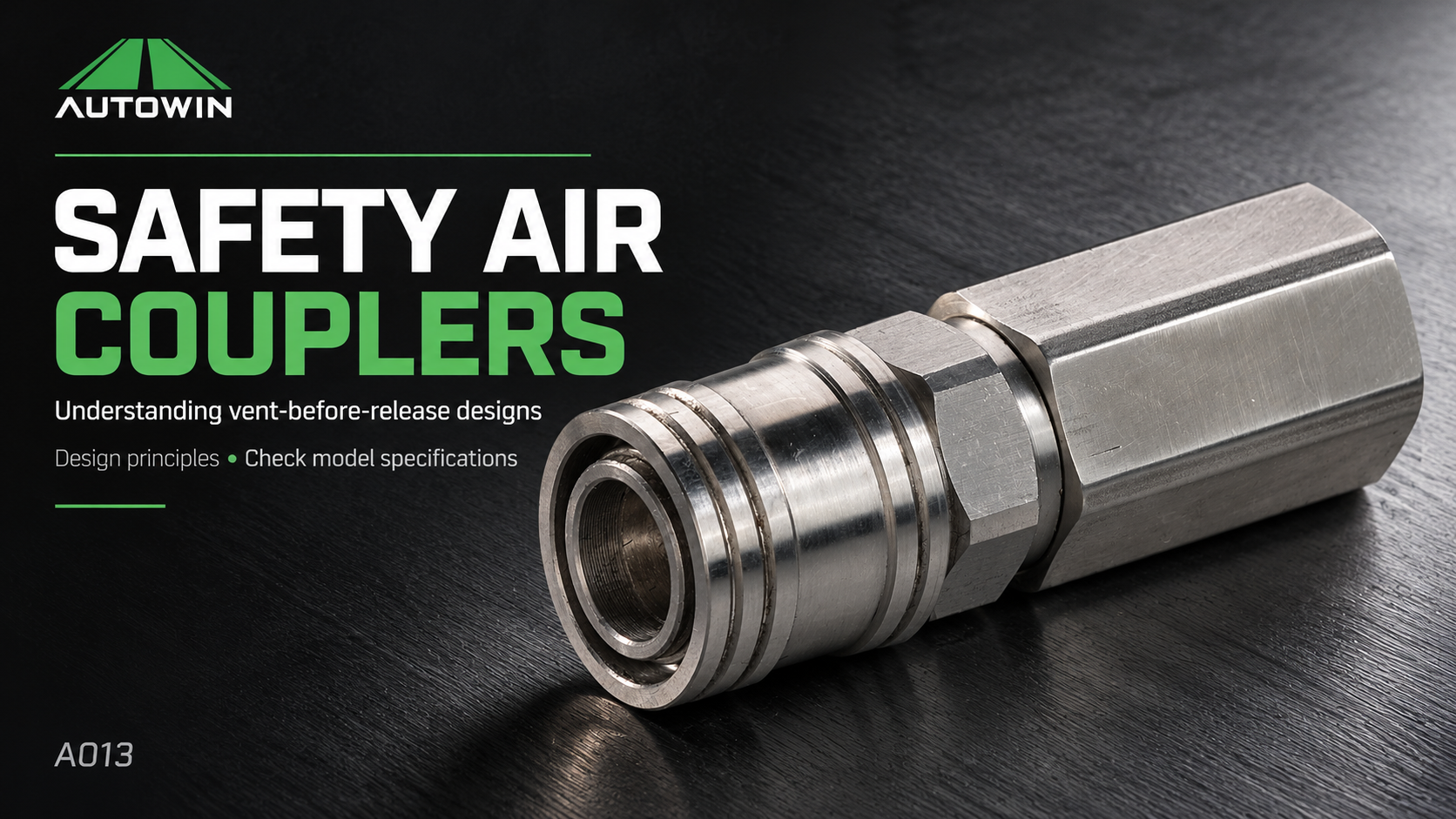
Push-to-connect describes an engagement mechanism; it does not, by itself, state whether downstream air is vented before separation. If controlled venting is required, request that function explicitly and read the selected model’s instructions. Do not infer it from sleeve shape or from the industrial profile.
Read ratings for the selected construction
Two industrial air couplers with a similar exterior can have different materials, seals, valves and ratings. Published industrial coupling tables distinguish body sizes and coupler-and-plug material combinations. A pressure value taken from one row should not be applied to a different construction.
Compare working pressure, permitted temperature and the intended medium for the proposed pair. Keep burst pressure separate from working pressure. When flow matters, request a value or curve with inlet pressure, pressure drop and reference conditions identified. A body-size label cannot replace that information.
Use the air coupler data sheet checklist to compare quotations. It also helps distinguish the housing material from the valve, sleeve and seal materials that may affect the application.
For high-flow alternatives, compare the interface and test conditions using the high-flow air coupling guide.
Approve a replacement without relying on a trial fit
Begin with the installed socket and plug references, not a loose plug alone. If identification is incomplete, obtain the supplier drawing and record the profile features needed to resolve it. A worn sample should be identified as worn so its dimensions are not treated as a manufacturing specification.
Have the supplier confirm the intended mating combination. Then agree how samples will be checked for dimensions, engagement, sealing and release behavior under an appropriate controlled procedure. Document the result against the actual part numbers and revisions; a successful check of one pair does not approve unrelated models.
For systems containing more than one profile, consult the industrial and automotive interface comparison. A shared mounting thread does not resolve a mismatch at the detachable connection.
Build an industrial fitting range that is easy to reorder
For wholesale air fittings, organize stock by profile and body size before dividing it by male thread, female thread or hose connection. Show those attributes on the carton and item description. Color can assist identification, but retain a written profile name and part number.
An OEM air coupler enquiry should include the existing mating component, operating conditions, required release behavior and quantity by connection. Ask the pneumatic coupling manufacturer to identify the offered construction and any proposed substitutions. This makes two quotations comparable without assuming that identical style names mean identical products.
Review AUTOWIN’s industrial air couplers and plugs, then send the mating reference and purchase requirements for the proposed configuration to be reviewed.
Common M-style purchasing questions
Does a larger thread mean a larger industrial plug profile
No. Thread size and coupling body size are separate catalog attributes. Confirm both rather than interpreting one from the other.
Are all products marked M interchangeable
No. A letter only has meaning within its supplier’s naming system. Use the full interface description, body size and documented mating combination.
Can a push-to-connect coupler replace a manual model
It may be an option if the interface and operating requirements are satisfied. The change also requires review of connection, release and any venting behavior.