 English
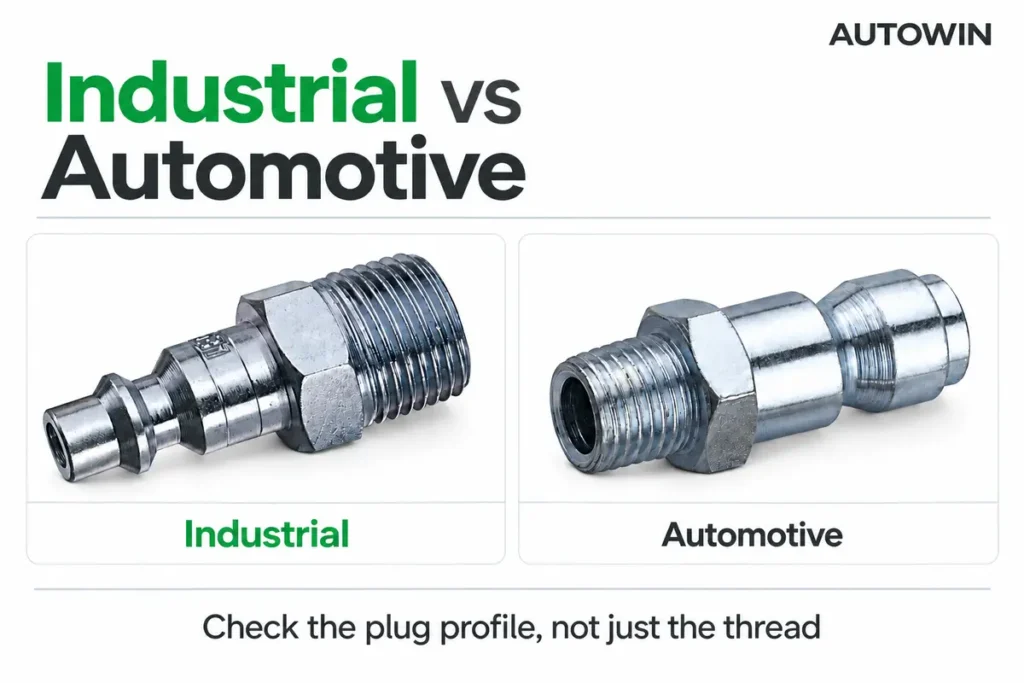
The main difference between industrial and automotive air fittings is the quick-coupling interface they are designed to use. The plug profile, retaining geometry and matching socket determine compatibility. The words industrial and automotive do not, by themselves, rank pressure capacity, durability or suitability for a particular tool.
Choose the profile already specified for the installation, or evaluate a complete change to a documented alternative. Do not mix the two families simply because both parts have 1/4-inch threads. The thread connects the part to the equipment; the quick-coupling profile connects the plug to the socket.
What the two names mean in coupling catalogs
Industrial interchange and automotive interchange are established catalog descriptions for different pneumatic plug families. Parker’s interchange guide lists standard industrial interchange separately from Tru-Flate automotive interchange. It associates Parker’s 20 and 30 series with the industrial family and its 10 series with the Tru-Flate family. These are manufacturer-specific references, not generic part numbers. [1]
Milton’s product terminology identifies Industrial as M-Style and Automotive as T-Style. [3] Use those names in the context of Milton’s system. A series letter from another manufacturer should not be treated as an automatic equivalent.
| Comparison point | Industrial interchange | Automotive interchange |
|---|---|---|
| Interface family | The specified industrial profile and body size | The specified automotive or Tru-Flate profile and body size |
| Manufacturer terminology example | Milton M-Style | Milton T-Style |
| Parker guide example | 20-series manual and 30-series push-to-connect couplers | 10-series manual couplers |
| Threaded end | Must be selected separately | Must be selected separately |
| Performance and materials | Depend on the exact parts and conditions | Depend on the exact parts and conditions |
The table explains terminology, not a blanket cross-brand interchange approval. Before selecting a part, confirm the exact body size, mating reference and applicable product documentation. The air hose fittings selection guide connects that compatibility check to the rest of the assembly.
Compare the complete plug nose and retaining features
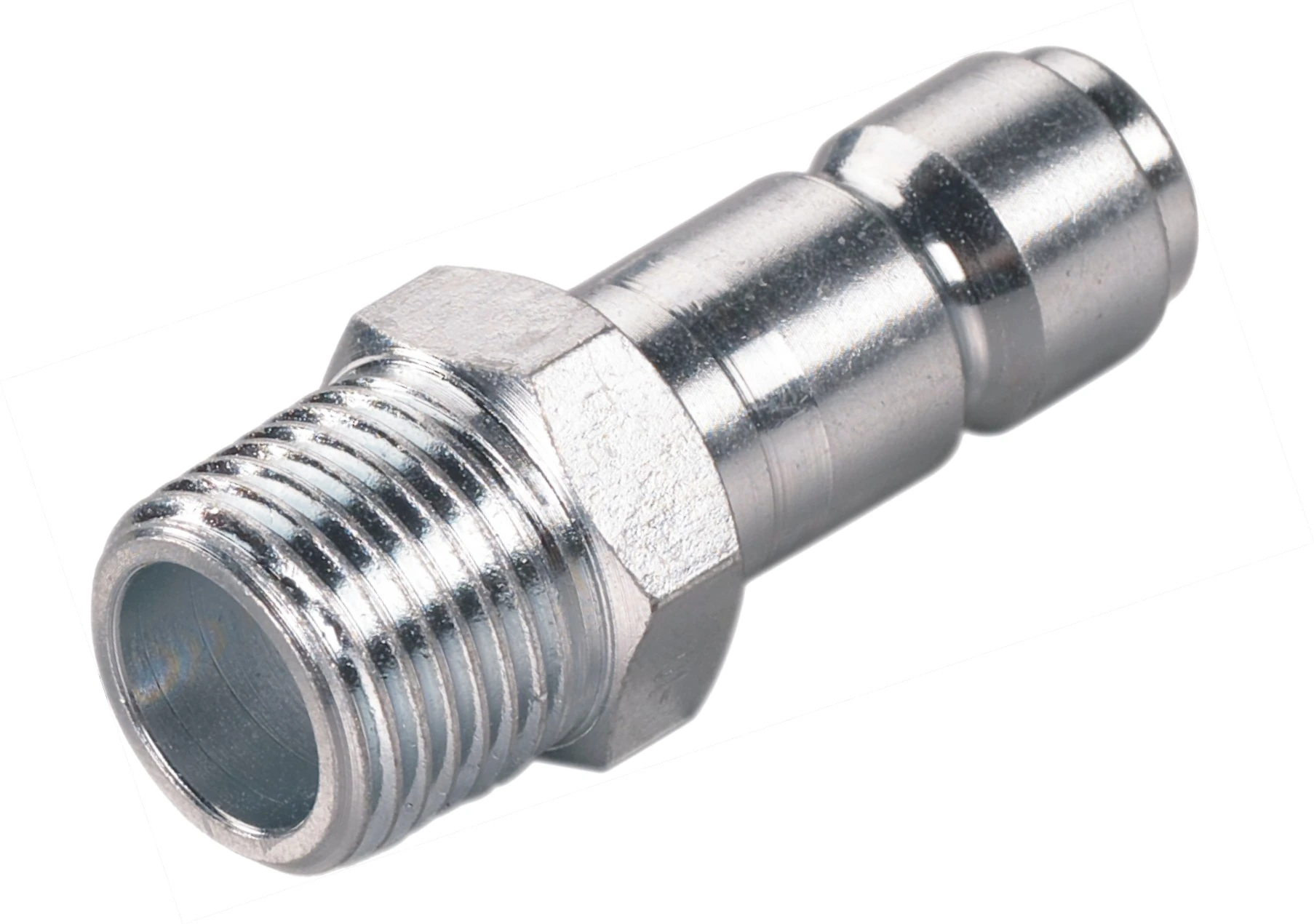
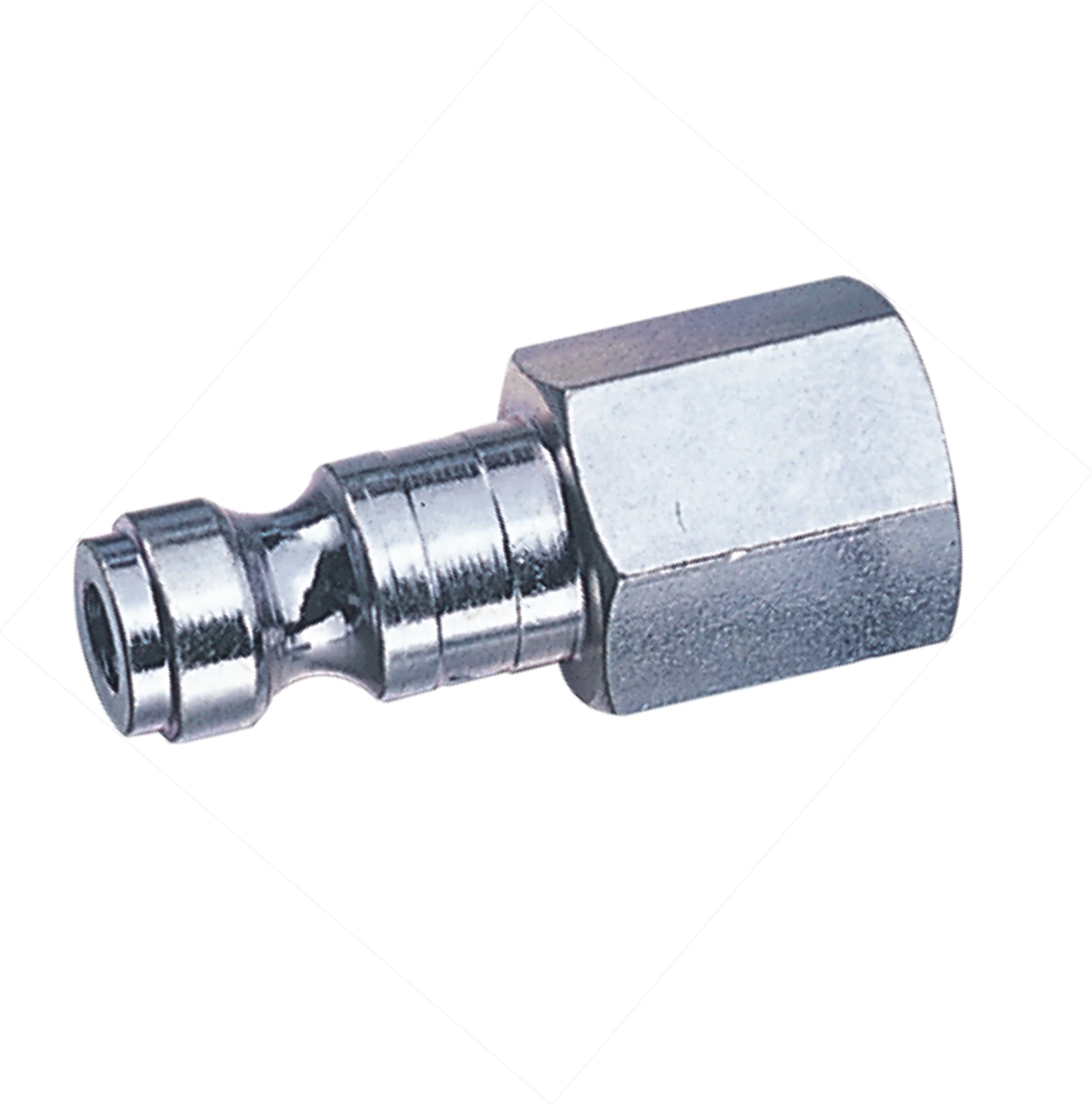
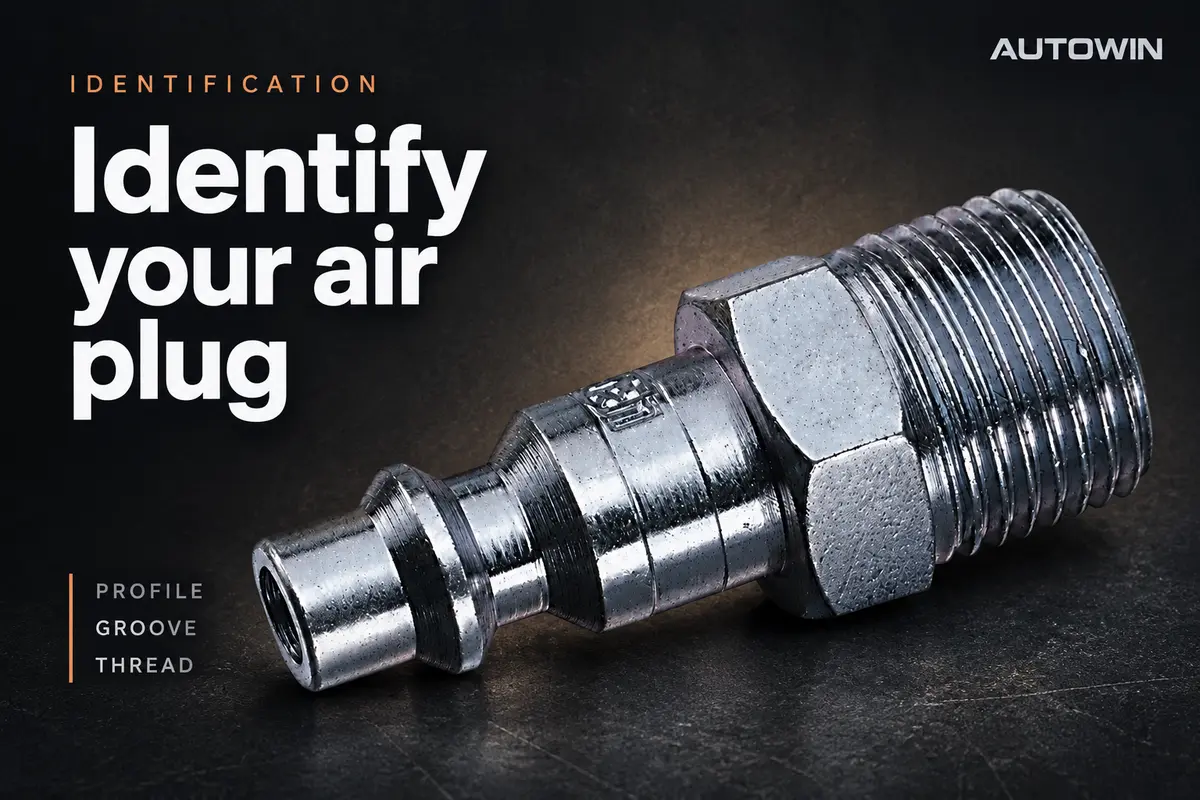
The visible differences lie in the shape of the inserted end: the leading nose, shoulder, sealing region and retaining feature. These features position the plug inside the socket. The socket must retain the plug and establish the intended seal and valve operation.
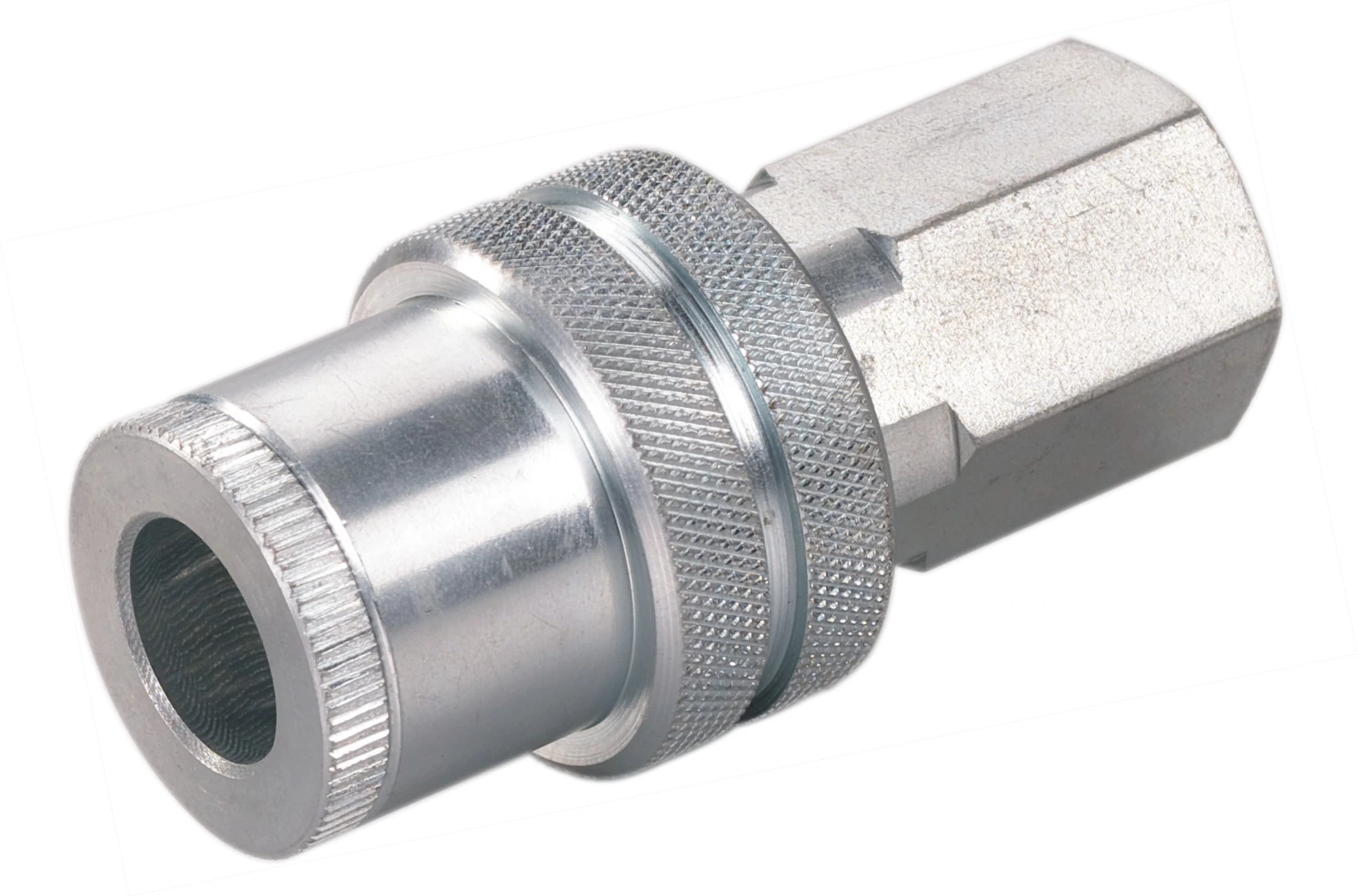
Compare an industrial vs automotive coupler by its documented plug interface, not just the socket’s outer shell. Manufacturers can change sleeve shape, grip treatment or finish without making the external appearance an accurate profile identifier.
Use the profile drawing at the correct body size. A single “long nose” or “short nose” description is too weak to approve a match. Record the dimensions identified by the manufacturer, and account for wear or damage on an old sample. The unknown air plug identification procedure shows which evidence to collect.
Do not force a plug that will not enter or lock. If a questionable combination appears to engage, isolate it for review. Dixon’s selection guidance notes that some non-interchangeable components can connect; apparent engagement is therefore not a safe compatibility test. [2]
Keep the thread and body size out of the profile decision
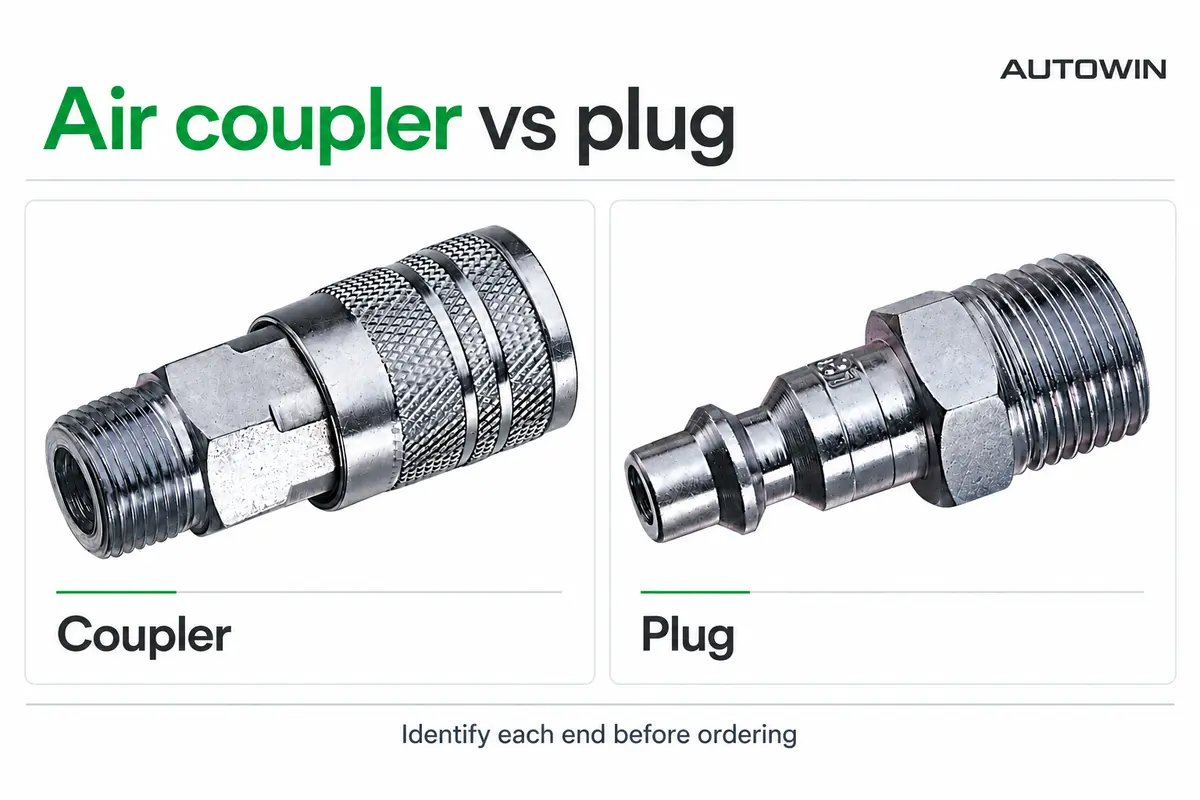
An industrial plug and an automotive plug can both be sold with a 1/4-inch male NPT end. That shared thread may allow each to attach to the same suitable tool port. It does not make their detachable ends compatible with the same single-profile socket.
Body size adds another distinction. A profile family may contain more than one coupling size. Identify the body class within the profile before interpreting the thread or hose connection. The air fitting size guide separates these dimensions and provides a recording format.
When replacing a tool-side plug, inspect the hose-side socket specification as well as the tool inlet. This prevents a correct threaded connection at the tool from concealing an incorrect quick-coupling interface at the hose.
Choose from the application requirements
The existing installed base often determines which profile is practical. Count the sockets, hose ends and tool plugs that must remain compatible. A maintenance purchase can preserve the approved system; a conversion project can evaluate alternatives across the complete connection.
Then compare operating pressure, flow at a stated pressure drop, temperature limits, materials and disconnection behavior. A workshop doing automotive repair can use industrial-profile fittings if the selected products satisfy its requirements. A product named automotive is not automatically approved for vehicle braking or another specialized system.
For performance, compare actual data for the selected pair. Dixon’s catalog presents separate pressure, flow and material information for its industrial and automotive series. [2] Those model-specific tables are more useful than the assumption that one profile name always means higher flow or greater strength.
If the current application loses pressure during operation, review the hose and upstream components before changing profiles. A new plug family will not necessarily correct an undersized hose, unsuitable regulator or another restriction in the air path.
Treat universal couplers as a specified option
A universal coupler can be useful when a workspace contains more than one approved plug family. Its documentation must list the accepted profiles and body sizes. The supported combinations, operating limits and release method belong in the purchasing specification.
“Universal” does not mean every pneumatic plug on the market. Nor does it prove equal flow performance with every accepted plug. If a universal socket is being considered for a mixed fleet, request the information for the actual combinations that will be used.
For routine stock control, one documented system may still be easier to manage than several profiles that happen to connect to a common socket. The right choice depends on the installed equipment and the need to share hoses and tools.
Plan a controlled workshop conversion
- Inventory the current interfaces. Record the profile and body size at each outlet, hose assembly and tool. Separate unknown or damaged parts from the approved stock.
- Define the target system. Select the exact socket and plug families, end connections, operating conditions and required release behavior.
- Review a complete sample connection. Confirm fit and function under an approved procedure before buying the full quantity. Include the actual hose and tool-end configurations.
- Control the changeover. Replace or segregate affected parts so old and new profiles are not mixed unintentionally. Provide the approved product description to maintenance and purchasing.
- Update repeat-order records. Retain part numbers, drawings, accepted substitutions and kit contents. Record a drawing or specification revision when the configuration changes.
Color coding can help after the system has been defined. Milton’s ColorFit literature associates colors with its named styles, but that is a product-system convention. [4] Keep text identification and part numbers available so color is not the only control.
Specify the profile in an OEM or wholesale enquiry
An OEM air coupler enquiry should name the required profile and body class, identify both end connections, and include the mating-part reference. Ask the pneumatic coupling manufacturer to confirm the intended pair and the conditions supporting its rating.
For wholesale kits, specify the profile on the outer packaging and on the contents list. Avoid a description such as “industrial automotive air fittings” unless it clearly explains what each item is and which combinations are supported.
Compare AUTOWIN’s industrial air fittings and automotive air fittings as separate product families. Send the required mating reference, service conditions and quantities so the relevant configuration can be reviewed.
Questions about industrial and automotive profiles
Can an industrial plug fit an automotive coupler
Do not assume that it can. A single-profile coupler is intended for its listed mating interface. A multi-profile coupler is acceptable only for the combinations explicitly supported by its manufacturer.
Does comparing automotive vs industrial air fittings tell me which is stronger
No. Compare the pressure rating, materials and validation for the exact pair. The profile name alone does not define strength or service life.
Do I have to change the threads when changing profiles
Not necessarily. A replacement family may offer the required mounting threads. Verify the full part specification and assembly method rather than assuming that the available options are identical.
Technical references
- Parker Pneumatic Interchange Guide. Industrial and Tru-Flate profile families. PDF pages 1–2.
- Dixon Quick Coupling Catalog 2026. Interchange guidance and separate industrial and automotive specifications. PDF pages 15, 22–24, 32–34.
- Milton 5 In ONE product documentation. Industrial M-Style and automotive T-Style terminology. Manufacturer terminology; accessed 14 October 2026.
- Milton ColorFit Couplers. ColorFit style and color identification. PDF pages 2.