 English
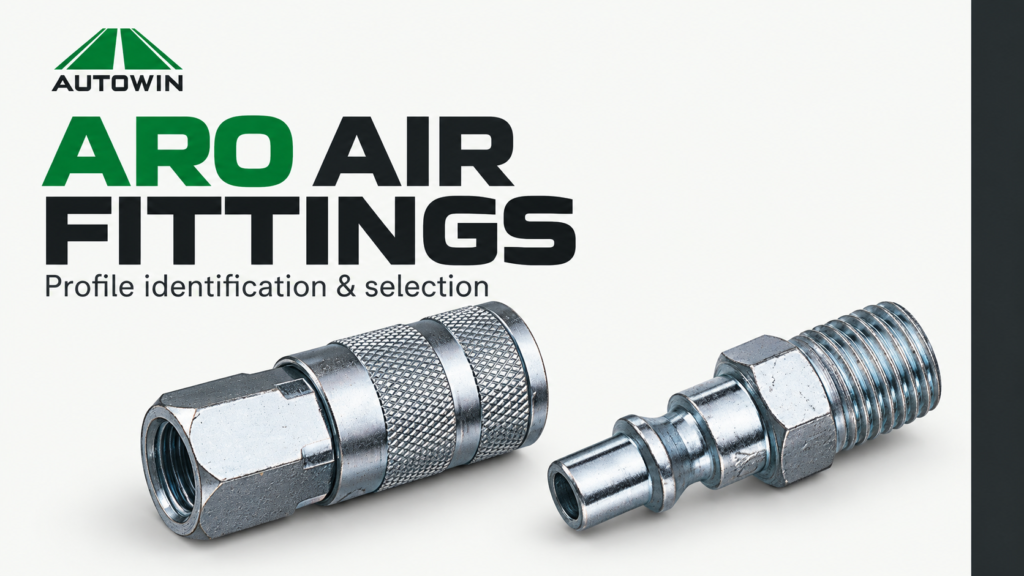
ARO air fittings need a more precise description than “ARO type.” In the interchange catalog terminology discussed here, ARO 210 identifies the 1/4-inch body family and ARO 310 identifies the 3/8-inch body family. These are coupling body designations, not instructions to select a mounting thread of the same size.
Keeping that distinction visible is especially useful when buying replacements for an established installation. A socket with a 3/8-inch threaded inlet can still belong to a 1/4-inch body family. Ordering from the inlet size alone can send the buyer to the wrong profile group.
Start with 210 or 310 and then record the body size
Published ARO interchange tables distinguish the 210 and 310 families and show their corresponding body sizes. They also list particular mating series. Treat those entries as a scoped interchange reference: a named family and size with specified counterparts, rather than a promise about every product using the word ARO.
| Interface designation | Body class in the referenced interchange catalog | Separate purchasing checks |
|---|---|---|
| ARO 210 | 1/4-inch body | Mounting thread or hose connection, mechanism and ratings |
| ARO 310 | 3/8-inch body | Mounting thread or hose connection, mechanism and ratings |
This table explains the interface terminology. It is not an AUTOWIN model cross-reference or a statement that every body size is available with every connection. Confirm the offered part against the supplier’s own drawing and data sheet.
For the broader selection sequence, use the air hose fittings guide. The ARO-specific task is to preserve the family designation while selecting the remaining attributes.
A series number is not portable between manufacturers
A supplier’s internal series number may resemble an interchange designation without meaning the same thing. For example, “310” on its own is incomplete: it could be part of a manufacturer’s model name rather than a declaration of ARO 310 compatibility.
Letters require the same care. An A-style description should be checked against that supplier’s profile definition. An M-series label in another catalog may identify an ARO product, even though M-style is commonly associated with industrial interchange elsewhere. The full catalog context resolves the ambiguity.
When a customer supplies only a short description such as “A coupler,” request the brand, full part number, body size and a clear plug-profile photograph. Avoid converting an incomplete request into a firm cross-reference before those details are available.
Use the inserted profile to resolve an unknown part
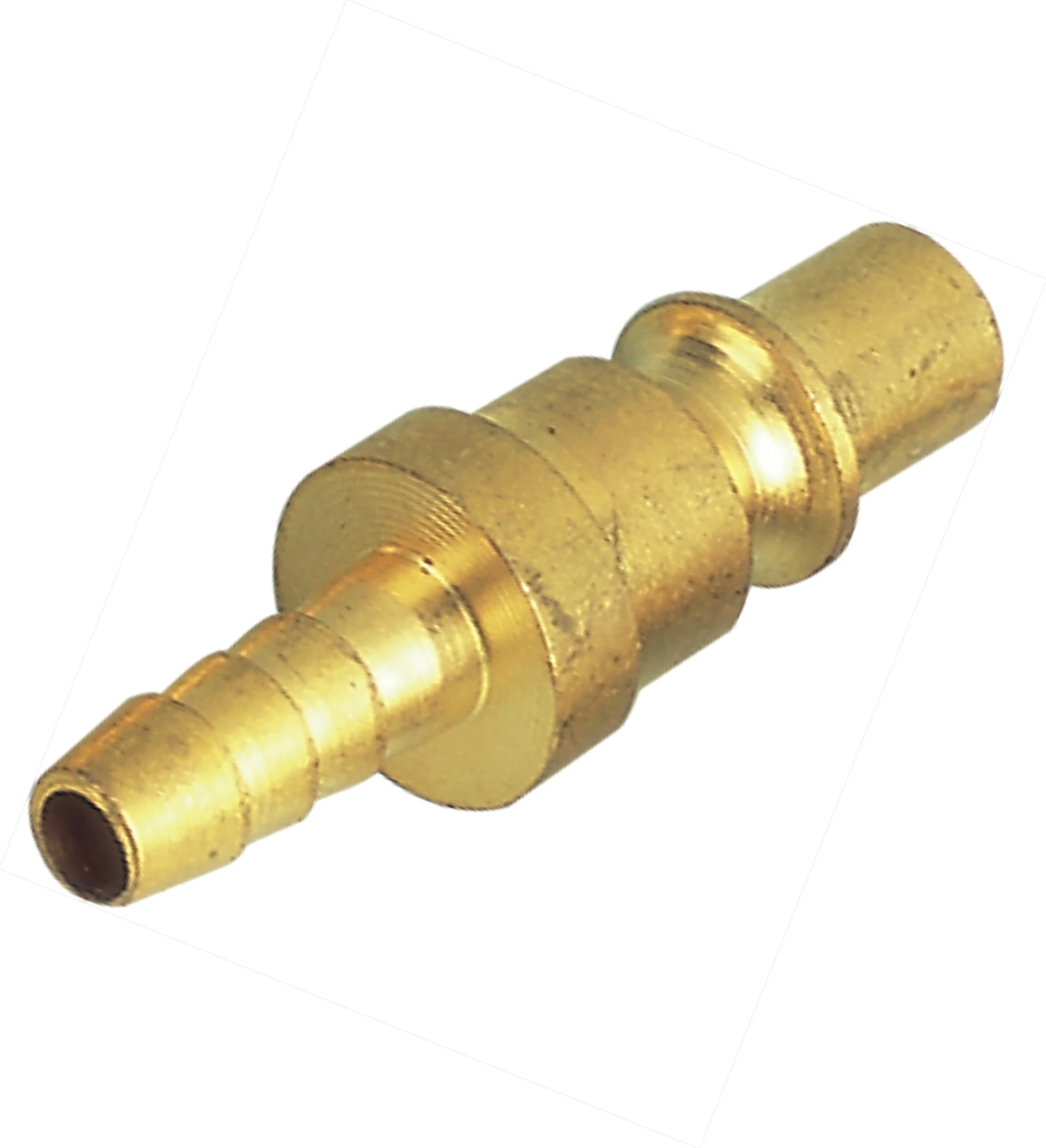
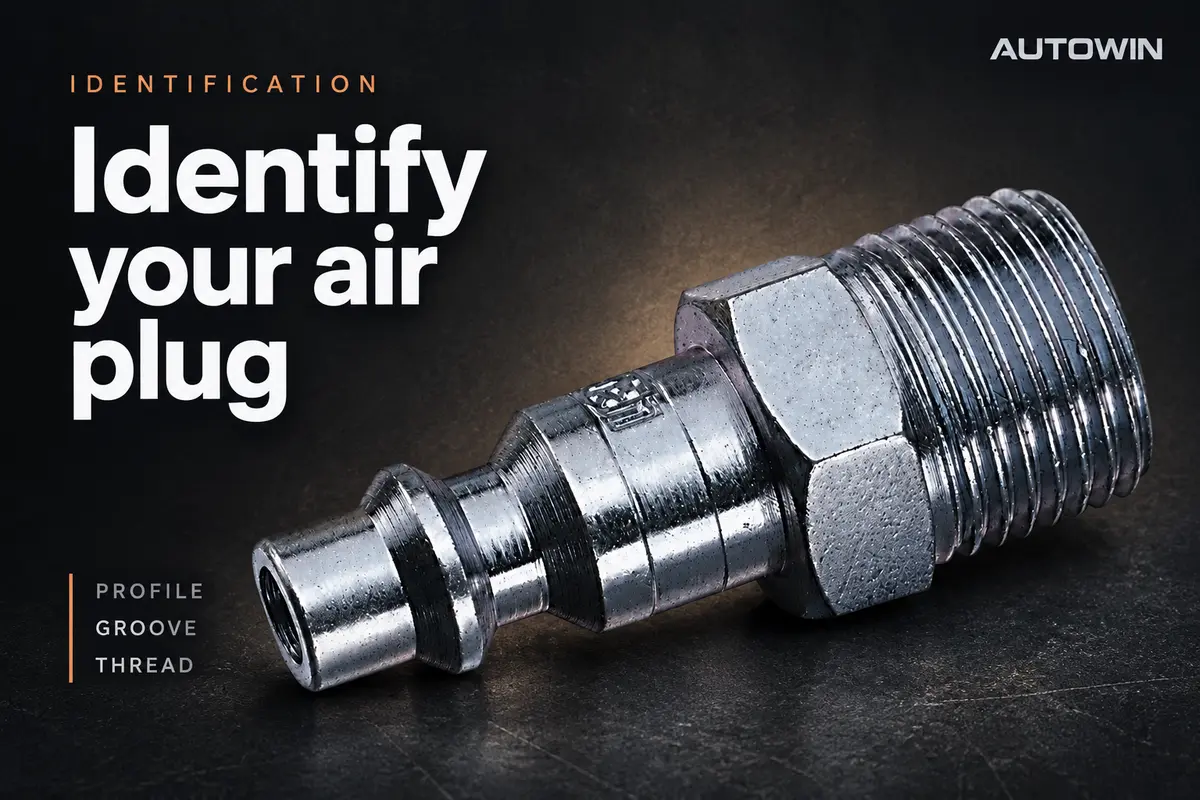
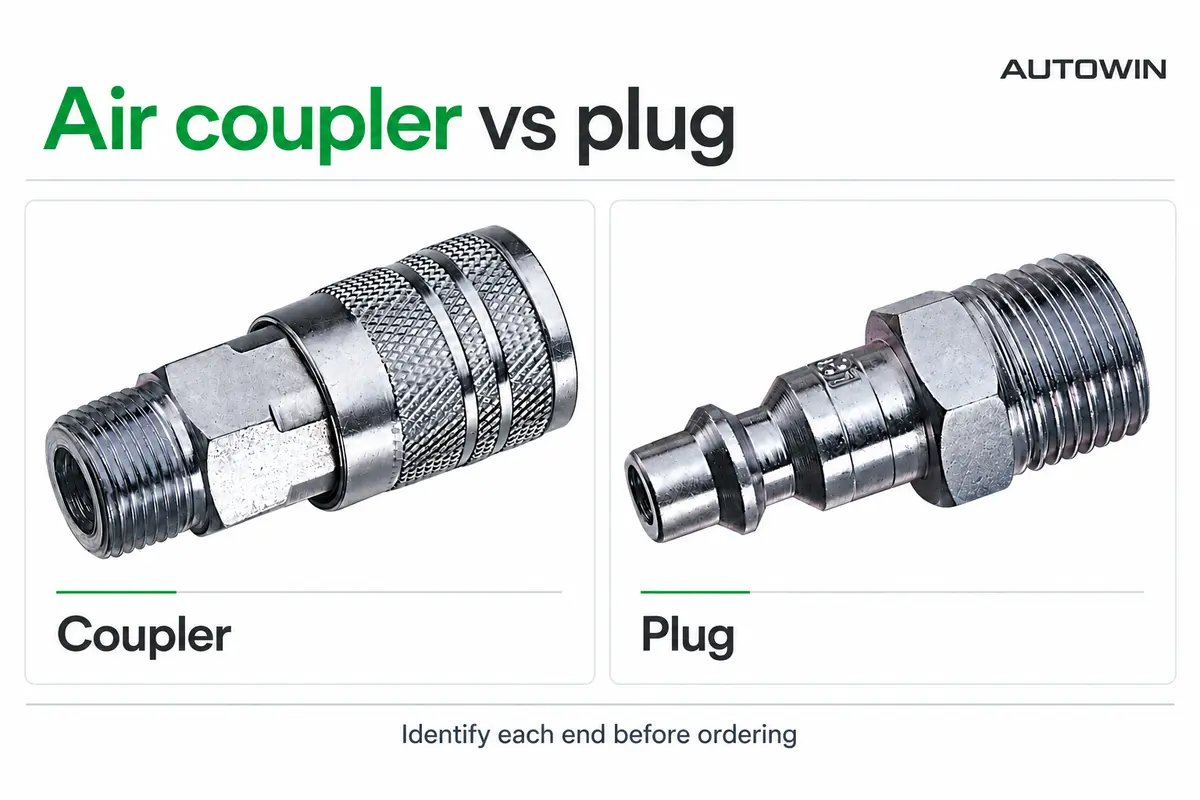
Locate the nose, retaining groove and the shoulder features on the portion that enters the socket. Compare their positions and dimensions with the intended profile drawing. The hexagon and threaded tail help identify the mounting end but do not define the quick-coupling interface.
Collect photographs from the side and the end, with the part clean enough for its geometry and markings to be visible. Preserve any readable identification from both the socket and plug. If the sample has wear or damage, report it alongside the measurements.
The unknown air plug identification procedure provides a useful evidence checklist. For an ARO enquiry, add an explicit field for “210 or 310 confirmed” so a missing interface designation cannot disappear inside a general product description.
Read the body and connection columns independently
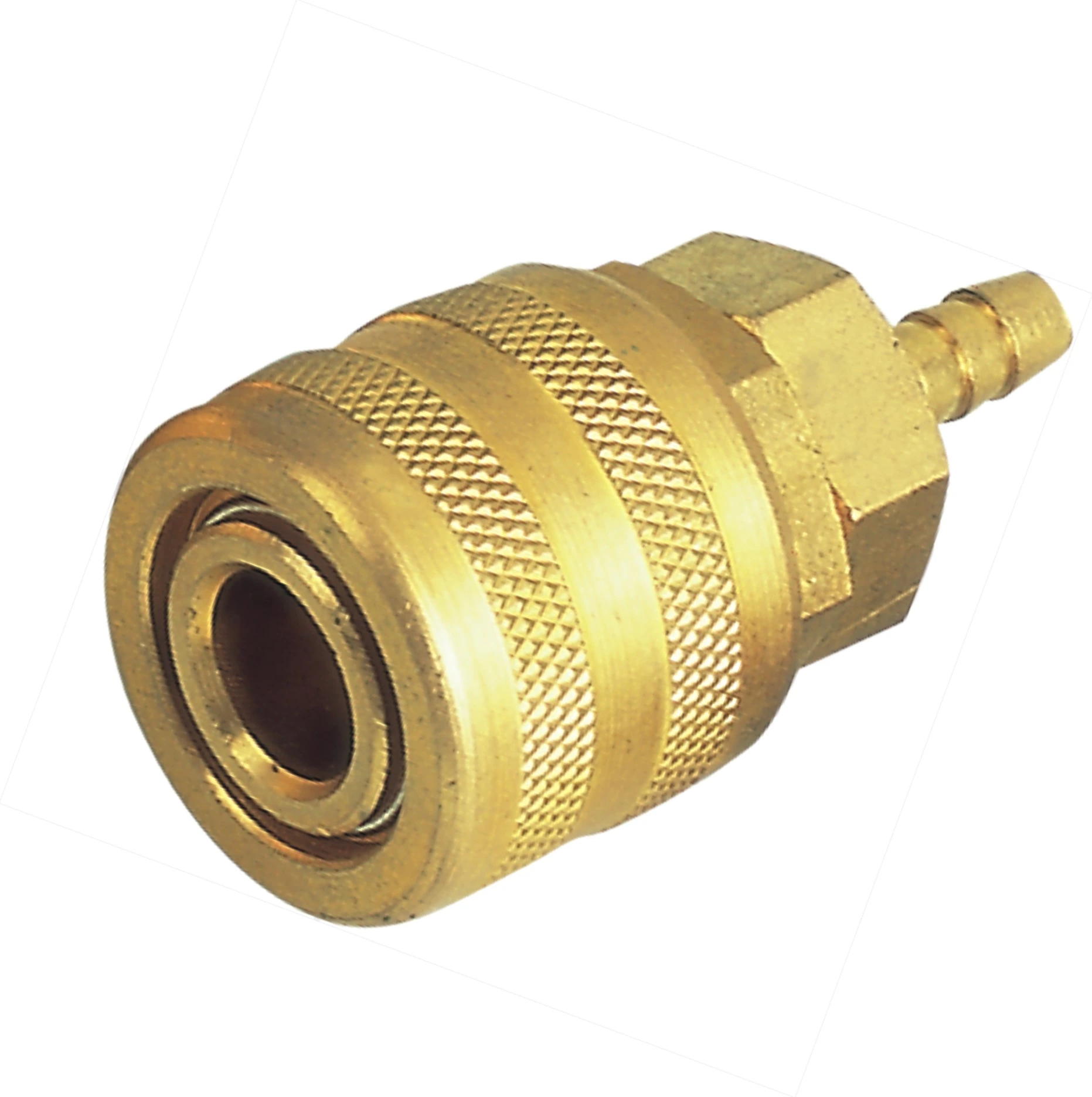
An ARO coupler fitting may be offered with a female thread, male thread or hose connection. Published tables show more than one end-connection size within the same body family. This lets the mounting end suit the installation while retaining the intended detachable interface.
For threaded parts, record the complete designation exactly as specified. Do not shorten NPT, NPTF or a BSP designation to “pipe thread” in the purchase order. For hose connections, identify the intended hose size and termination construction rather than describing the part only as a barb.
A useful enquiry description separates the fields: ARO interface designation; coupling body size; socket or plug; end connection; exact mating reference. Then attach the operating requirements. The guide to body, thread and hose dimensions explains why those fields should remain separate.
Manual and automatic versions need their own review
ARO interchange ranges can contain manual and automatic coupling constructions. Their operating action, locking mechanism, materials and available sizes may differ. Do not infer that a manual option exists for every size listed in an automatic range.
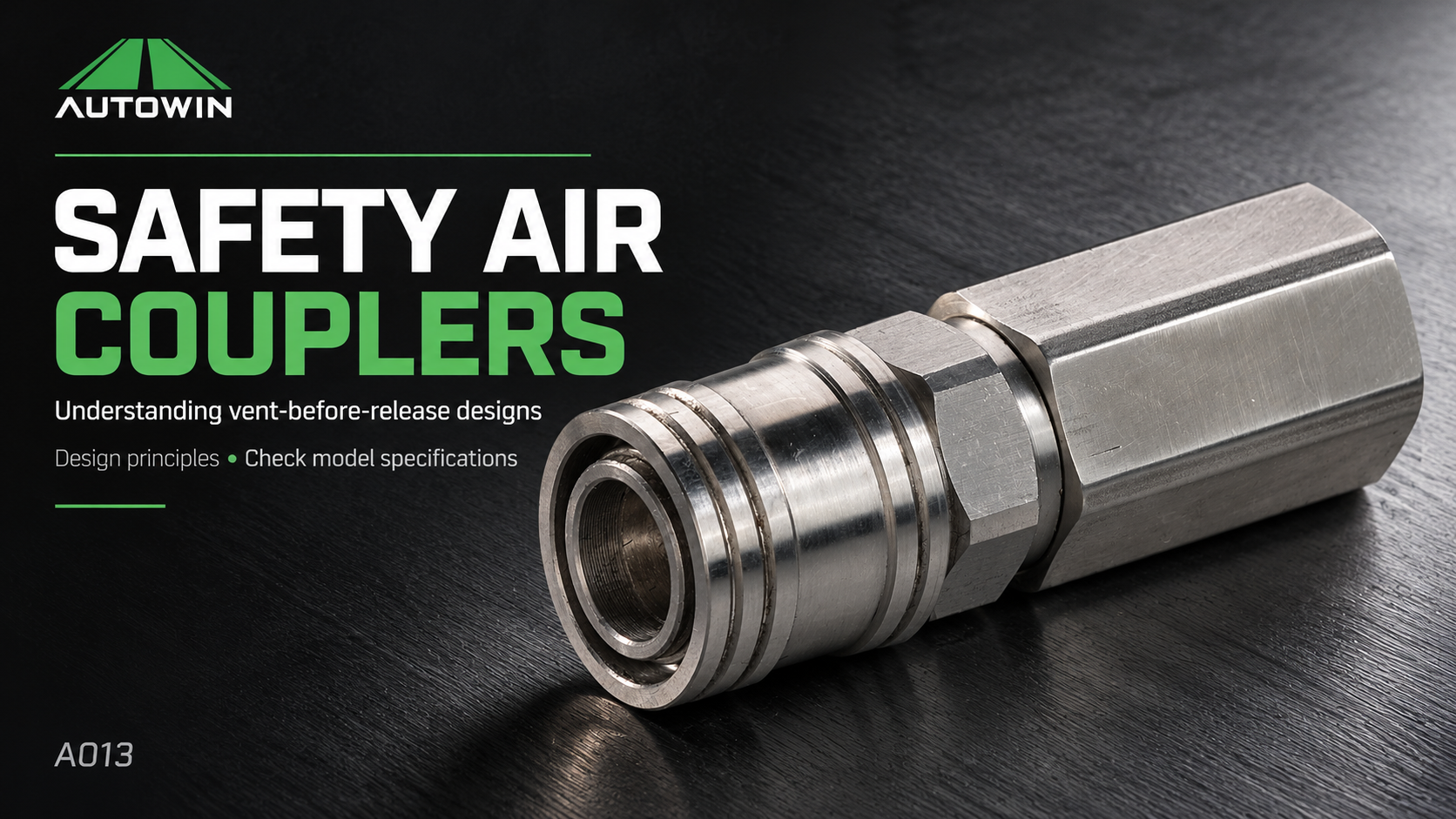
Read the proposed model’s connection and release instructions, then compare them with the current installation. Where venting before release is required, request a product specifically documented for that behavior. The family name and an automatic connection mechanism do not establish a venting function.
Pressure and flow data also belong to the selected construction. Compare a stated working-pressure limit and a flow value with its test conditions. A published result for one ARO coupler-and-plug combination cannot be transferred to a different supplier’s product without supporting data.
If the proposed socket accepts several profiles, use the universal air coupler compatibility checklist to record its documented scope.
Turn the enquiry into a controlled replacement record
For an OEM or wholesale order, retain the original component reference, offered replacement reference and the evidence connecting them. Record the drawing revision, exact socket-and-plug combination, operating conditions and agreed acceptance checks.
If several thread variants use the same approved profile, list them as separate order lines. This gives purchasing a clear quantity for each connection and prevents a correctly identified interface from being delivered with the wrong end fitting.
A pneumatic coupling manufacturer should be asked to resolve uncertain fields before sample approval. That is more useful than requesting a broad “equivalent ARO coupler” with no counterpart identified. It also gives a distributor a defensible description for its own catalog.
Browse AUTOWIN’s ARO-type air couplers and plugs. To discuss wholesale quantities or an OEM application, send the interface designation, mating part and required connections.
Questions about ARO interface selection
Does a 3/8-inch inlet prove that a coupler is ARO 310
No. The inlet is an end connection. Identify the coupling body family separately from that thread size.
Is A-style a sufficient purchase specification
No. It needs the supplier’s profile definition, body size, connection and mating reference. A letter alone leaves too much unresolved.
Can an unmarked sample establish a replacement
It can help the identification process, but dimensions, condition and the intended mating socket still need review. Treat it as evidence to investigate, not an approved interchange specification.