 English
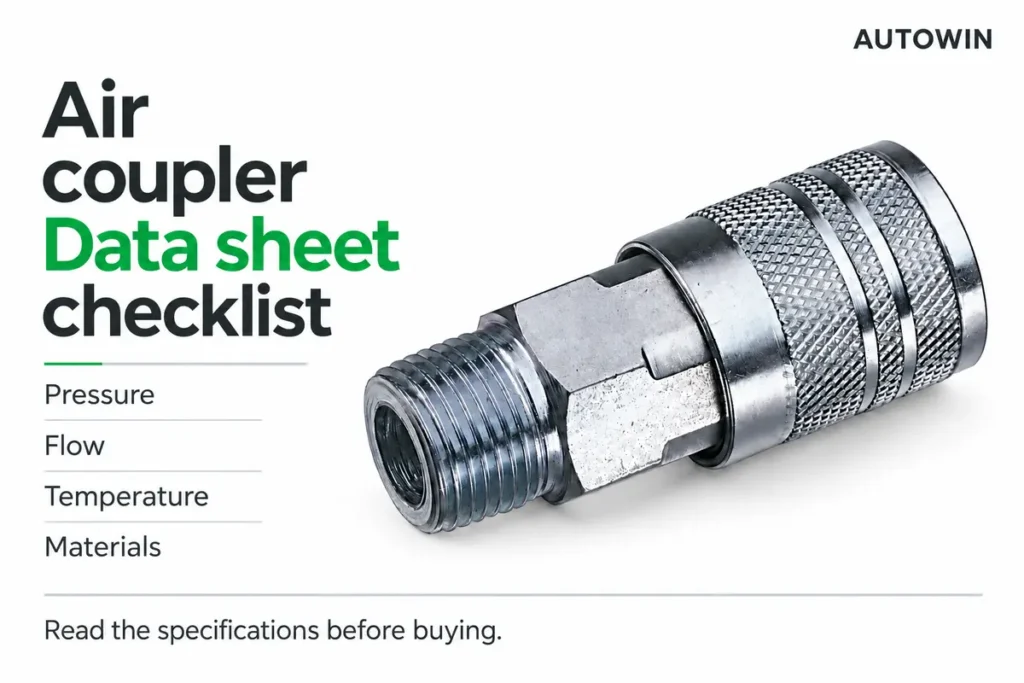
Read air coupler specifications as a set of conditions, not a list of impressive numbers. First identify the exact socket, plug and end connections. Then check the permitted operating state, pressure, temperature, flow-test conditions and materials for that configuration.
This approach makes quotations for compressed air fittings comparable. It also exposes missing information before an OEM sample or a wholesale order is approved. A catalog value for a different plug, seal or connection is not a substitute for the configuration you intend to buy.
Start with the complete configuration
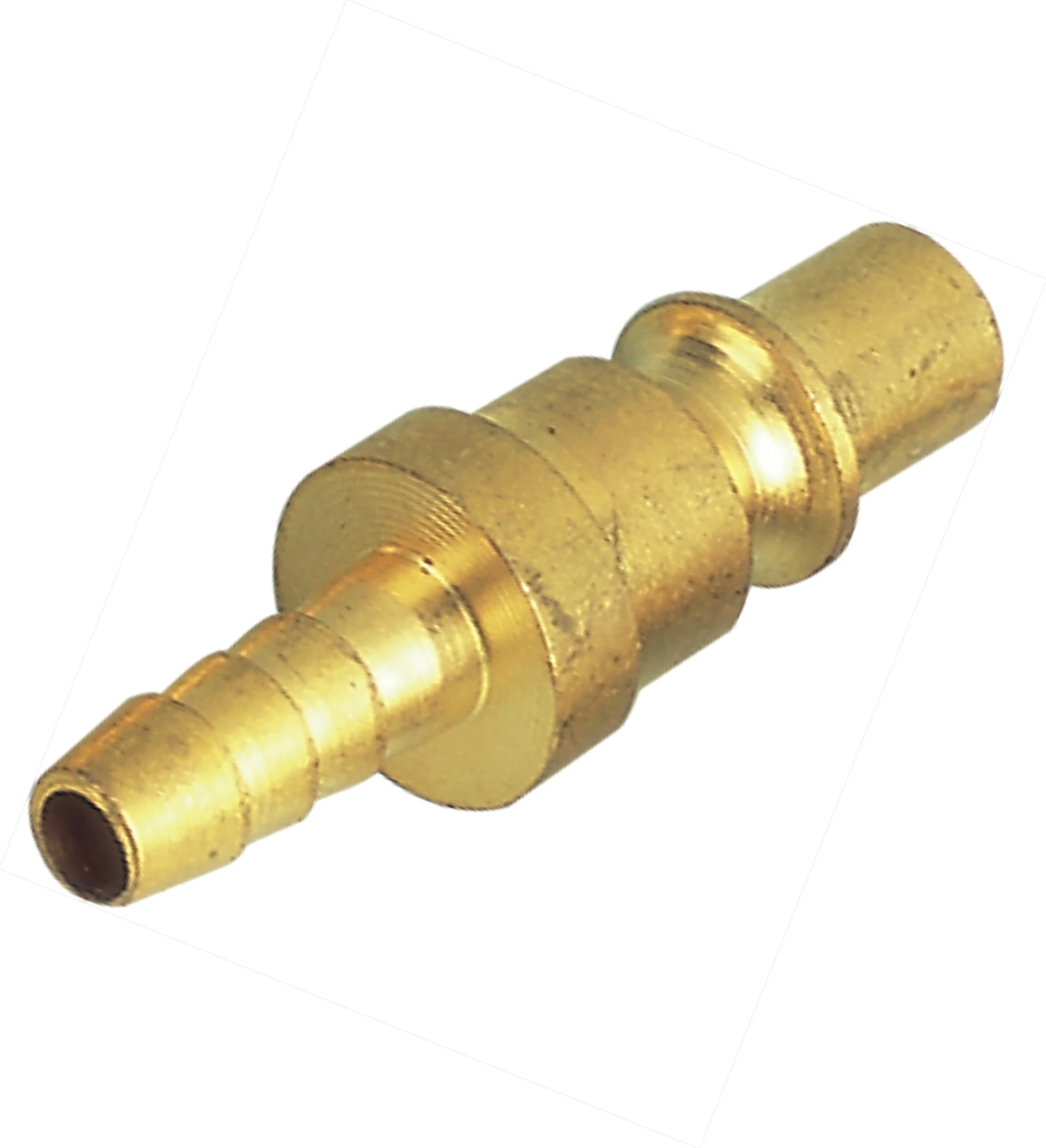
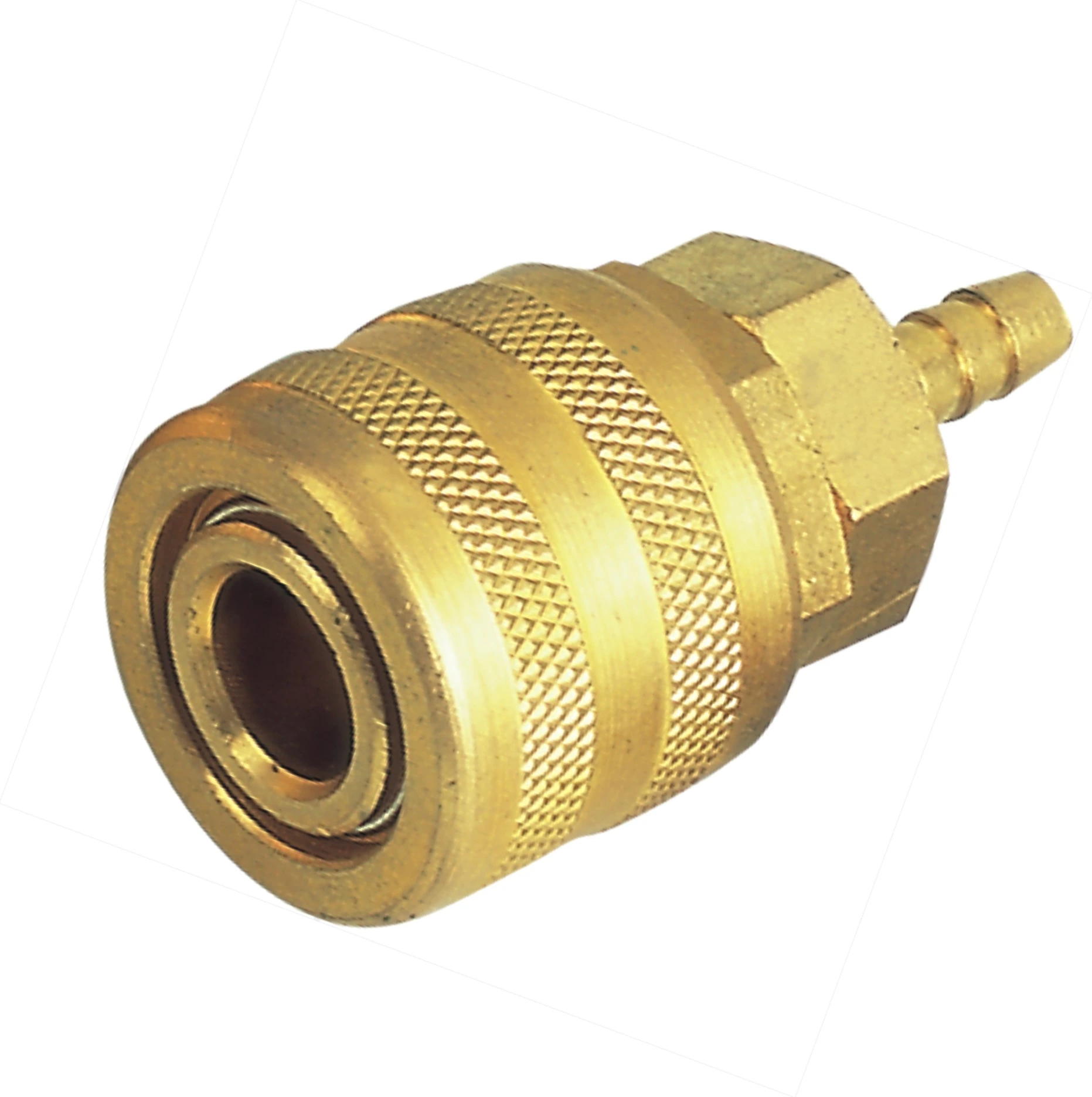
Write down the socket part number, mating plug, body size and profile. Add the rear thread or hose connection for each half. If the ordering code includes material, seal, sleeve or release options, decode those before reading the performance table.
A family-level brochure may cover many combinations. Check whether the relevant row applies to your body size and materials. A specification for a connected pair may not cover the same socket with another accepted plug or a different hose-end arrangement.
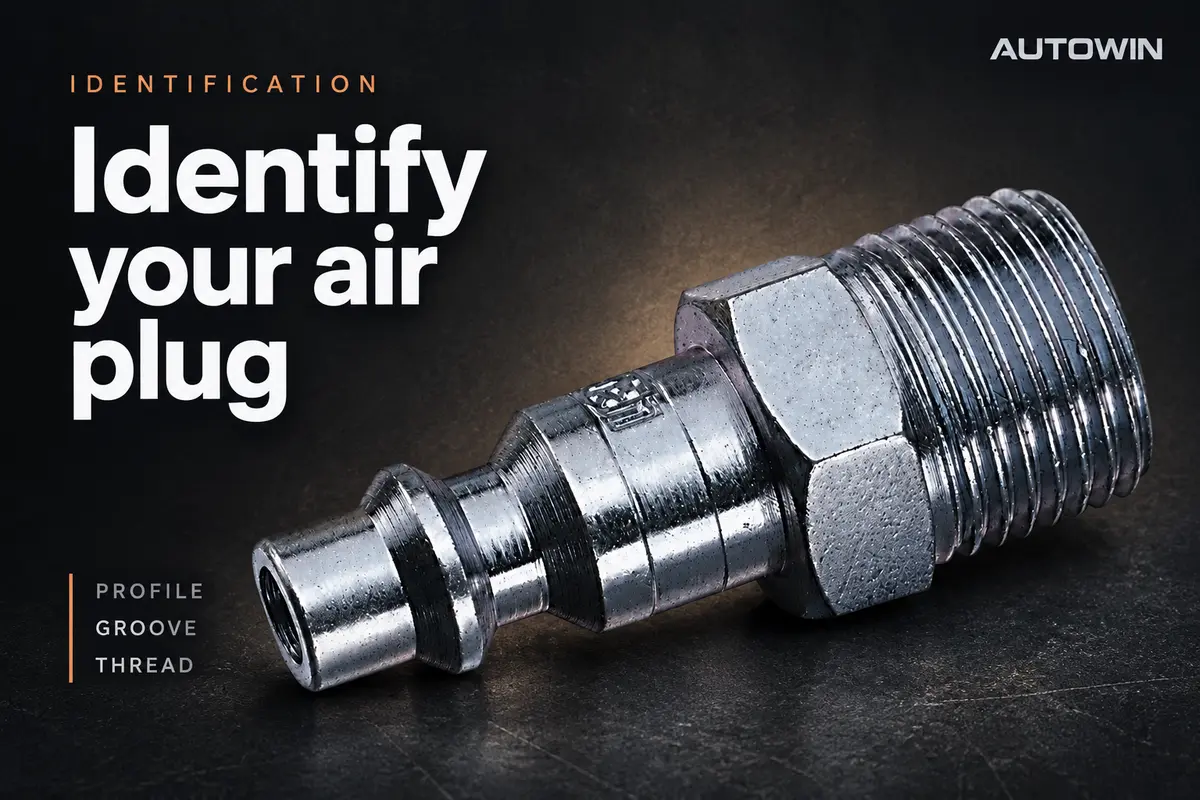
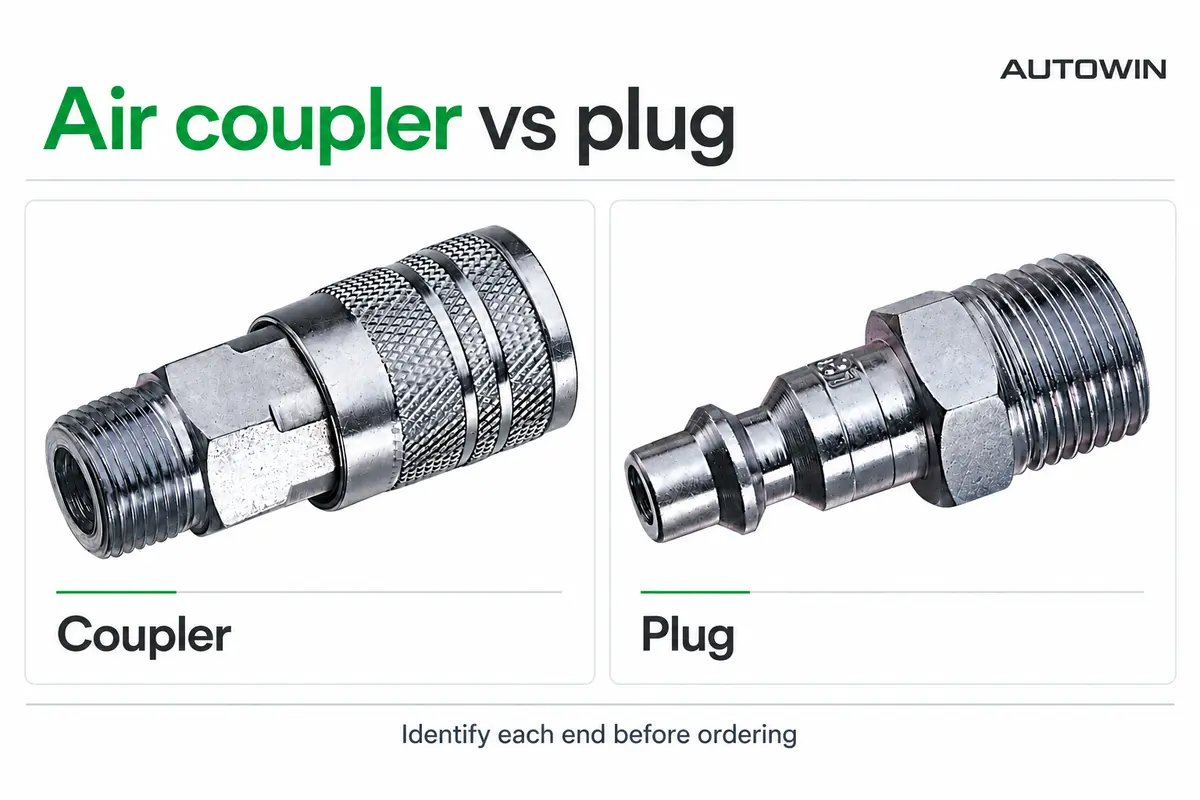
Use the coupler and plug naming guide to separate the components. Where a size label is unclear, the air hose fitting size guide distinguishes body size from the mounting end and flexible line.
Separate working pressure from proof and burst pressure
Maximum working pressure is a service limit under the stated conditions. Proof pressure relates to a defined verification test. Burst pressure describes a failure-related test result or specified threshold. These values serve different purposes and must not be substituted for each other.
Check whether a pressure table applies when the coupling is connected, disconnected, or operated during connection and release. A connected pressure rating does not automatically approve connecting or disconnecting at that pressure. Trapped pressure and the coupling’s venting procedure can impose additional requirements.
Dixon’s DF-series table provides a useful example of why configuration matters. For its 1/4-inch D-series connected combination, the listed maximum working pressure is 500 PSI for a brass coupler with a steel plug and 300 PSI for a brass coupler with a brass plug. These are values for the stated Dixon configurations, not AUTOWIN product ratings or general limits for brass. [1]
The complete assembly still requires review. Hose, adapters and the hose attachment may limit its permitted service. Do not derive a field-test pressure by multiplying a catalog working pressure, and do not treat a burst value as spare operating capacity.
Compare flow only when the conditions match
A flow figure needs context. At minimum, identify the inlet pressure, pressure drop, reference conditions and tested configuration. Note whether the stated flow is standardized, normalized or actual volume under local conditions.
Pressure drop is the pressure difference across the tested component or assembly at the stated flow. A product tested with a larger permitted drop may show a larger flow figure without providing a better result at your allowable drop. Units alone do not resolve that difference.
| Published example | Conditions shown in the supplied document | How to use the information |
|---|---|---|
| Festo NPHS data sheet | Inlet pressure p1 = 6 bar and pressure drop = 1 bar; separate flow values standardized to DIN 1343 and ISO 8778 | Keep the selected reference basis with the value and identify the exact configuration |
| CEJN eSafe Series 310 brochure | Inlet pressure 100 PSI / 6.9 bar and pressure drop 6 PSI / 0.4 bar | Do not rank its flow against the Festo value without aligning the conditions |
| Dixon DF-series table | Flow column labeled with a pressure drop of 15 PSI | Request any additional inlet and reference conditions needed for a like-for-like comparison |
These examples illustrate different reporting conditions; they are not a product ranking. The Festo sheet’s separate standardization bases are particularly useful evidence that two reported volume-flow numbers can differ without representing two different hardware designs. [1][2][3]
When converting CFM and litres per minute, preserve the original reference conditions. Unit conversion changes the unit; it does not reconcile different inlet pressures, pressure drops or reference temperatures. If a catalog heading and a footnote appear inconsistent, ask for clarification rather than selecting the more favorable number.
For high-flow ranges, continue with the high-flow air coupling profile and performance guide.
Read a pressure-drop curve at the required operating point
A curve can be more useful than a single headline flow figure. Locate the required flow, read the corresponding pressure drop, and confirm that the curve belongs to the selected socket, plug and test conditions. Stay within the published range unless the supplier provides supported data beyond it.
For system selection, decide how much pressure loss is acceptable across the coupling while the tool or equipment is operating. Other components also consume part of the available pressure difference. A low-loss coupling does not eliminate the losses of a long hose, small adapter or restrictive filter.
When reviewing industrial air fittings, ask for the full curve or the relevant operating point if the catalog omits it. The overall air fittings selection guide explains how that component check fits into the complete supply path.
Read pressure and temperature limits together
Check both ambient and medium temperature, together with any restrictions on the pressure range. A seal option, sleeve construction or end connection may change the permitted conditions. Do not combine the highest pressure from one option with the highest temperature from another.
Festo’s NPHS data sheet separates operating and environmental conditions by coupling element and release-sleeve version. Its materials table also distinguishes housing, valve, release components and seals. [2] Read the column headers and footnotes before transferring a value into a purchasing spreadsheet.
Include the actual medium and its relevant contaminants in the enquiry. A compressed-air application may involve moisture, lubricant or cleaning chemicals. A broad material name cannot establish suitability for every exposure, and ordinary shop-air data does not approve a component for special gases or breathing-air service.
Separate housing material from the rest of the assembly
“Brass body” is only one material description. Ask for the valve, sleeve, locking elements, springs and elastomer seals where those materials affect the application. A surface finish should be identified separately from the base material.
The seal designation should also be specific enough for the intended service. Do not infer an exact compound, temperature rating or chemical resistance from an appearance or a generic “rubber seal” description. Request the applicable material specification and operating limits.
Where a quotation offers a material substitution, compare the affected pressure rating, wear surfaces, corrosion behavior and assembly requirements. Keep the approved change tied to a part-number or drawing revision so repeat orders do not silently drift.
Turn the data sheet into an acceptance checklist
Use the table below when comparing a pneumatic coupling manufacturer or several OEM air coupler quotations. A blank field means information is still required; it should not be filled with a value from a different brand or a nearby model.
| Field to compare | Evidence to request |
|---|---|
| Interface | Profile, body size and the approved mating socket and plug |
| End connections | Thread standard and gender, or hose connection with permitted construction |
| Working limits | Pressure, temperature and the states or configurations covered |
| Flow | Curve or value with inlet pressure, pressure drop and reference conditions |
| Materials | Relevant body, sleeve, valve, spring and seal specifications |
| Operation | Connection method, venting or release sequence and applicable restrictions |
| Validation | Agreed dimensional, leak, retention and functional acceptance criteria |
| Document control | Part number, drawing revision, test-report reference and permitted substitutions |
For air compressor fittings supplied as a kit, extend the review to the included hose ends and adapters. The package should identify the approved combinations and preserve the assembly instructions needed by the user. An individual coupler data sheet does not describe every possible arrangement of kit contents.
Send AUTOWIN the required interface, operating conditions and comparison fields when enquiring about pneumatic quick connect fittings. For custom configurations or private-label supply, use the OEM and ODM project review to define the quotation and sample scope.
Data-sheet questions
Can I compare two CFM values at different pressure drops
Not as a direct performance ranking. Obtain data at comparable conditions or a supported curve that covers the required operating point.
Does an interchange statement mean all ratings are identical
No. An interface statement does not establish identical materials, flow, pressure limits or release functions. Review those fields for the selected pair.
Can I use a competitor catalog to complete missing product specifications
No. It can show which questions to ask, but the supplied product needs its own applicable specifications and supporting evidence.
Related reading: connection operation and pressure control
Technical references
- Dixon Quick Coupling Catalog 2026. Connected ratings by material combination and flow pressure-drop label. PDF pages 22.
- Festo NPHS Couplings. Flow conditions, reference bases, operating limits and materials. PDF pages 4–5.
- CEJN eSafe Couplings. Series 310 flow-test conditions and component information. PDF pages 13.