 English
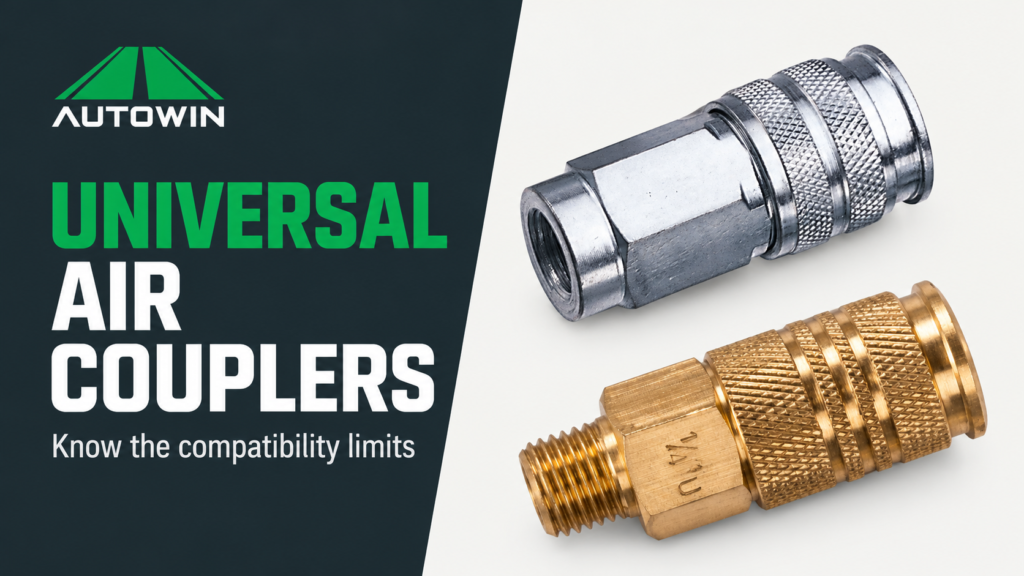
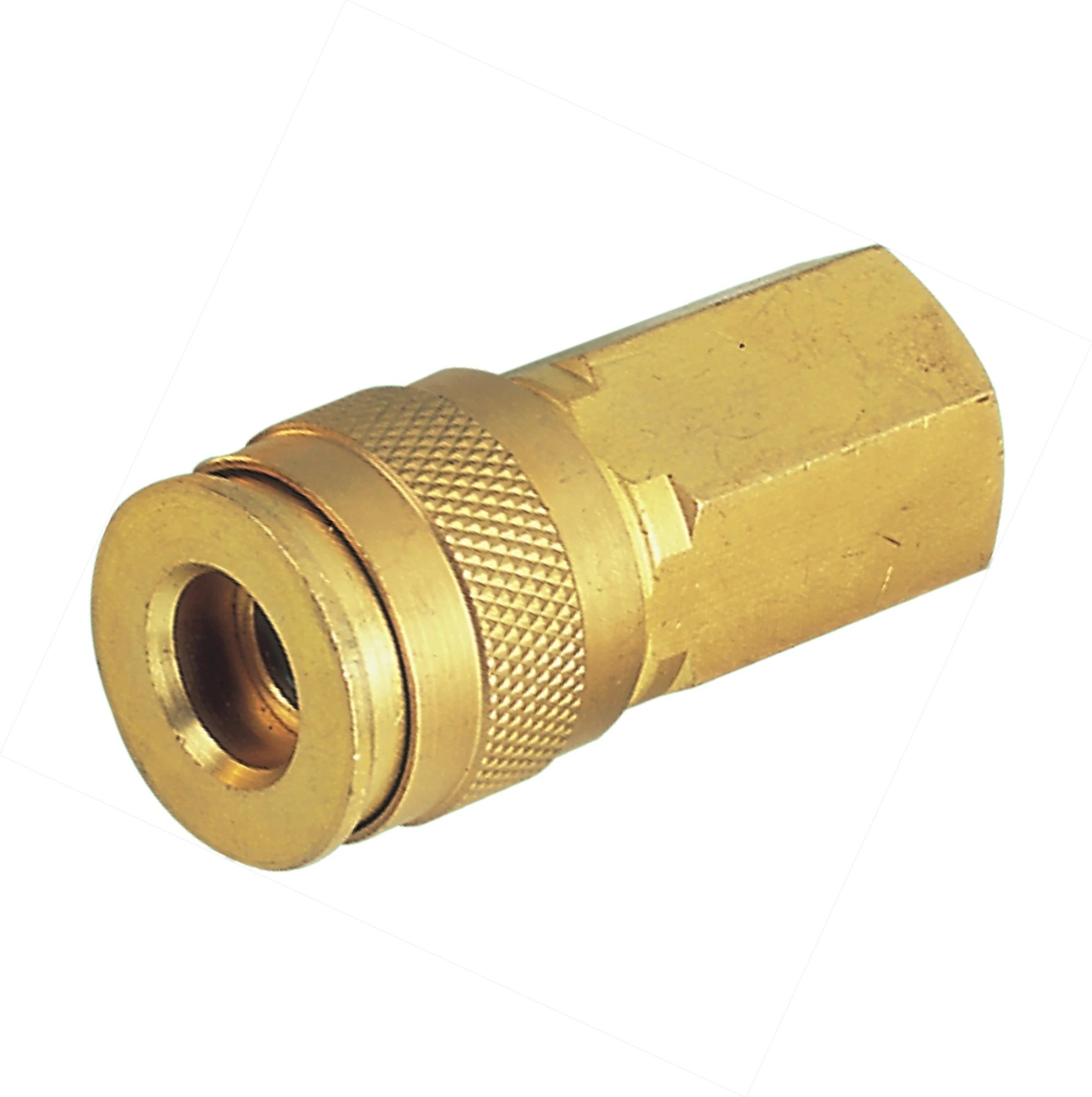
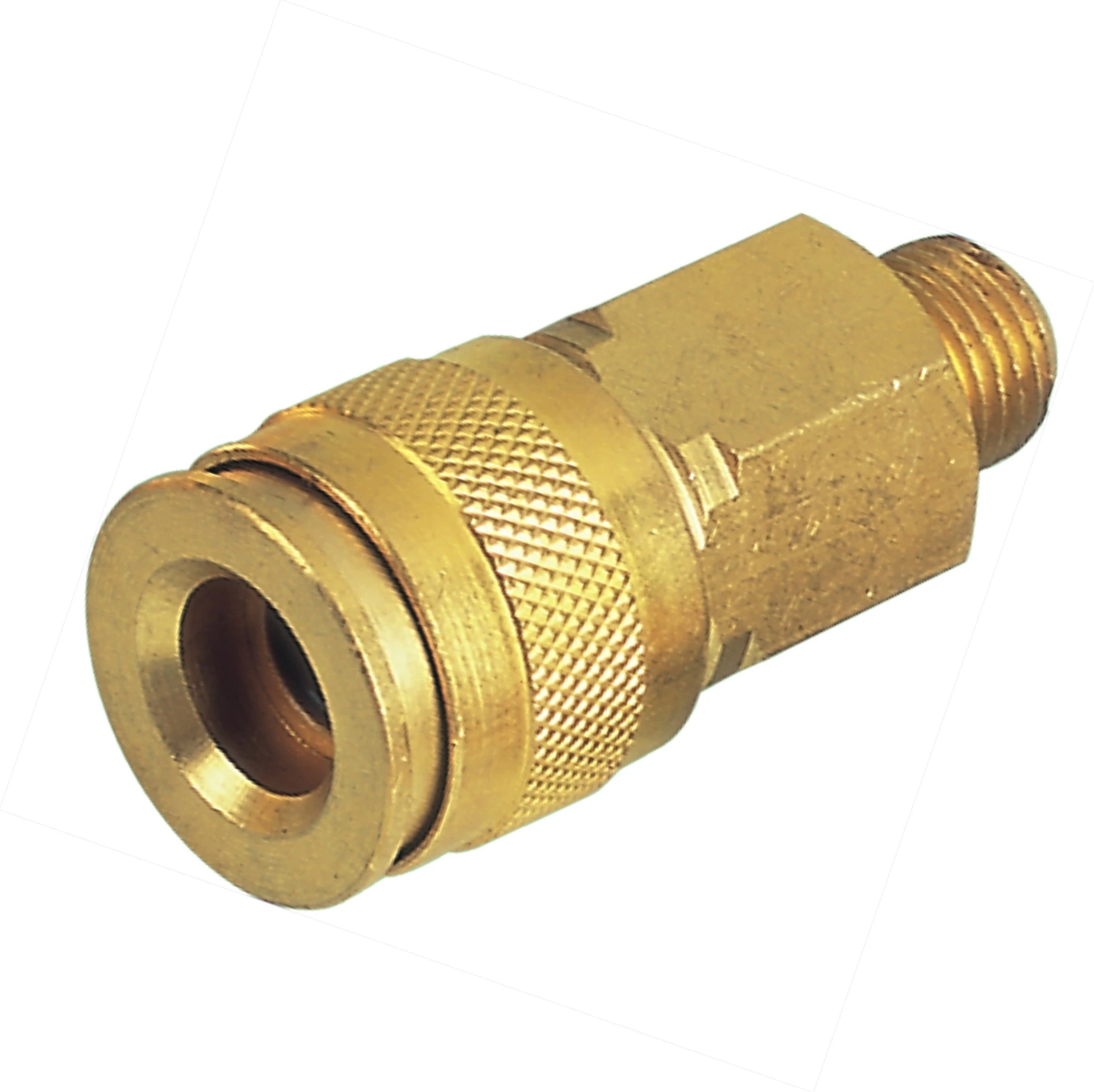
Universal air coupler compatibility is defined by the manufacturer’s accepted plug list and the exact coupling body size. A universal socket is intended to accept several specified interfaces. It does not mean that every air plug, thread size or brand can be used without further checks.
That distinction matters in a mixed workshop and in a distributor’s product description. The useful promise is a documented set of compatible profiles at stated operating conditions. A broad label without that scope leaves the customer guessing.
Ask what the word universal includes
Published universal coupling ranges support different combinations of industrial, automotive, ARO, Lincoln and European-style interfaces. The accepted set belongs to a particular model and body class. A three-profile socket and a five-profile socket should not receive the same compatibility description.
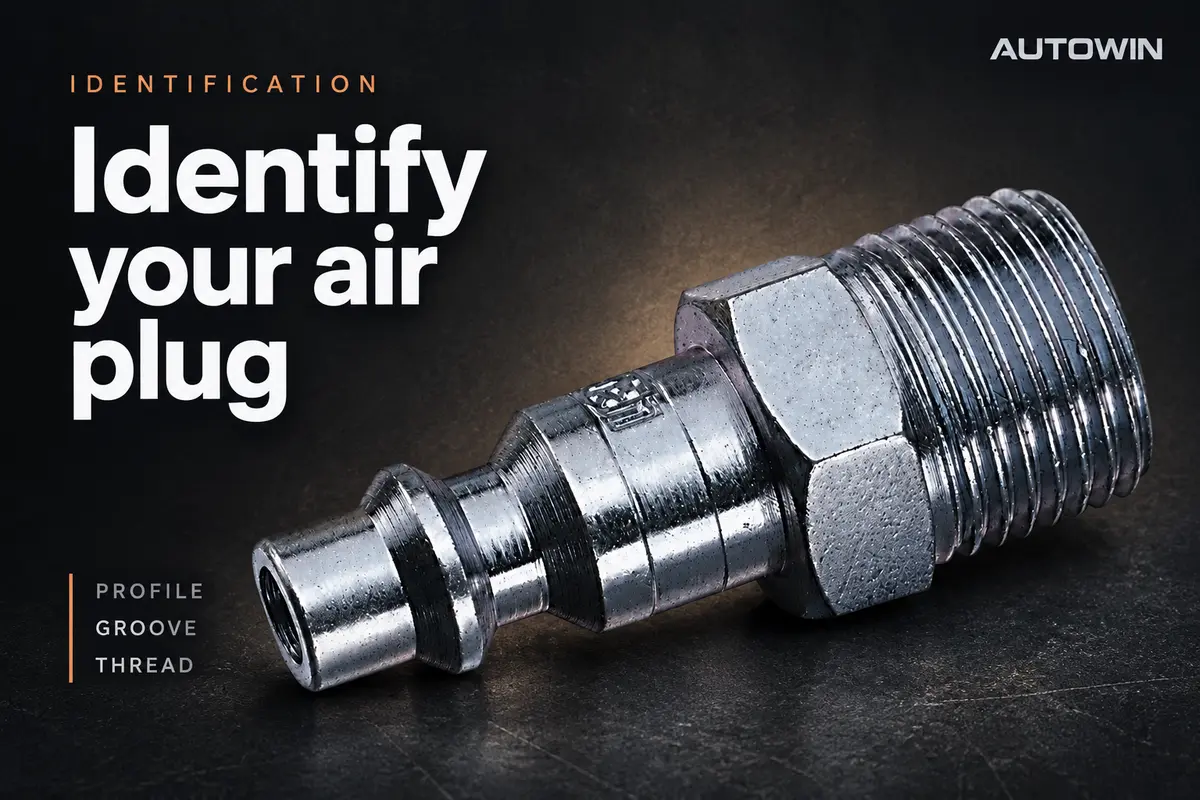
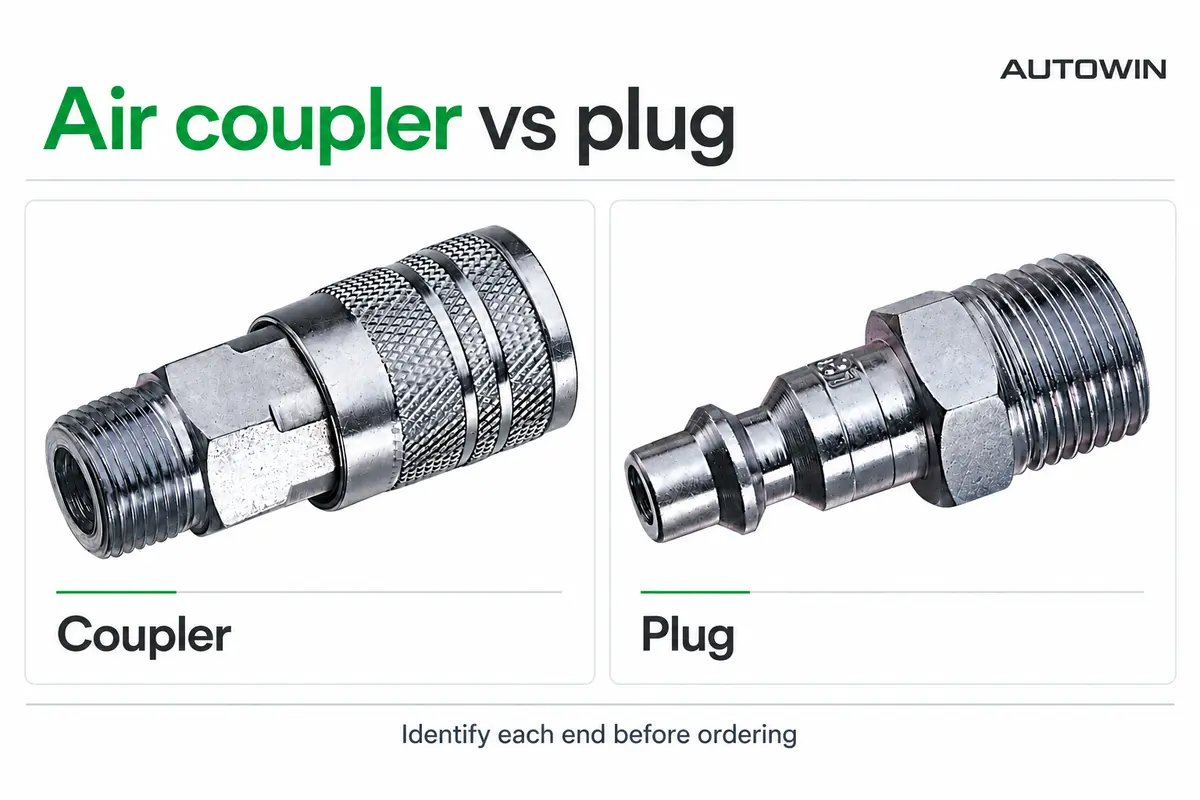
Start with the intended tool and hose inventory. Identify the profile and body size of each plug that must connect to the new socket. Then compare that list with the manufacturer’s documented coverage. Any unidentified plug remains an unresolved item, even if other plugs in the workshop are supported.
Use the unknown air plug identification guide for incomplete records. The air hose fittings guide explains where the universal socket sits within the overall connection.
The accepted profile list can change with body size
One published safety-exhaust range illustrates why the size-specific row matters. Its 1/4-inch body version lists industrial, automotive, Euro/Megaflow, ARO and Lincoln profiles. Its 3/8-inch and 1/2-inch body versions list industrial and automotive profiles. A larger body in that range does not preserve the entire smaller-body compatibility list.
This is an example from a manufacturer’s catalog, not a compatibility declaration for AUTOWIN products. It demonstrates the purchasing rule: read the exact model and body-size entry rather than carrying the headline profile count across the range.
A 1/4-inch quick-connect fitting description also needs clarification. The fraction can refer to the mounting thread rather than the coupling body. The body and thread size guide shows how to keep those fields separate.
Build a compatibility matrix around actual components
For each plug that must be supported, keep one record linking the existing component to the proposed socket. Do not fill an unknown result with a presumed match. Distinguish documented support, sample evaluation and unresolved questions.
| Record field | Information to capture |
|---|---|
| Proposed socket | Manufacturer, part number, body size and revision |
| Existing plug | Manufacturer or known reference, profile, body size and condition |
| Documented scope | Catalog or drawing that lists the accepted combination |
| Operating limits | Applicable pressure, temperature, medium and release requirements |
| Performance evidence | Flow information for the intended pair and stated test conditions |
| Review outcome | Approved scope, unresolved item or rejected combination, with a record reference |
This is a purchasing record structure, not a prefilled test result. The supplier and responsible technical reviewer need to establish the acceptance criteria and review the actual combinations. A plug entering the socket does not complete that process.
Do not give every accepted plug the same performance
A multi-profile socket can be compatible with different plugs without delivering identical flow with every one of them. Read the performance information for the pair that matters to the application. Where only one test configuration is identified, ask whether it represents the other intended combinations.
Keep the applicable component and assembly limits in view. Universal-coupler guidance specifically calls for respecting the lower performance rating of the mating components. That does not create a rating for an undocumented combination; it is a limit to apply after the intended match has been established.
Use the coupler data sheet checklist to request missing information. It prevents a convenient compatibility feature from obscuring pressure, temperature or flow requirements.
Check whether universal also means safety exhaust
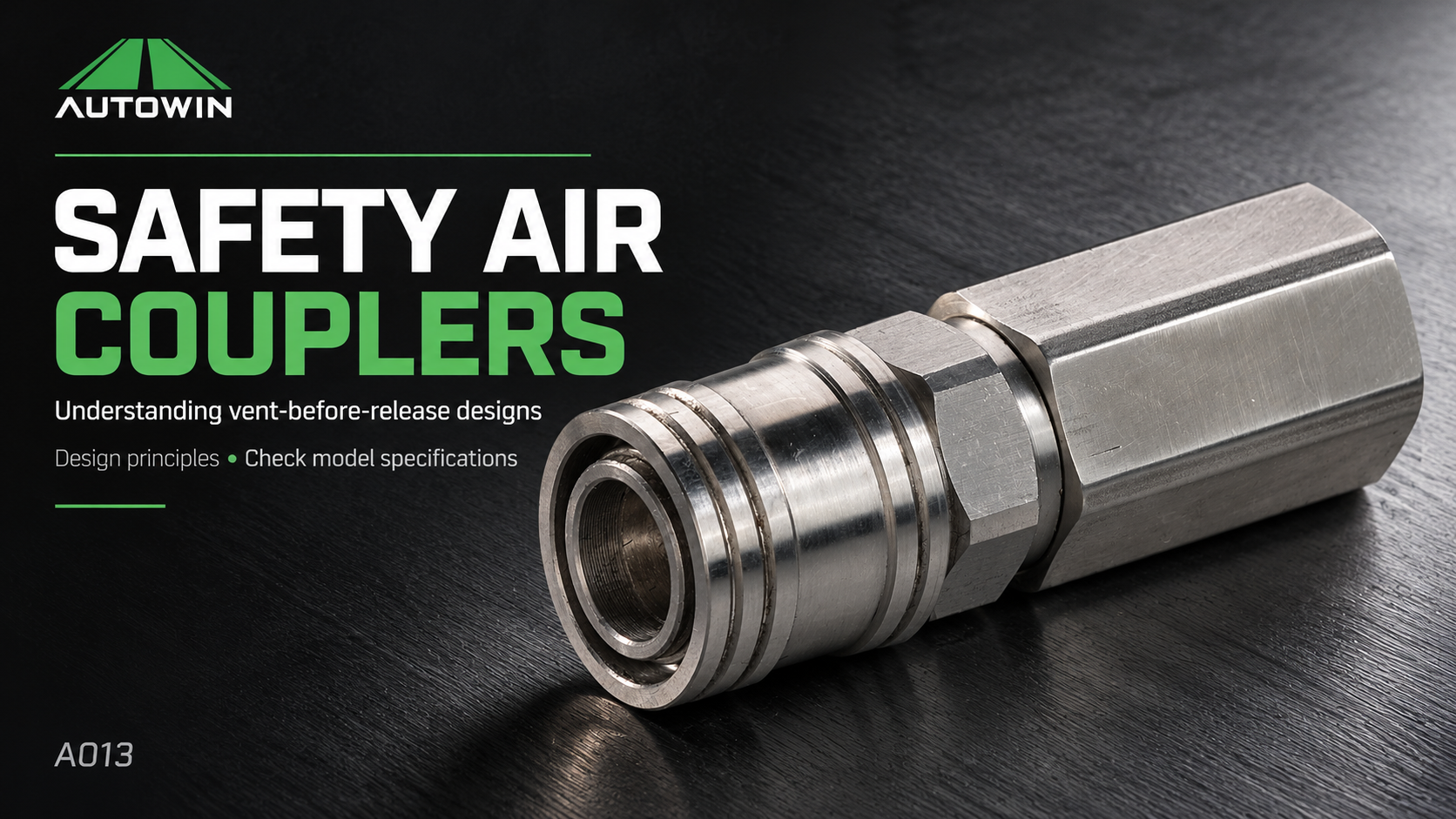
Universal describes the accepted interface range. Safety exhaust describes a release function. A universal socket is not automatically a venting socket, and a safety-exhaust socket is not automatically compatible with multiple profiles.
Where controlled venting is required, obtain the exact model’s connection and release instructions. Some designs retain the plug while downstream pressure is vented before final separation. The operating sequence belongs to that product and should not be copied onto another socket with a similar appearance.
Also review maintenance instructions for the intended air conditions. A recommendation concerning dry air, lubrication or seals in one manufacturer’s range is not a general instruction for every universal air coupling. Follow the selected product’s documented requirements.
Choose between mixed-profile access and standardization
A documented multi-profile socket can be useful where a shared hose must serve an established collection of supported plugs. The benefit depends on the real inventory. If most components are unidentified, buying a universal socket does not remove the identification work.
For a new production station or a controlled OEM assembly, one documented profile may make parts management and repeat ordering simpler. That is a procurement choice to evaluate against the need to share equipment. Compare the accepted combinations, operator procedure and replacement-stock requirements for each approach.
If mixed-profile access is retained, keep the approved plug list available at the purchasing and maintenance points. Review additions to the tool fleet before treating them as part of the accepted system.
Write a bounded wholesale product description
For wholesale air quick connect fittings, state the accepted profiles, coupling body class, end connection and release function. Avoid descriptions such as “fits all air tools” when the supporting documentation only lists particular plug families.
An OEM universal-coupler enquiry should include the required plug list, operating conditions and quantity by mounting connection. Ask the manufacturer to identify unsupported or unverified combinations explicitly. Keep approved wording for the packaging tied to that response.
Browse AUTOWIN’s universal air couplers, then send the plug profiles your application needs to accept for model-specific review.
Questions about universal air couplers
Does universal mean every body size is supported
No. Accepted profiles and sizes belong to the exact socket. Review the relevant model row rather than the general range name.
Can a universal socket identify an unknown plug
No. The plug still needs a documented identity and a supported combination. Apparent insertion is not an identification method.
Should a distributor advertise the largest profile count in a range
Only for the specific products whose documentation supports that count. Other sizes or versions need their own descriptions.