 English
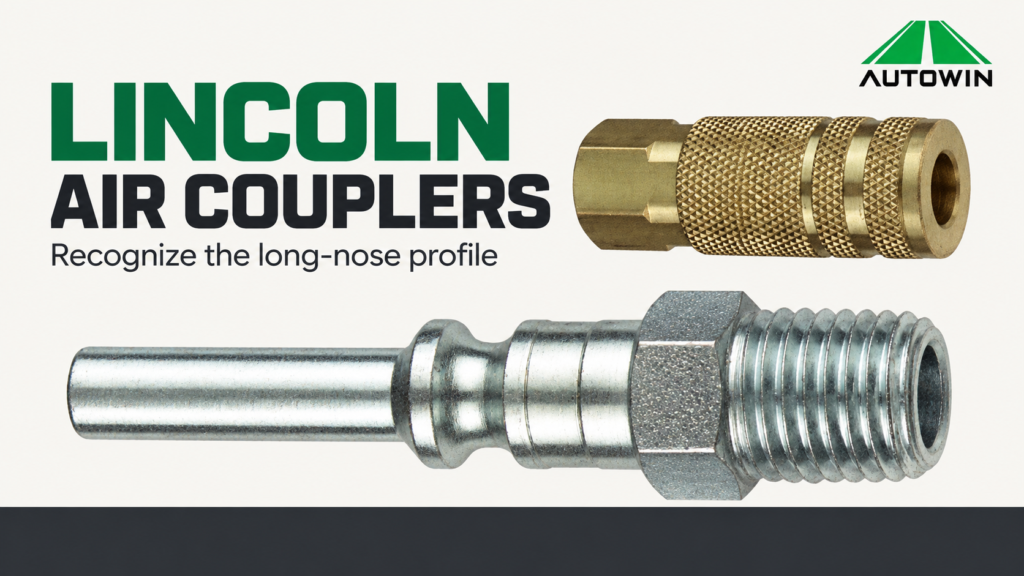
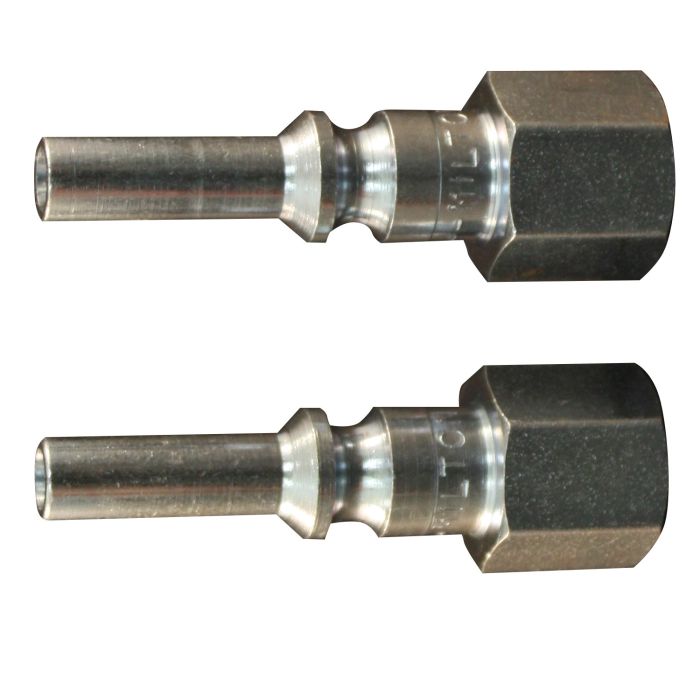
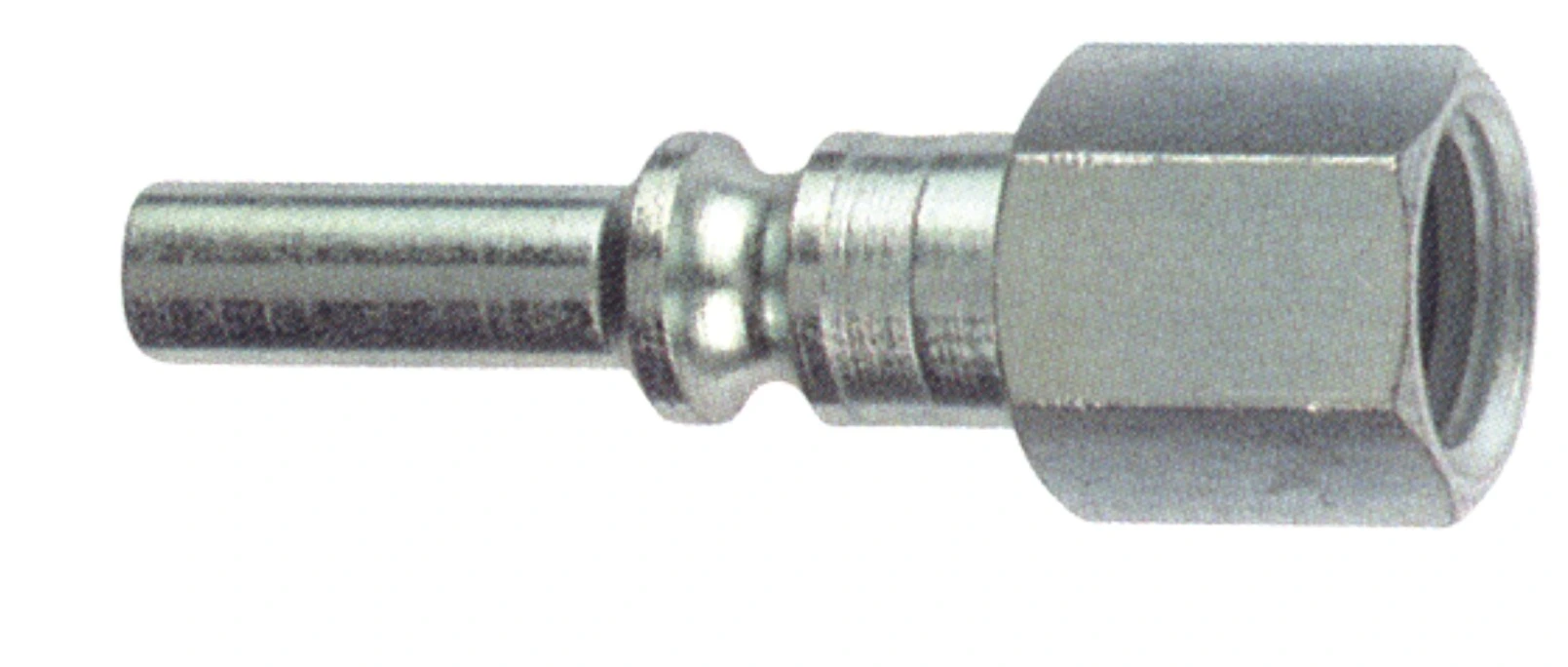
A Lincoln air coupler belongs to a long-stem or long-nose pneumatic interchange family. Its matching plug has an extended inserted stem, which is the first useful visual clue when investigating an unfamiliar connection. That clue needs confirmation against the complete profile and the intended socket.
Replacing this connection with a more familiar industrial plug simply because the mounting threads match can leave the air system with incompatible ends. For maintenance and distribution, the priority is to identify the long-nose interface and preserve a documented socket-and-plug pair.
Look at the inserted stem rather than overall length
Published Lincoln profile drawings show an elongated cylindrical nose ahead of the retaining feature. Compare that inserted region with the supplier’s drawing. The position of the retaining groove, the adjoining shoulders and the stem diameter all matter to the match.
Overall plug length is less useful on its own. A male threaded tail and a female threaded body can change the complete part length without changing the intended interface family. An unusually long adapter behind a short-profile plug does not turn it into a Lincoln plug.
Photograph the complete side profile and the end of the nose. Include readable markings and a scale reference for identification. Then obtain the dimensions called out by the drawing rather than estimating them from a photograph. The unknown quick-connect plug guide describes the broader evidence-gathering process.
Distinguish long-nose Lincoln from other automotive descriptions
Air hose coupler types are not named consistently by application alone. Catalogs can describe the Lincoln family as a long-nose automotive interchange while listing the Tru-Flate automotive family separately. The word automotive therefore does not uniquely identify the connection.
Use the full phrase “Lincoln long-nose interchange” together with the body size and supplier reference. Avoid shortening it to “automotive plug” on a purchase line. That abbreviation removes the feature that makes the order specific.
The industrial and automotive profile comparison helps explain why industry labels should not drive the match. For Lincoln replacements, the long-stem profile remains the deciding identification task.
Record a small set of decisive features
| Feature | How to document it | Reason for the check |
|---|---|---|
| Inserted stem | Side photograph and drawing dimensions | Distinguishes the long-nose geometry |
| Retaining groove and shoulders | Positions and dimensions from the specified profile | Identifies the geometry the socket must retain |
| Body class | Supplier’s declared coupling body size | Prevents an assumption based on the mounting thread |
| End connection | Full thread or hose-connection designation | Defines the separate attachment to the installation |
| Condition | Wear, burrs, corrosion or other visible damage | Prevents a damaged sample becoming the dimensional target |
These observations support identification; they are not a substitute for the manufacturer’s dimensional requirements. Where a feature is unclear, ask for an engineering review before ordering a claimed equivalent.
Check the socket specification as carefully as the plug
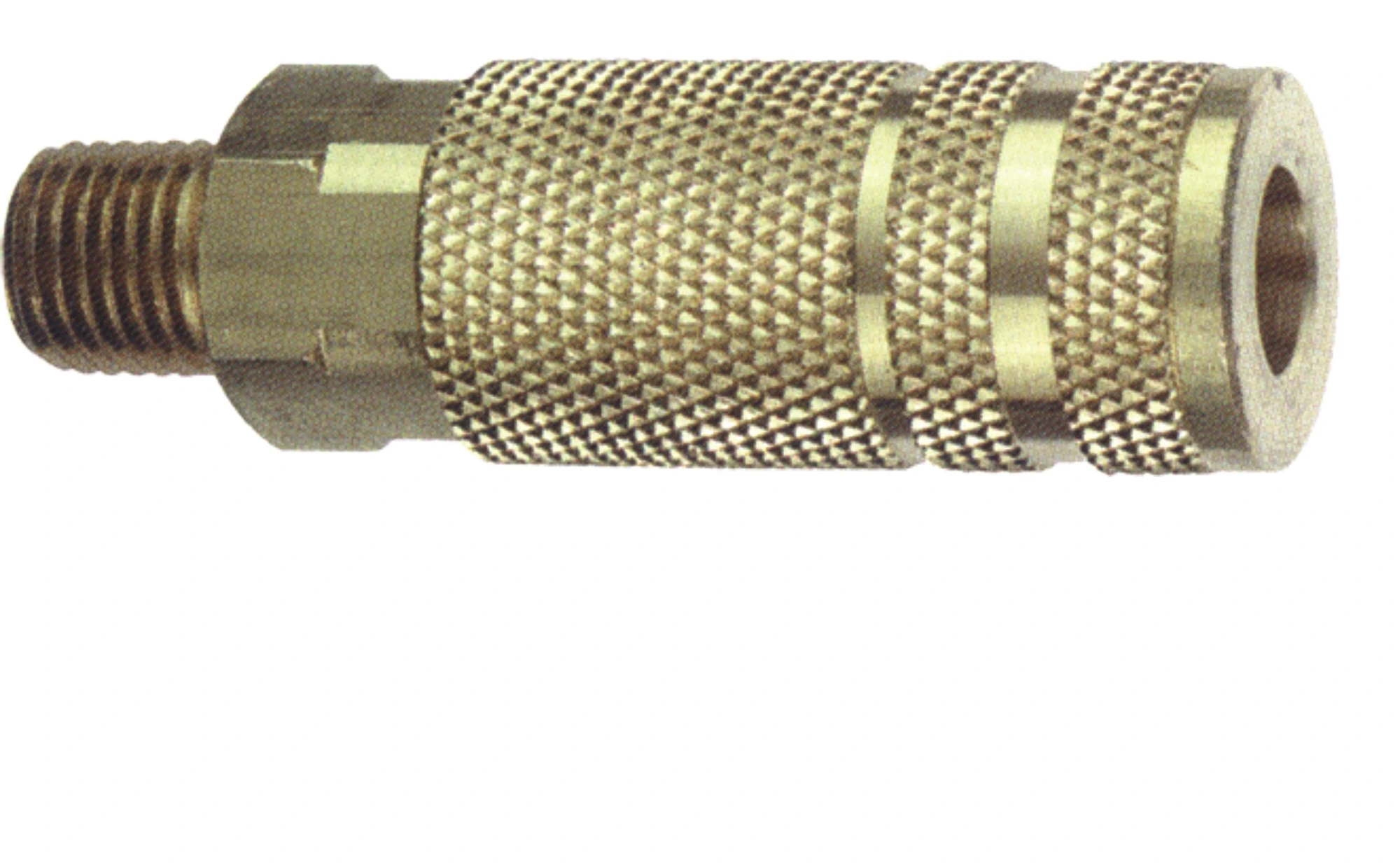
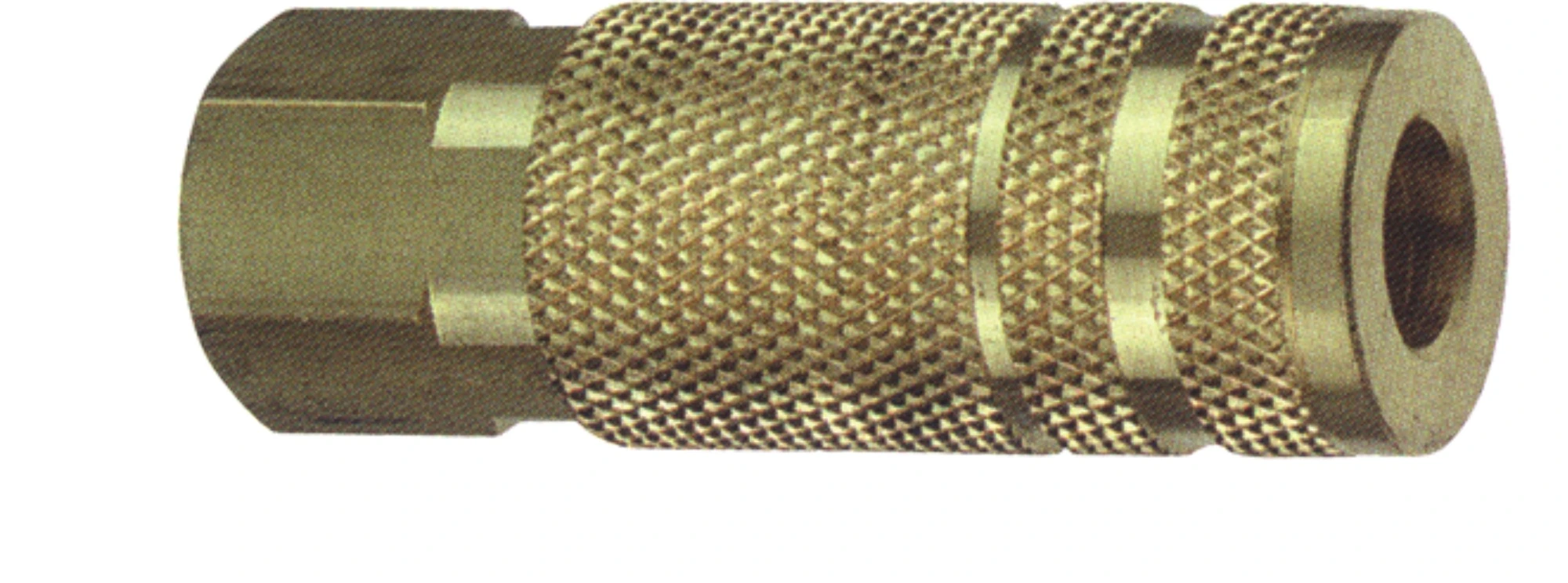
A long nose is visible on the plug, but the socket’s internal configuration is not established by its exterior sleeve. Find the socket part number and accepted profile in its documentation. If that cannot be established, a loose plug photograph leaves an important half of the connection unresolved.
Interchange charts associate Lincoln long-stem plugs with particular coupler series. Keep the maker and complete series reference together. A catalog cross-reference identifies a candidate combination within its stated scope; it should not be expanded into approval for every similarly numbered product.
Do not force a plug into an unidentified socket or use apparent locking as the only compatibility check. Confirm the intended pair and arrange sample evaluation under the supplier’s appropriate procedure. Record the actual components reviewed, including their revisions.
Separate interface recognition from operating suitability
Identifying the Lincoln profile does not establish the pressure rating, temperature range, flow or seal suitability of an offered product. Those attributes belong to the selected construction. The same applies when replacing an older component with a newly sourced one.
Ask for the working limits and flow information for the complete mating pair. Request the connection and release instructions, including any restrictions that matter to the application. Treat a different sleeve mechanism or end connection as a specification change to review.
The coupler specification guide provides a structured comparison. Use the air hose fittings guide when the replacement also affects the hose assembly or tool connection.
Choose between preserving the profile and replacing a complete pair
For a maintenance order, preserving a verified interface may be practical when other hoses and tools must continue to connect to it. Inventory those mating components before buying. The quantity needed can extend beyond the single worn fitting that prompted the enquiry.
If an installation is being converted to another family, define the change at both ends of every affected detachable connection. Specify which existing components remain and which are replaced. A planned conversion is different from substituting an unfamiliar plug into an existing socket.
For wholesale supply, keep Lincoln-type parts separate from general automotive stock in both the catalog and packing list. A distinct description helps distributors avoid promising the wrong fit to customers who use the term automotive broadly.
Review AUTOWIN’s Lincoln-type air couplers and plugs. For an OEM or maintenance purchase, send the long-nose profile evidence and socket reference, together with operating requirements and quantities.
Questions about Lincoln air couplers
Is every long plug a Lincoln plug
No. Evaluate the inserted stem and retaining features against the correct drawing. Overall length includes the mounting end and cannot establish the profile.
Can an automotive socket be assumed to accept it
No. Automotive is used in more than one catalog description. The socket must explicitly support the Lincoln profile and required body size.
Does a universal coupler solve an unidentified connection
Only a documented accepted-profile list can establish its intended scope. An unknown plug still needs identification before a suitable combination can be selected.