 English
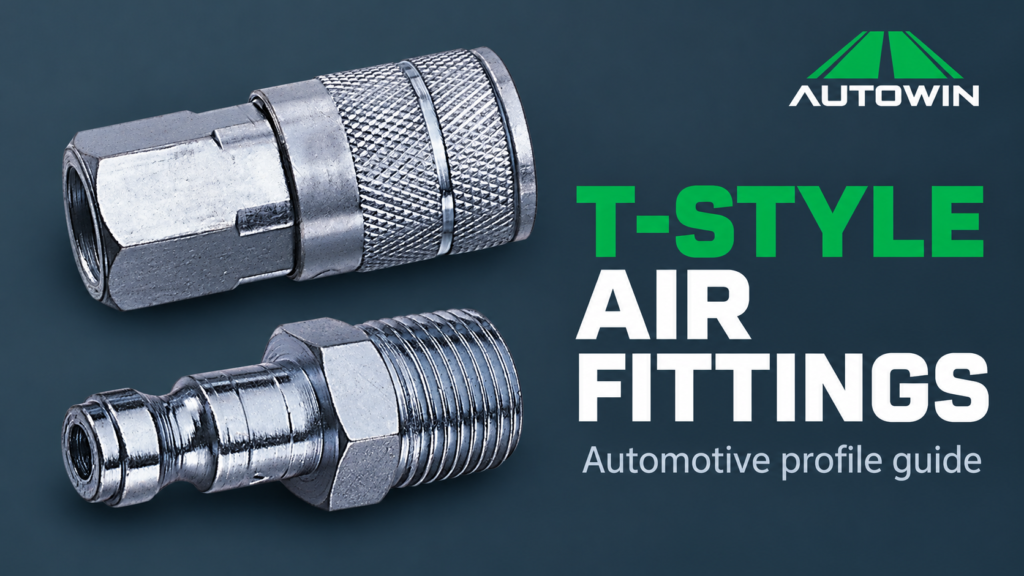
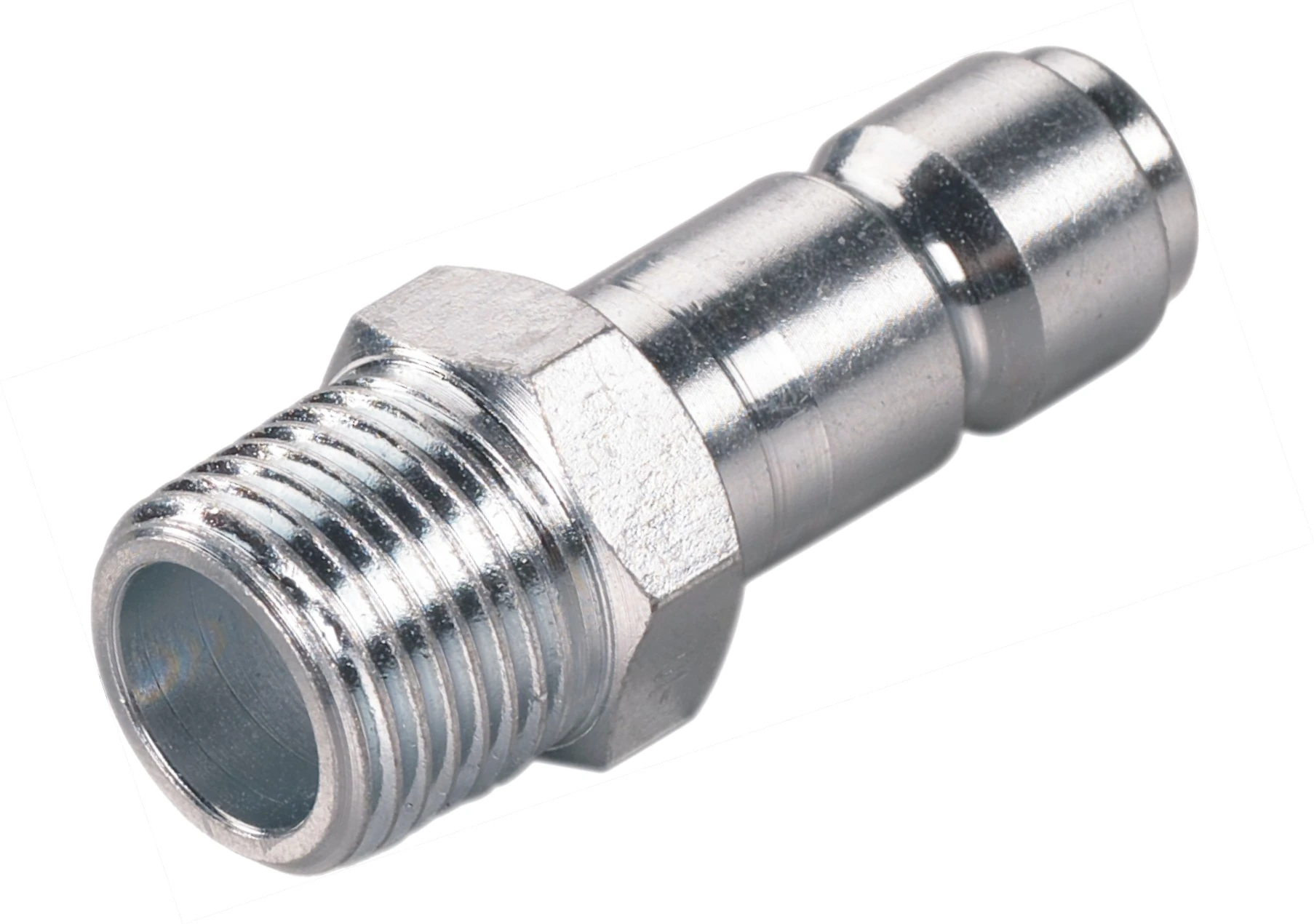
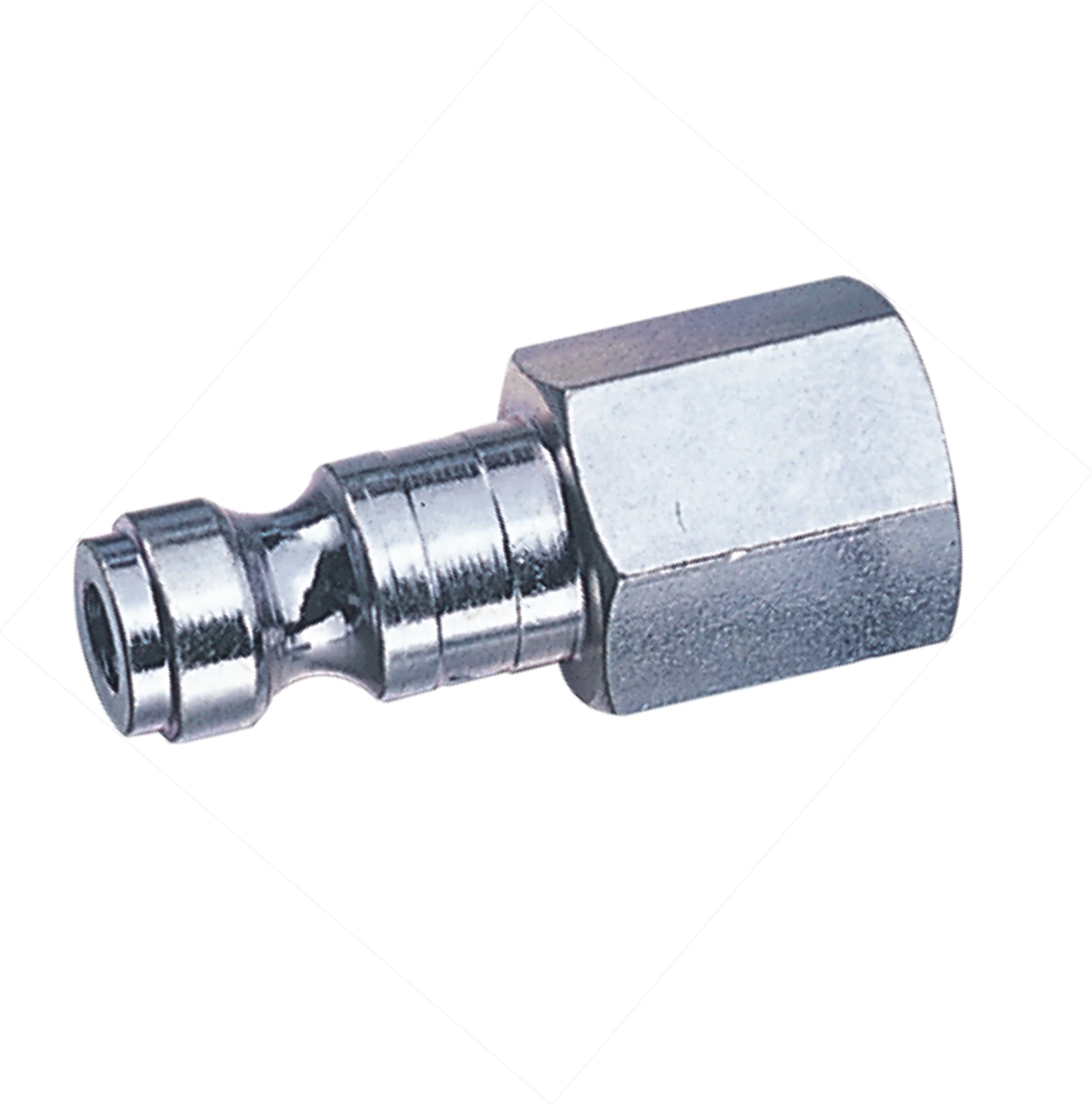
T-style air fittings are associated with the automotive or Tru-Flate interchange family. For a workshop buyer, that name is the beginning of the specification. The selected plug must still match the socket’s documented profile and body size, while its threaded or hose end must suit the equipment.
The word automotive describes an interface family in this context. It does not mean that every air connection used in a vehicle workshop belongs to that family, or that a shop-air fitting is approved for a vehicle brake system. Identify the actual connection before ordering replacements.
Establish what T-style means in the supplier’s catalog
Catalogs use both automotive interchange and Tru-Flate terminology for this profile family. T-style is a supplier style designation associated with that family. Other suppliers can use a different series name for the corresponding interface.
Request the full interchange description and body class instead of comparing letters. Keep the supplier name and part number attached to any cross-reference. A listing headed “T” without a profile drawing or documented counterpart is incomplete evidence.
The industrial versus automotive fitting guide explains the distinction between the two families. Here the task is narrower: defining a repeatable automotive-profile purchase for an existing workshop or distributor range.
Map the connection on the hose and the tool
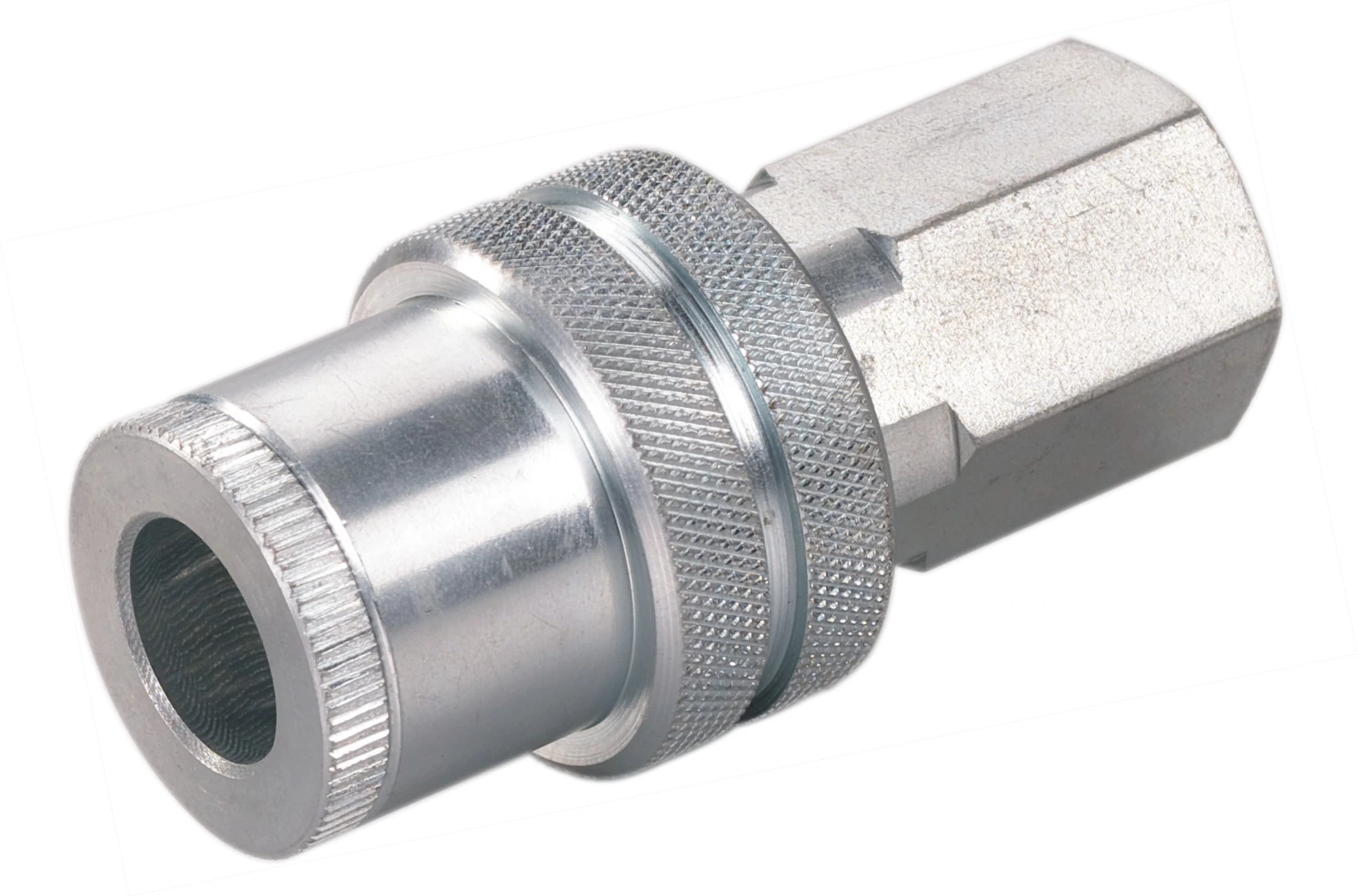
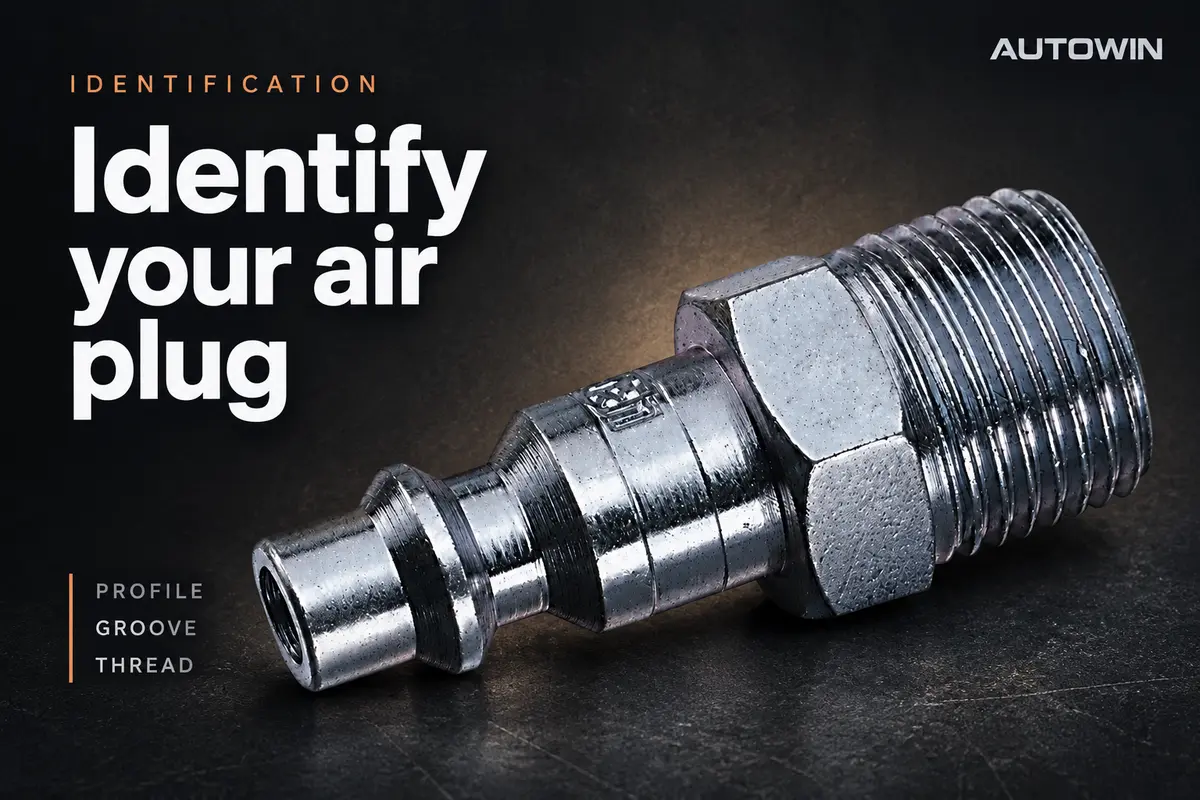
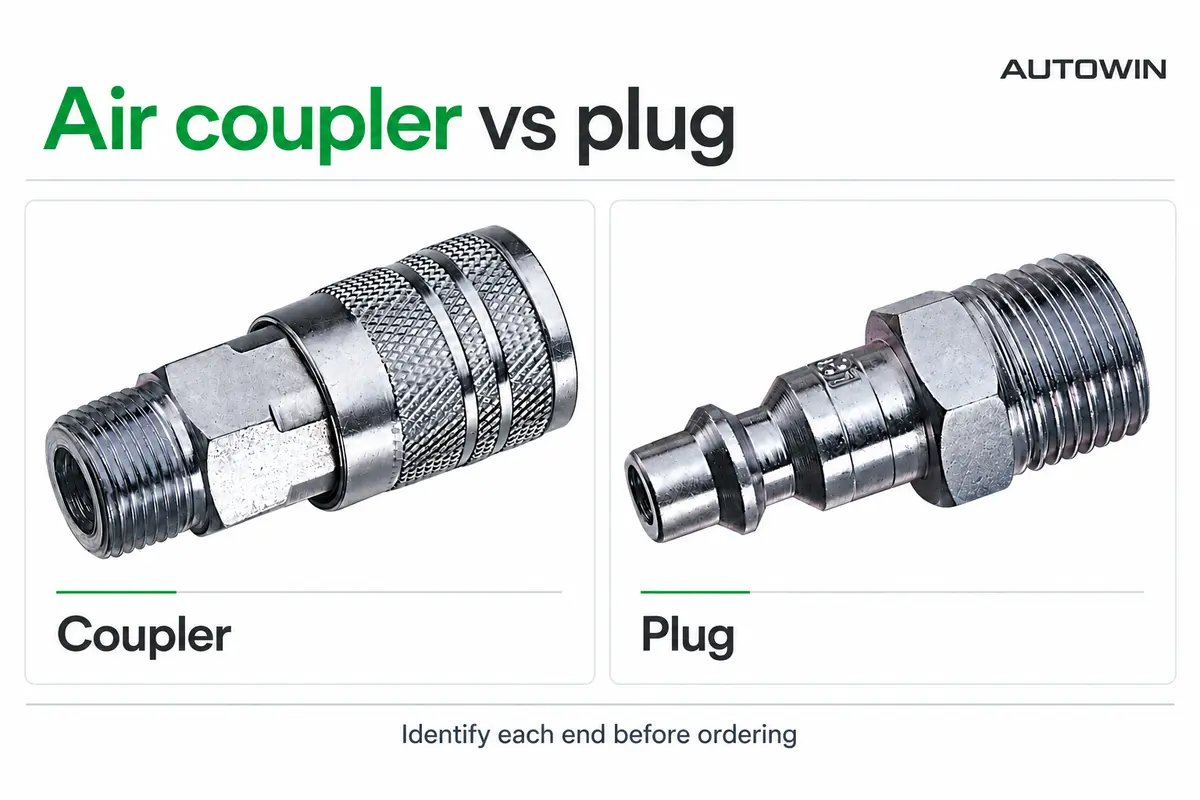
An automotive air hose coupler has two jobs to consider. Its mounting end attaches to the hose assembly or supply connection, and its socket accepts the removable plug. The tool-side plug also has a separate mounting end. Document each interface rather than writing one size across the entire assembly.
On a tool cart, record the hose outlet socket and each tool’s plug. If hoses are shared between workstations, include those outlets in the review. A replacement plug that suits one cart may be unsuitable for another station using a different family.
The complete air fitting selection guide helps trace the air path. Use that map to distinguish a profile mismatch from a mounting-connection or hose-assembly problem.
Check the purchase line before approving the sample
| Check | Information needed | Question to resolve |
|---|---|---|
| Detachable interface | Automotive or Tru-Flate profile and body size | Which exact socket accepts this plug |
| Mounting end | Thread standard, size and gender, or hose termination | Does it connect to the intended port or hose |
| Operating action | Connection, release and any venting instructions | Will the operator use it in the intended way |
| Service conditions | Working pressure, temperature, medium and required flow | Does the offered assembly meet the application |
| Identification | Part number, drawing revision and packaging description | Can the accepted configuration be ordered again |
A 1/4-inch threaded end is not proof of a 1/4-inch body or a particular plug profile. Consult the air fitting size guide when a quotation uses “1/4-inch” without identifying the dimension.
Evaluate the assembly rating and release method
Automotive interchange catalogs distinguish ratings by construction and size. The connection to the hose also matters: a hose or termination can limit the permitted operating conditions of the finished assembly. Do not carry a catalog coupler rating onto a complete hose assembly without checking its other components.
Keep a required working-pressure range and temperature range in the enquiry. For a tool with a significant air demand, ask for flow information at stated conditions for the proposed coupler-and-plug pair. The word automotive does not establish the available flow.
Connection and release are separate questions. A manual sleeve, sleeve lock or venting feature should be identified explicitly. Follow the exact product instructions for isolation and disconnection; apparent engagement of a questionable plug is not a substitute for a documented match.
Use color and packaging to support an identified system
Colored fittings can help staff distinguish approved groups after the profile has been established. Color assignments belong to a particular product system or local stock-control method. They should not be assumed to identify a universal profile across all manufacturers.
For wholesale automotive air fittings, put the profile family and body size in the item description, then state the thread or hose connection. Keep that description on the inner package as well as the carton. A buyer should be able to identify a loose pack without relying on the sleeve color.
For kits, list the quantity and connection of every socket and plug. A total piece count does not tell the customer whether the kit contains the mounting ends needed for their tools. Confirm that the kit’s stated compatibility applies to its actual contents.
Resolve mixed workshop stock before expanding the order
Separate unidentified fittings from the approved T-style group. Compare the marked components with their drawings, then review any proposed replacements against the matching sockets. Keep a record of accepted combinations rather than returning unidentified parts to a common bin.
If a workshop wants one hose to serve several plug families, evaluate a specifically documented multi-profile socket. Obtain the accepted profile list and applicable body sizes. The term universal is not permission to combine every plug found in the workshop.
For an OEM kit or private-label range, agree on the profile description and contents before preparing packaging. Ask the supplier to identify any substitution that changes materials, connection action or mating scope. A revised kit should remain traceable to its accepted specification.
Explore AUTOWIN’s automotive air couplers and plugs. Send the workshop interface and kit requirements, including the existing mating components and quantity by end connection.
Questions buyers ask about T-style fittings
Should every automotive workshop use an automotive profile
No. Select for the installed system and application requirements. The workshop’s industry does not identify the plug profile already in use.
Does a T-style name establish compatibility with every Tru-Flate listing
No. It identifies a family to investigate. Confirm the exact body size, counterpart and supplier documentation before approving the pair.
Can color replace the written profile description
No. Color is an additional identification aid. Keep a readable profile name, connection specification and part number available.