 English
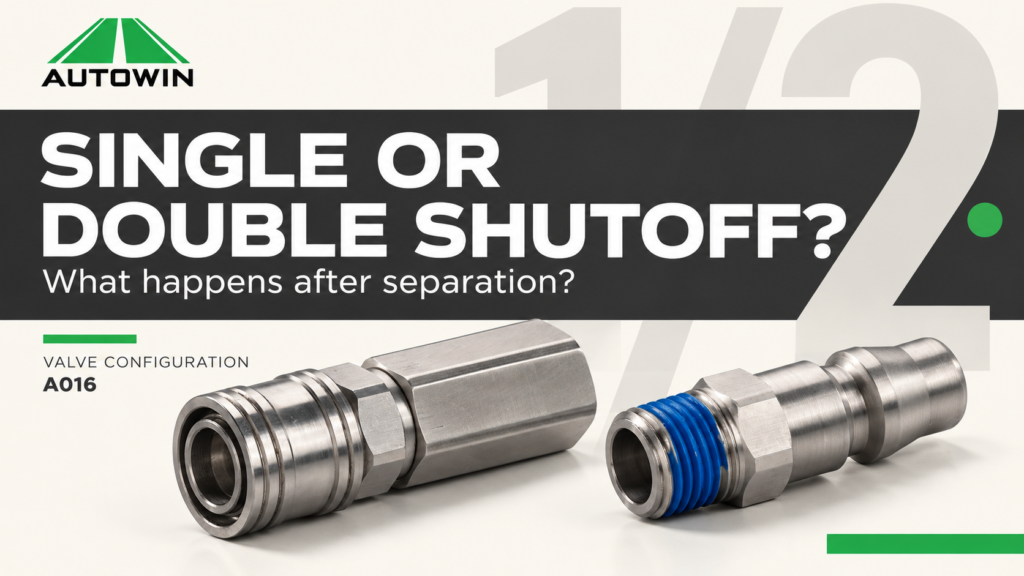
The difference between single-shutoff and double-shutoff air couplings is the valve configuration. A single-shutoff arrangement closes one half when the connection separates. A double-shutoff arrangement closes both halves. This distinction affects where medium and pressure can remain, so “double” should not be interpreted as an automatic safety upgrade.
For a conventional pneumatic single-shutoff arrangement, the socket is valved and the mating plug is unvalved. The precise arrangement and allowed service must still be confirmed for the chosen product. When specifying an air hose coupling, record the state of each half after disconnection, then assess the release sequence separately.
Read the two halves as a circuit
The supplied Dixon selection guidance explicitly includes single-shutoff, double-shutoff and unvalved configurations as an application decision. Parker’s Pneumatic Catalogue explains the basic distinction: single-shutoff has a valved coupling and a straight-through plug, while double-shutoff closes both halves and retains the medium in both connecting lines.
That second description has a practical consequence for a compressed-air system: a disconnected part should not be presumed pressure-free just because flow has stopped. The engineer must identify whether its volume remains charged and how any required depressurization will be controlled. This is a circuit-design question as much as a connector choice.
| Configuration | Basic arrangement | Question after separation |
|---|---|---|
| Conventional single-shutoff | One valved half and one unvalved half | Where does downstream air go during release? |
| Double-shutoff | A closing valve in each half | What pressure is retained on each side? |
| Unvalved pair | No automatic closing valve in either half | Which separate devices isolate and exhaust the circuit? |
| Vent-before-release function | A documented exhaust stage before plug release | Which connected volume is exhausted, and with which approved mate? |
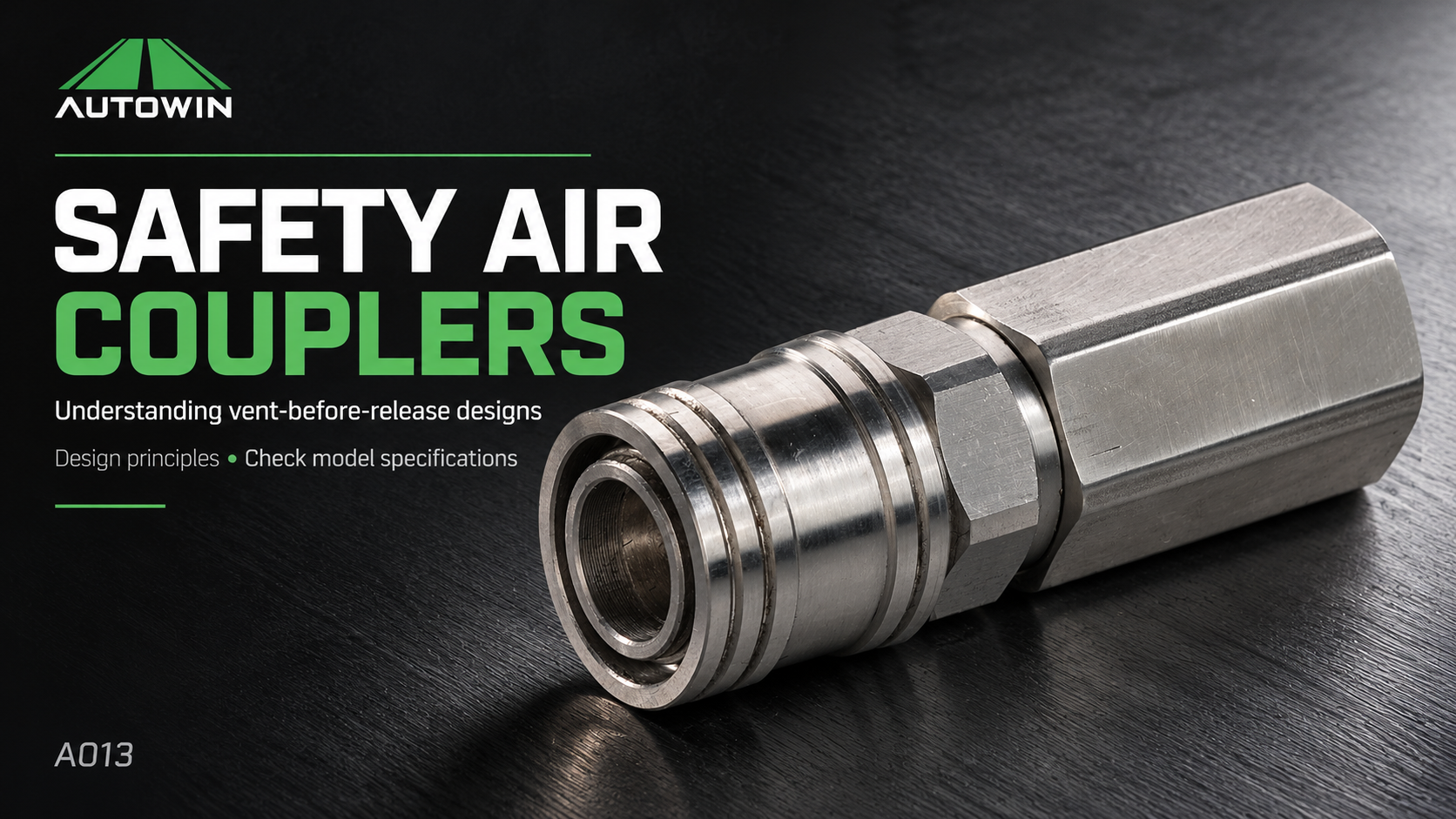
The last row describes an additional function rather than a count of valves. Festo’s NPHS catalogue provides a useful example: it describes one-sided shutoff together with connector-side exhaust before release. Valve count and controlled release therefore belong in different specification fields.
Choose the required state after a changeover
Start with what the application needs to happen when the assembly is separated. Must the supply stop? Must a removable assembly retain a medium? Must a hose be exhausted before it is handled? Which section will later be serviced? Write those answers before selecting the connector.
If retention is requested, identify why it is required and what precautions the remaining pressure creates. If depressurization is required, identify the approved exhaust route. Do not let a purchasing shorthand such as “self-sealing” replace this functional description.
For an assembly that is frequently swapped, include the disconnected condition in the review. Storage, handling and the next connection are part of the use case. Whether connection against residual pressure is permitted must come from the specified model’s documentation; do not force a connection that resists engagement.
Do not borrow ratings from a different service
Quick-coupling catalogues often include air, hydraulic and other fluid-handling products. A double-shutoff example in a hydraulic section is not evidence that the same product is suitable for a pneumatic circuit. Confirm the permitted medium, pressure, temperature, seals, interface and operating instructions for the actual offering.
For pneumatic quick connect fittings, use the manufacturer’s relevant pneumatic data and test conditions. A published pressure limit cannot substitute for flow information, and a matching thread cannot establish a compatible coupling interface. Our coupler specification guide and air fitting size guide address those separate checks.
Write a quotation request around function
For OEM pneumatic couplings, supply a circuit sketch that marks the two halves, the direction of normal supply and the state required when disconnected. Identify any separate isolation or exhaust device. Ask the pneumatic fittings supplier to confirm the proposed valve configuration and document any pressure that may remain.
Then attach the mating drawings, end-connection specification, operating conditions and expected order quantity. If alternatives are welcome, ask each supplier to describe the functional differences instead of quoting several visually similar parts against one ambiguous line item.
For wholesale air fittings, keep valved and unvalved replacement halves distinct in stock records. A replacement should match the approved assembly specification, including valve behaviour. Do not infer equivalence from material, body length or packaging size.
Questions about valve configuration
Is double-shutoff always the better option?
No. It serves a different retention requirement. The design must also address any trapped pressure and the handling or servicing of disconnected components.
Does single-shutoff mean the hose will depressurize before release?
No. One-sided shutoff alone does not specify a retained venting stage. Confirm the disconnecting function separately.
Can I change only the plug to change the shutoff arrangement?
Only use combinations approved for that series and application. Valve actuation, mating dimensions and ratings must remain compatible. Do not assemble an undocumented hybrid.
Use the air hose fittings selection guide to place valve choice alongside the other connection requirements. Browse AUTOWIN’s coupling and plug range and submit a circuit-based enquiry through our OEM project page. Availability and suitability of a double-shutoff option require model-specific confirmation.
Download this guide
Keep the complete guide, comparison table and technical references for your next specification review.
Download PDF (4 pages · 2.3 MB)
Related reading: connection operation and pressure control
References
- Dixon 2026 Quick Coupling Catalog, physical PDF page 15: valve configuration as a selection criterion.
- Festo NPHS catalogue, physical PDF page 2: one-sided shutoff with controlled exhaust.
- Parker Pneumatic Catalogue, General Information, printed page 4: basic valve arrangements. The purchasing checklist is an editorial application of these distinctions.