 English
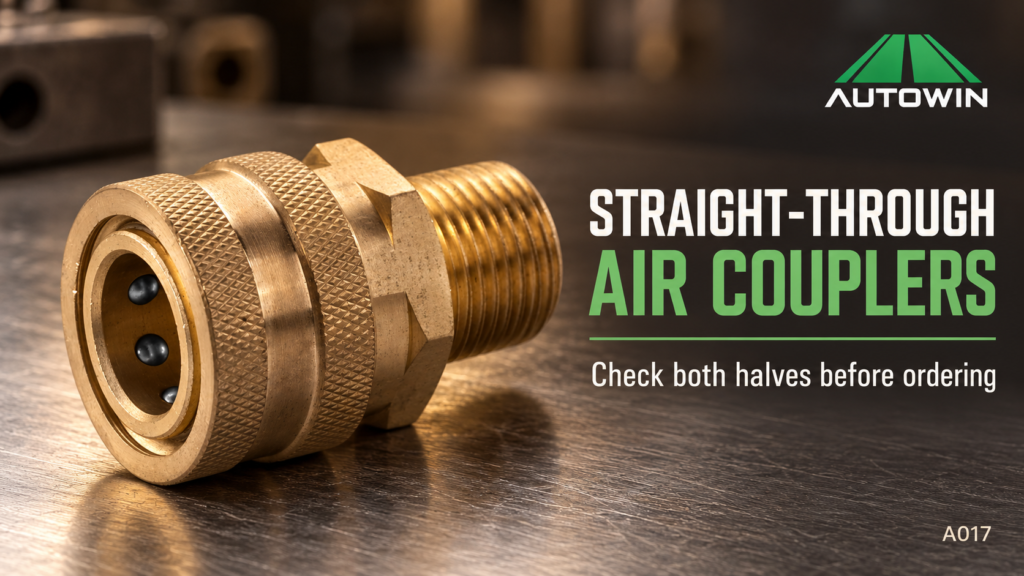
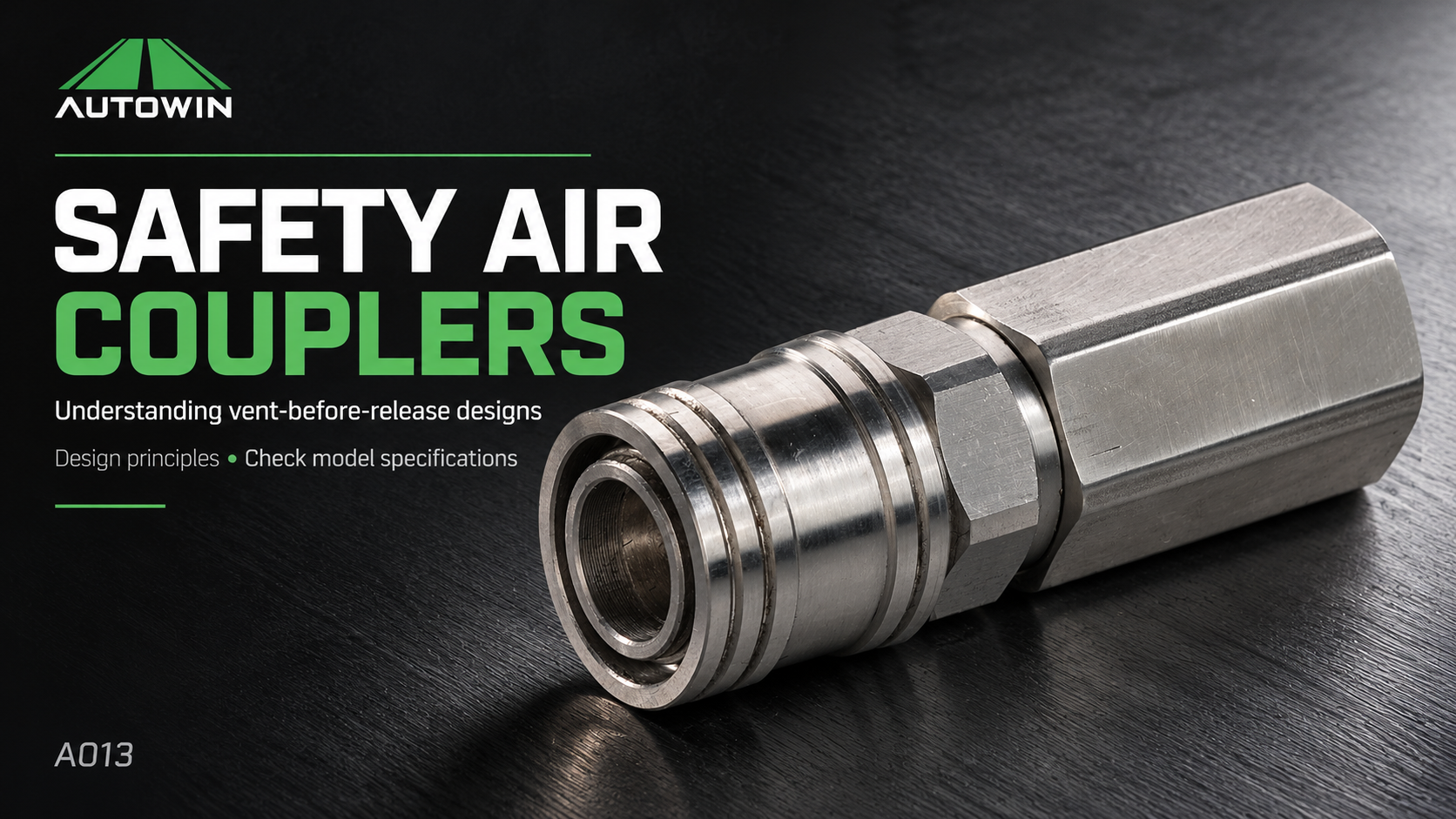
A straight-through air coupler, when the term describes an unvalved coupling system, has no automatic shutoff valve in either mating half. It connects a flow path; it does not provide the same supply-closing function as a conventional valved socket. Separate isolation and the required pressure release must therefore be addressed before disconnection.
There is a naming trap here: “straight-through” can also describe only an unvalved plug used with a valved socket. In other listings, “straight” describes body shape. Ask what is inside each half before ordering compressed air hose couplings by a category name.
Resolve three descriptions that can look similar
| Listing description | What it may identify | What still needs confirmation |
|---|---|---|
| Straight fitting | A straight body or aligned end connections | Whether the part contains a valve |
| Straight-through plug | An unvalved mating half | The valve arrangement of the socket |
| Straight-through coupling system | An unvalved pair, where explicitly specified | Permitted service and separate isolation arrangements |
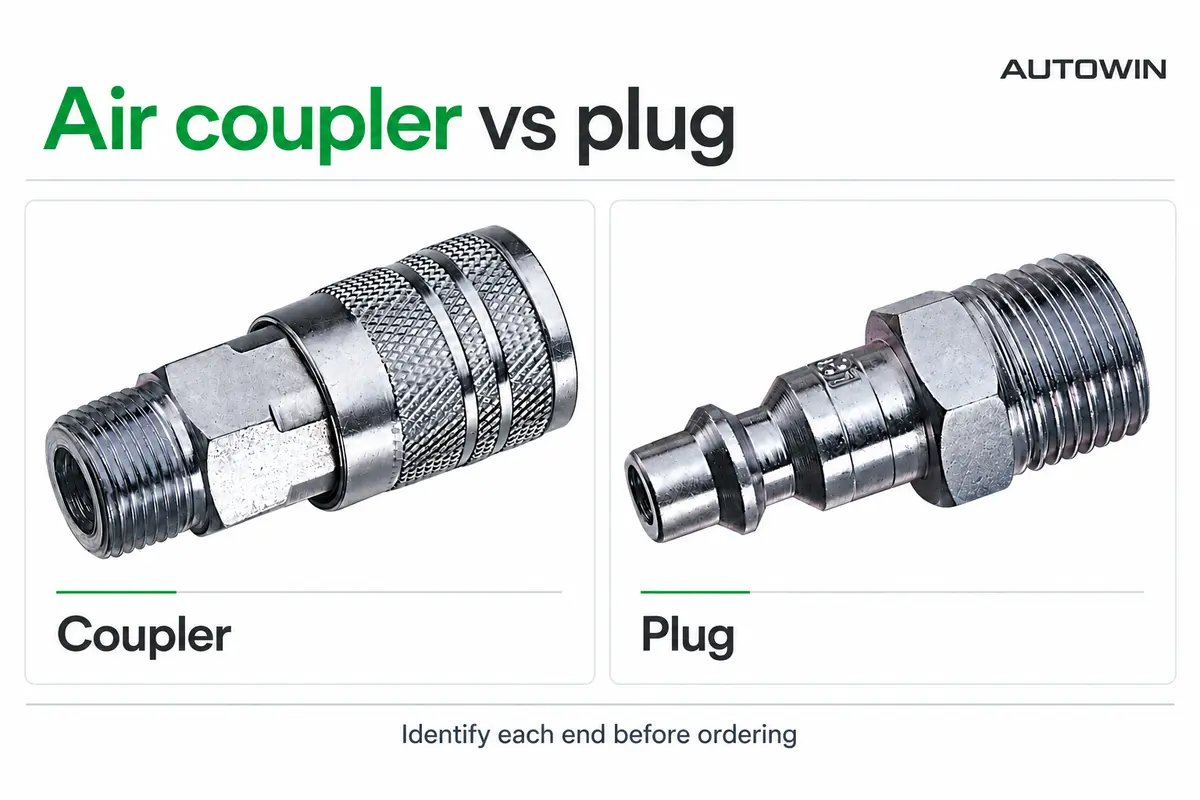
This distinction matters when a buyer combines a coupler from one list and a plug from another. A product description for one half cannot establish the behaviour of the complete assembly. Use the coupler versus plug guide to identify the components, then request the valve arrangement for the selected pair.
What an open passage can and cannot tell you
Removing a shutoff element removes that element from the flow path. That is a useful design distinction, but it is not enough to rank two completed air hose couplings by performance. Passage dimensions, end connections and the rest of the air circuit still matter.
Ask for air-flow information at stated inlet pressure and pressure drop. Compare equivalent conditions rather than a nominal body size or a photograph of the bore. An unrestricted-looking opening may still be followed by a smaller adapter, hose end or tool inlet.
Do not write “zero pressure drop” into an RFQ. Request the pressure loss or flow data needed for the operating point. If only water-flow data are available, ask for evidence appropriate to the compressed-air application instead of treating the published liquid figure as an air rating.
Confirm that the product is approved for air
The supplied Dixon catalogue makes valve configuration part of the application review, alongside pressure, medium, ends and other conditions. Its broad product range also illustrates why a connector name should not be treated as permission to use every listed product in compressed air.
Some unvalved coupling literature concerns liquid handling or pressure washing. Those pages can explain an arrangement, but their pressure values and applications should not be copied into an air-service specification. Obtain confirmation for the exact socket and plug, including the medium and operating limits.
The air coupler data-sheet checklist provides a way to record these requirements. Keep connection dimensions separate from the service approval so that an apparently matching replacement is not accepted on fit alone.
Plan isolation and pressure release outside the connection
For an unvalved pair, do not expect separation to shut off the incoming air. The equipment design and operating procedure must identify the appropriate isolation and exhaust means. The operator must also be able to establish the required pressure condition before opening the connection.
Closing a valve does not automatically empty the volume downstream of it. Consider the section between the isolation point and the coupling, plus any separately trapped downstream volume. A controlled service procedure must cover those sections as applicable; loosening a thread or forcing a sleeve is not a substitute.
Where frequent tool changes call for a defined vent-before-release function, make that a selection requirement. Do not assume an unvalved pair is suitable simply because it offers a direct passage. Conversely, do not reject it only by name if a competent system review establishes an appropriate application and pressure-control arrangement.
A specification for OEM and wholesale enquiries
Send a straight-through coupler supplier the part pair you intend to use and specify whether “unvalved” applies to the socket, the plug or both. Include the mating profile, body size, thread form, hose dimensions, medium and working conditions. Describe the separate isolation and pressure-release arrangement for review.
For wholesale air hose couplings, request clear component identification on the quotation and packaging. If several versions share an external appearance, the stock description should distinguish their valve configurations. A purchasing team should not have to inspect the internal passage of every incoming part to understand what was ordered.
Questions that prevent ordering errors
Does straight-through mean a larger bore?
No. In this context it identifies valve arrangement. Confirm passage dimensions and air-flow data for the particular product.
Will an unvalved plug make my current socket unvalved?
No. The socket’s own configuration still determines whether it shuts off. Assess the pair, and use only approved mating combinations.
Can I disconnect it as soon as I close the supply valve?
Not on that fact alone. Follow the specified procedure for releasing and verifying the pressure in the relevant sections before separation.
For a broader comparison, read the air hose fittings guide. AUTOWIN’s straight-through coupler and plug category is a starting point for an enquiry; confirm the actual configuration before selection. Submit drawings and requirements for OEM air connections with the intended application.
Download this guide
Keep the complete guide, comparison table and technical references for your next specification review.
Download PDF (4 pages · 3.9 MB)
Reference material
- Dixon 2026 Quick Coupling Catalog, physical PDF pages 15–16: application selection and safe-use principles.
- Parker Pneumatic Catalogue, General Information, printed page 4: unvalved straight-through arrangement and the need to stop flow before unlocking. Air-service suitability must be established separately for the selected model.