 English
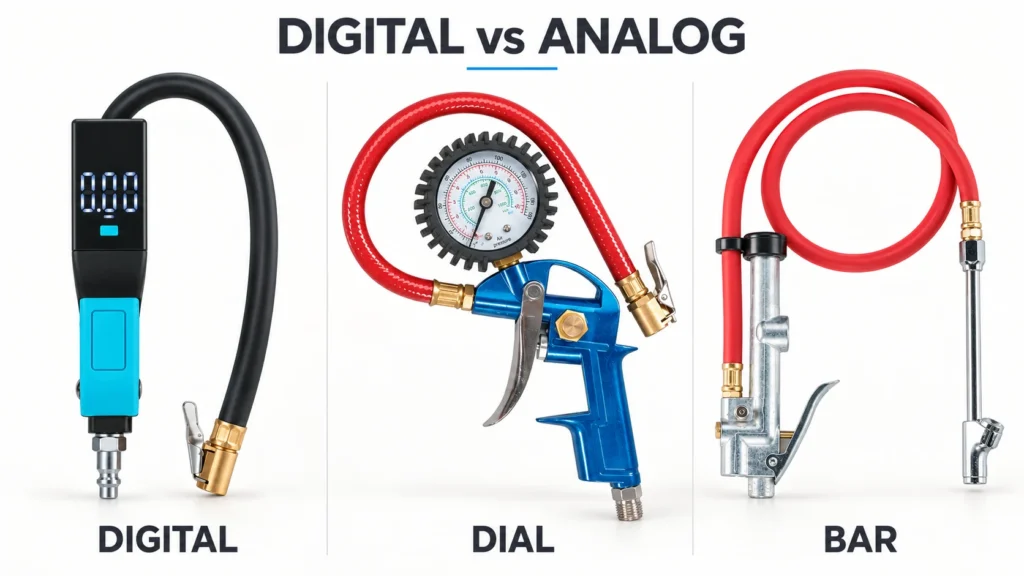
When a customer asks for a digital or analog tire pressure gauge, the first question is how it will be used. Reading pressure at a service counter, controlling inflation from a workshop air line and supplying a retail emergency kit are different jobs. The display is only one part of that choice.
For workshop inflators, digital, dial and bar formats can all be worth evaluating. Choose between them by checking the reading experience, documented measurement performance and the configuration your customer needs to maintain.
Save a copy for your purchasing team
Digital vs analog tire pressure gauge comparison PDF
Illustrated PDF · 4 pages · 321 KB. Includes product links and a printable reference for workshop and distributor discussions.
Digital, dial and bar formats compared
| Buying question | Digital | Mechanical dial | Mechanical bar |
|---|---|---|---|
| How is pressure read? | Numerically on an electronic display. | From a pointer against a circular scale. | From a linear graduated scale. |
| What should the sample show? | Digit size, contrast, viewing angle and any backlight. | Scale spacing, pointer visibility and readability from the working position. | Scale spacing and how clearly the index or reading position can be seen. |
| Does the readout need power? | Yes. Battery, rechargeable or external supply depends on the model. | A purely mechanical readout does not need a display battery. | A purely mechanical readout does not need a display battery. |
| What proves measurement performance? | The specified error limits and relevant test or calibration results. | The specified error limits and relevant test or calibration results. | The specified error limits and relevant test or calibration results. |
| Does the format determine chuck or hose? | No. Confirm the complete assembly. | No. Confirm the complete assembly. | No. Confirm the complete assembly. |
“Analog” includes more than a round dial. A bar-type inflator also gives a mechanical reading. When ordering, write the required format explicitly so a supplier does not substitute one for the other.
When a digital tire inflator gauge is worth considering
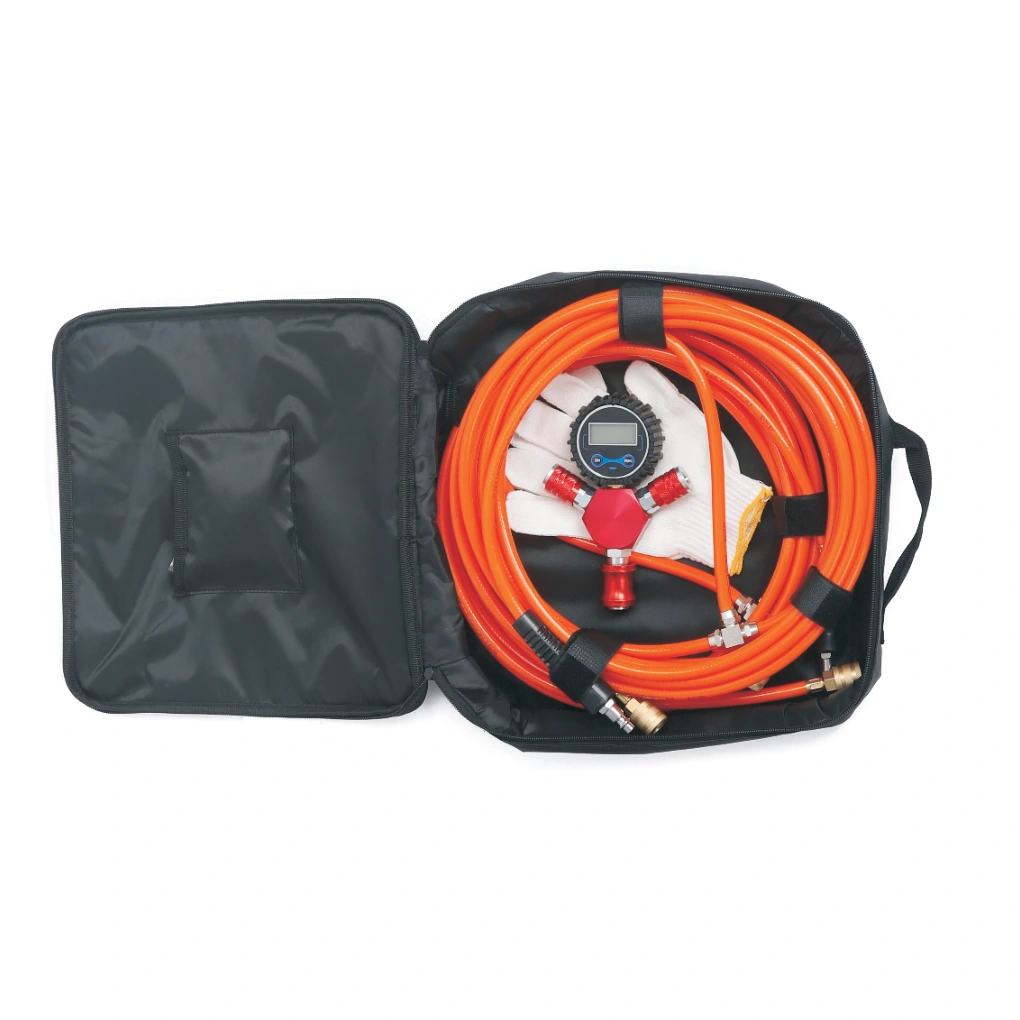
A digital tire inflator gauge is useful to evaluate when customers want a clear numerical reading or need to switch between pressure units. Where the model includes a backlight, assess it under the lighting conditions in which the tool will be used. Check the display while holding the handle and hose in a normal working position.
Look at the power arrangement as closely as the screen. Ask which batteries are required, whether they are included, how the battery compartment opens and what the manual says about low-battery indications. Rechargeable and externally powered models need their own charging or supply arrangements.
A digital readout also does not establish that an inflator stops automatically at a preset pressure. A manual trigger inflator and an automatic preset inflator can both have electronic displays. Confirm the actual control functions before writing a distributor listing or quotation.
Compare the model-specific options in AUTOWIN’s digital tire inflator gauge series. Keep display type, power source and automatic-control functions as separate fields in your selection sheet.
What to check on a tire inflator with dial gauge
A mechanical dial format can suit customers who want a pressure reading without managing display batteries. The dial still needs to be legible at the pressures they use. A large face may be helpful, but the number of scales, spacing between markings and pointer design also affect the reading experience.
View the pointer squarely during the sample assessment. An angled view can make its position against the scale harder to judge. Ask the supplier for the numerical error specification and applicable conditions rather than treating dial size as evidence of accuracy.
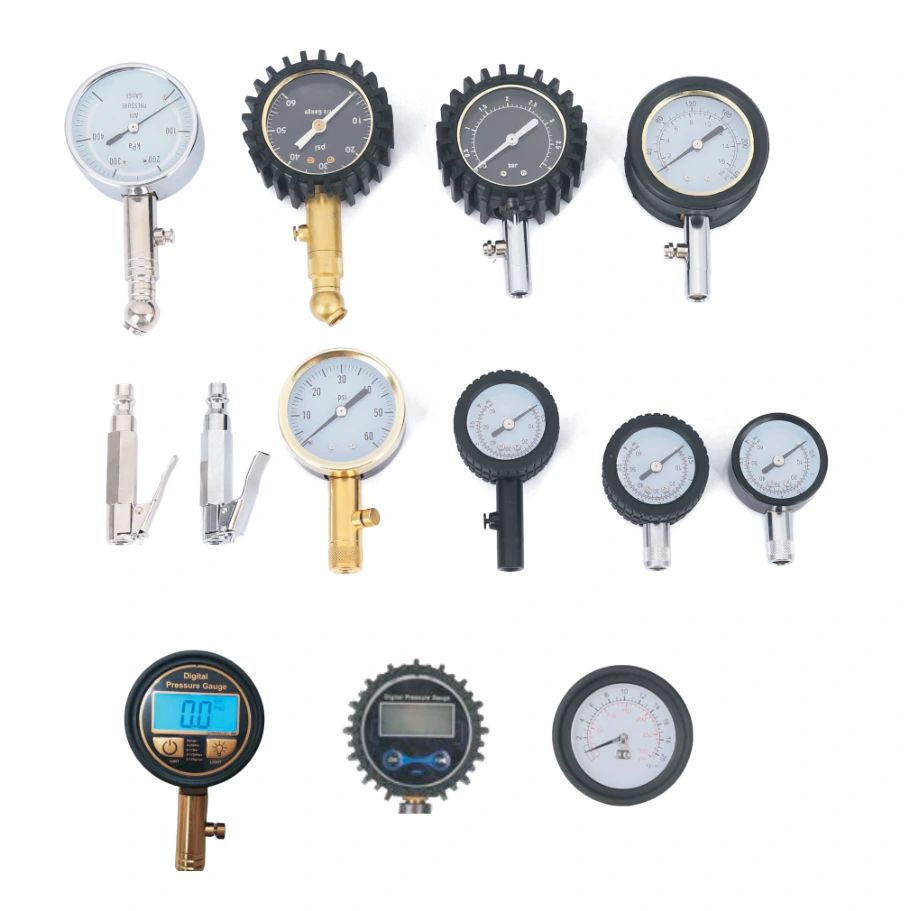
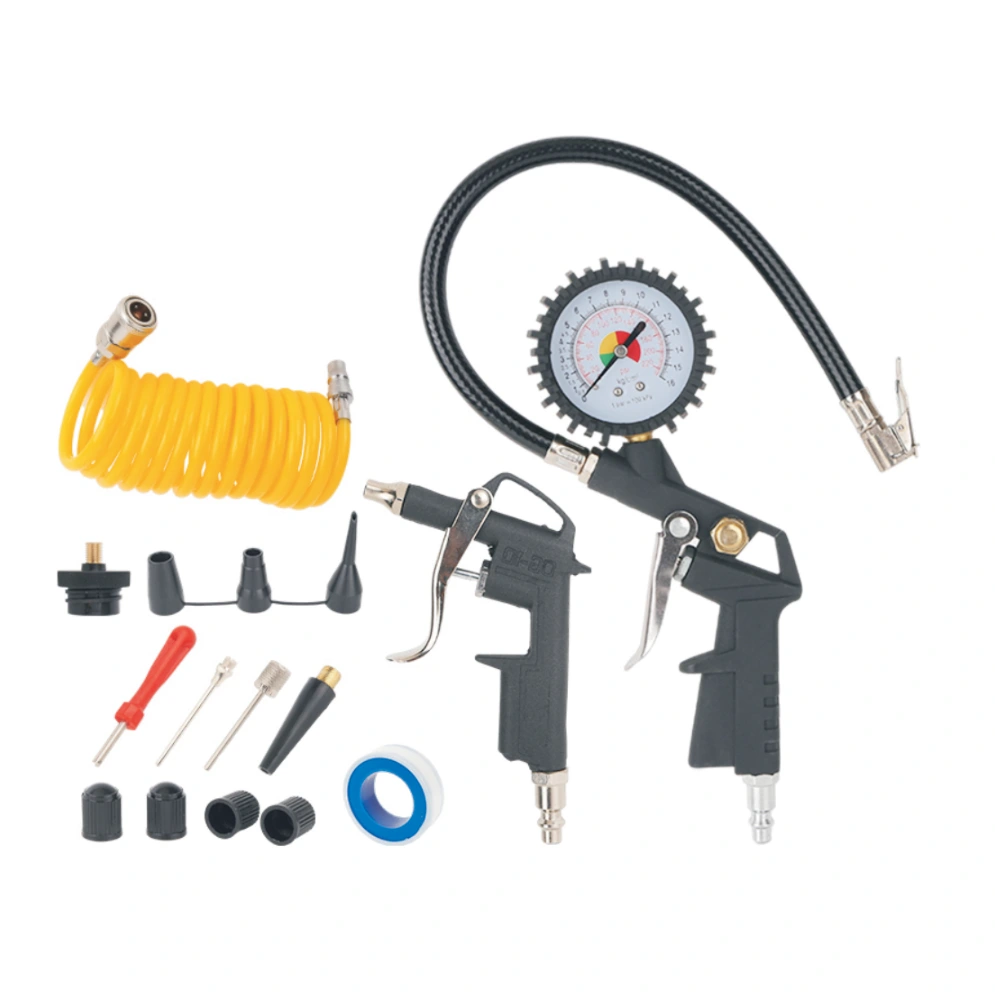
The dial tire inflator range is intended for comparison by configuration. If the customer only needs to measure pressure, compare the separate analog tire pressure gauge series. A standalone analog tire gauge should not be described as a workshop inflator unless it actually has the required inflation function.
Where a bar-type inflator fits
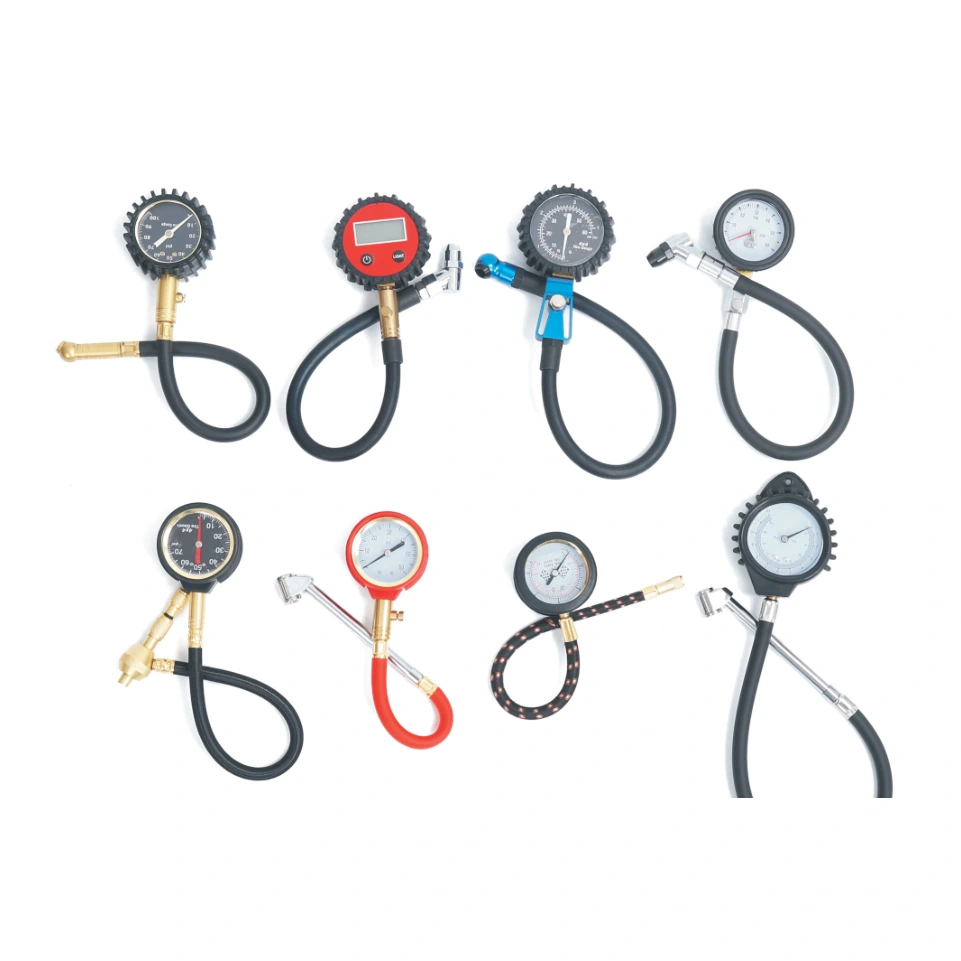
A bar-type format deserves consideration when a workshop already uses linear scales or a distributor needs to maintain continuity with an established product range. During evaluation, ask technicians to read the scale at the usual working pressures and check whether the chosen units are easy to distinguish.
Function varies within this format. For example, AUTOWIN’s STG-24 extended-reach inflator lists a 10–120 PSI range, a 36-inch hose and a straight-on dual-foot chuck. It does not include a bleeder valve. A buyer who needs controlled pressure release at the handle should account for that before approving the model.
Use the bar-type tire inflator series to compare the other configurations. Do not carry a feature from one model across the whole range.
Does digital mean more accurate?
The display format alone cannot answer that question. Resolution describes the smallest distinguishable change in a reading. A product’s numerical accuracy specification describes a different aspect of its measurement performance. Those distinctions are set out in the International Vocabulary of Metrology.
A digital display that changes in 0.1 PSI steps may have a larger permitted error. A mechanical gauge may meet the buyer’s requirement even though it has no decimal display. Compare the error limits at the pressures that matter to the customer, together with the conditions under which those limits apply.
Durability also needs product evidence. Ask about the casing, environmental limits, available service parts and documented testing. Neither “digital” nor “analog” is enough to support a blanket claim about service life.
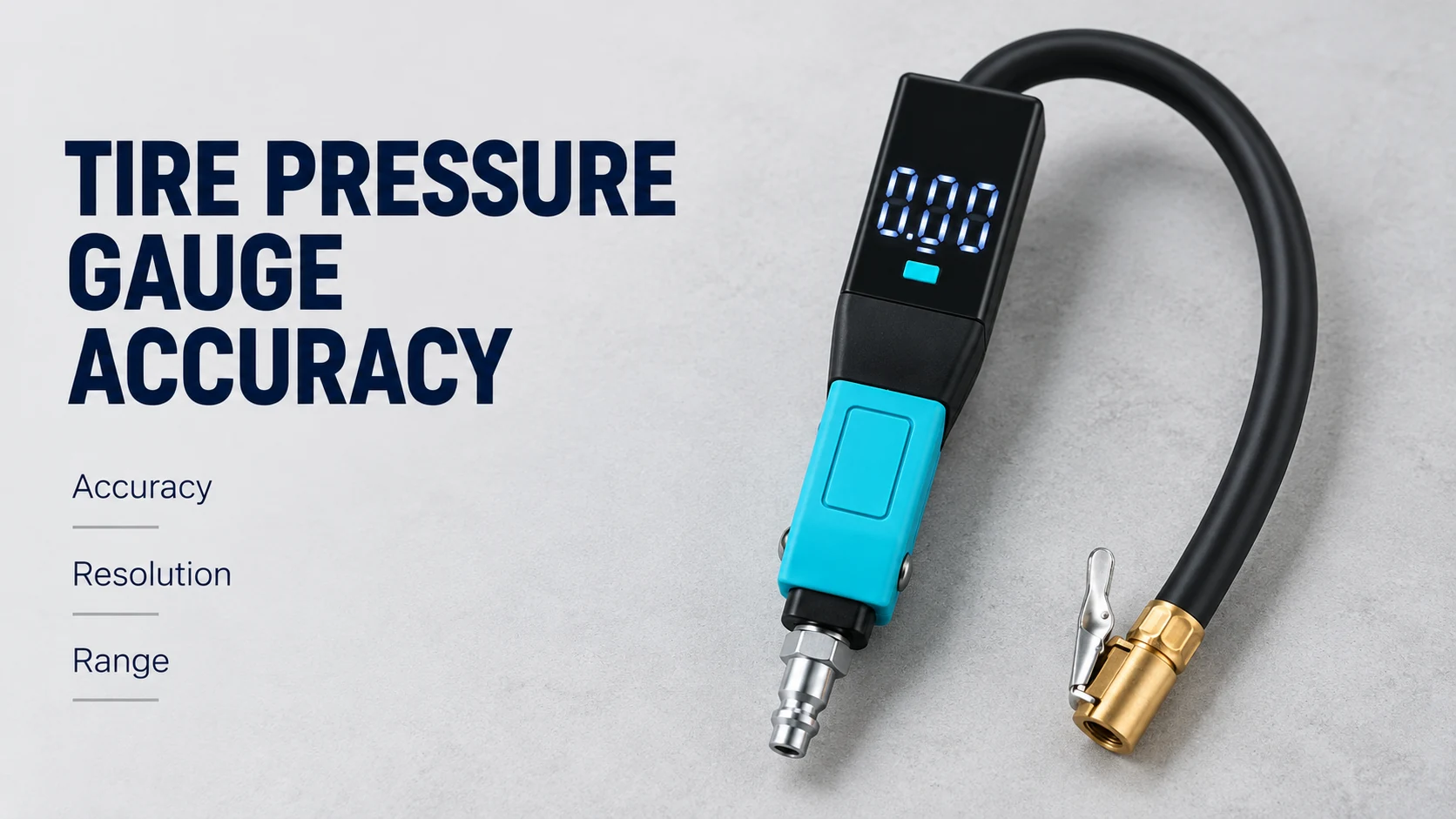
Before comparing supplier accuracy claims, read our guide to tire pressure gauge accuracy, resolution and measuring range. It explains which specifications and supporting records to request.
A practical way to choose a distributor assortment
Start with the needs your customers can describe. A workshop that wants readable numerical values may prefer a digital sample. A customer avoiding display batteries may prefer a mechanical dial or bar. A fleet buyer may decide primarily on valve reach and the complete inflation assembly, then choose the readout.
Evaluate samples with comparable ranges, chucks and hose lengths where possible. Otherwise, a technician’s preference may reflect the connection or handle rather than the display. Record comments on readability, grip, valve access, pressure adjustment and the work needed to maintain the tool.
For repeat purchasing, put the approved configuration into the SKU description. “Digital inflator” is too broad to distinguish a clip-on version from a dual-foot version, or a manual model from an automatic one.
Request samples or a model comparison from AUTOWIN with your preferred display, pressure units, chuck arrangement and expected quantities. This gives both sides a clear basis for discussing the range your customers actually need.