 English

Air Tool Accessories
Pencil Tire Pressure Gauges for Distributor Supply
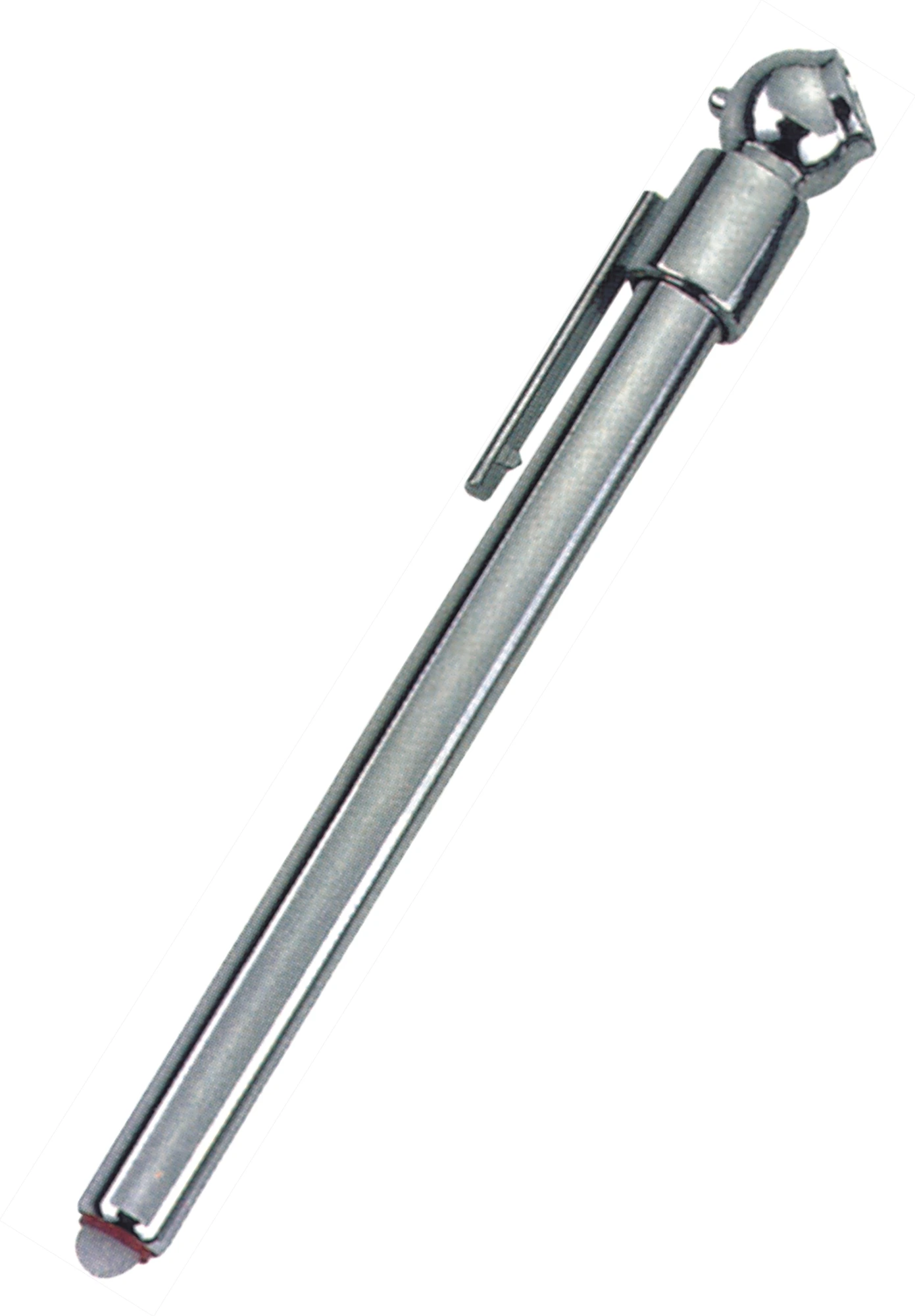
Select a pencil tire pressure gauge by its complete pressure range, head material and measuring-bar construction. AUTOWIN lists 13 metal-body stick gauges for portable checking kits, service counters and wholesale packs. Compare two- and four-sided bars, plastic or metal heads, and the published minimum reading before choosing quantities for your assortment.
Key Specifications
- Models
- 13 pencil / stick gauges
- Reading
- Sliding measuring bar
- Listed ranges
- 5–50, 10–50 or 10–120 PSI
- Body
- Metal
* Catalogue entries; confirm final specifications.
Ask about this productProduct Details
A pencil tire pressure gauge provides a sliding-bar reading in a compact handheld format. AUTOWIN lists 13 configurations with metal bodies, covering different heads, measuring-bar materials and pressure bands. For a distributor assortment, compare the complete model description rather than specifying only a generic stick tire gauge or the highest PSI figure.
The lower-range entries include SP1192 at 5–50 PSI and S410-A, S410-B, S410-C, S430, SP1195 and SP1196 at 10–50 PSI. S410-A and S410-B use two-sided plastic bars, S410-C uses a two-sided steel bar, and S430 uses a four-sided plastic bar. These details help distinguish products that otherwise share the same listed pressure band.
For the 10–120 PSI group, compare S510-P, S510-M, SP1161A, SP1161B, SP1162 and SP1168. S510-P has a plastic head, while S510-M has a metal head; both list metal bodies and four-sided plastic bars. SP1161A uses a two-sided plastic bar and SP1161B a four-sided plastic bar. SP1168 pairs a plastic head with a two-sided steel bar, while SP1162 also includes a kPa scale entry in the catalogue.
These models measure tire air pressure. Tread-depth measurement is handled by a separate gauge series despite the wording retained in this page address. For a wholesale enquiry, list model quantities and specify the intended pressure band, scale markings and packing format. Include your destination and any branding or inspection requirements so the offered configuration can be retained for repeat orders. The listed range and bar material do not establish a separate accuracy or calibration claim.
Model Differences
- SP1192: 5–50 PSI; plastic head, metal body and two-sided plastic bar.
- S410-A/B/C, S430, SP1195 and SP1196: 10–50 PSI. S410-A/B use two-sided plastic bars; S410-C uses a two-sided steel bar; S430 uses a four-sided plastic bar.
- S510-P, S510-M, SP1161A/B, SP1162 and SP1168: 10–120 PSI.
- S510-P has a plastic head; S510-M has a metal head. Both list metal bodies and four-sided plastic bars.
- SP1161A has a two-sided plastic bar; SP1161B has a four-sided plastic bar. SP1168 has a plastic head and two-sided steel bar.
- SP1162 lists a metal head/body, four-sided plastic bar and an additional kPa scale entry; retain the catalogue scale markings for configuration confirmation.
Applications
Vehicle checking kits
Choose a compact pencil tire gauge for portable pressure-checking kits.
Service-counter supply
Build an assortment by pressure range, head material and bar type.
Wholesale tool packs
Specify model numbers and quantities for distributor packs and packaging discussions.
Models & Specifications
Compare the pressure range and features of each model. Select models and enter the quantity required.
Swipe the table to compare all dimensions.
| Model / SKU | Construction / profile | Range / scale | Features / connection | Quantity (pcs) | |
|---|---|---|---|---|---|
| S410-A | Plastic head; metal body | 10–50 PSI | 2-side plastic bar | ||
| S410-B | Plastic head; metal body | 10–50 PSI | 2-side plastic bar | ||
| S410-C | Plastic head; metal body | 10–50 PSI | 2-side steel bar | ||
| S430 | Plastic head; metal body | 10–50 PSI | 4-side plastic bar | ||
| S510-M | Metal head and body | 10–120 PSI | 4-side plastic bar | ||
| SP1161A | Metal head and body | 10–120 PSI | 2-side plastic bar | ||
| SP1161B | Metal head and body | 10–120 PSI | 4-side plastic bar | ||
| SP1162 | Metal head and body | 10–120 PSI; 150–800 kPa | 4-side plastic bar | ||
| SP1168 | Plastic head; metal body | 10–120 PSI | 2-side steel bar | ||
| SP1192 | Plastic head; metal body | 5–50 PSI | 2-side plastic bar | ||
| SP1195 | Plastic head; metal body | 10–50 PSI | 2-side plastic bar | ||
| SP1196 | Plastic head; metal body | 10–50 PSI | 2-side plastic bar | ||
| S510-P | Plastic head; metal body | 10–120 PSI | 4-side plastic bar |
Selection checklist: profile and dimensions · tool compatibility · quantity per model
Frequently Asked Questions
Which pencil tire gauge starts below 10 PSI in this series?
SP1192 is listed at 5–50 PSI. The other entries start at 10 PSI and end at either 50 or 120 PSI. Choose a range that includes the intended pressure; this series table does not list a 2–20 PSI model.
How do S410-A, S410-B, S410-C and S430 differ?
All four list plastic heads, metal bodies and 10–50 PSI ranges. S410-A and S410-B use two-sided plastic bars, S410-C uses a two-sided steel bar, and S430 uses a four-sided plastic bar. Quote the complete reference when ordering.
Should a distributor choose pencil or dial pressure gauges?
Choose the reading format and valve-access arrangement for the intended checking task. Pencil models use a sliding bar; the analog dial tire pressure gauge series offers SDG configurations with model-specific heads, scales and bleeder options. Compare the actual row rather than assuming equivalent features.
Can these stick gauges be ordered with tread-depth tools?
Specify them as separate enquiry items because they measure different things. These 13 pencil models check air pressure, while tread-depth tools measure groove depth. The tire gauge range and purchasing guide separates those families; list model quantities and packaging needs for each selected series.
Request a Quotation
Send the required models, quantities and packaging details.
Selected models
No models selected yet. You can also describe what you need in the form.
Your model selection will be included in Project Details.